

Many parents hear schools say “we teach phonics” and nod along, not really sure of what it means since a generation ago they grew up learning ABCs by letter names, not sounds.
Phonics simply means that letters have sounds, and reading involves blending those sounds together to form words. For example, c‑a‑t becomes a cat.
In this guide, you will get the full A‑to‑Z phonics sound list along with a simple, step‑by‑step method to teach phonics at home. It will make English learning for preschoolers clear and fun, and confidence‑building.
What Is Phonics and Why Do Schools Teach It Instead of ABC?
Most parents grew up learning the alphabet by letter names—ay, bee, see. Phonics takes a different approach. It teaches letter sounds—as in apple, b as in ball.
Sounds, in turn, unlock reading in a way names cannot. A child who knows that c‑a‑t blends into cat can now decode new words independently. A child who only knows letter names on the other hand, cannot read without memorizing.
According to the Harvard Centre on the Developing Child, the brain builds its language and literacy circuits most actively in the early years, which is why sound-based learning at this age is so effective.
Phonics Sounds A to Z (The Complete Chart)
Here is a handy phonics chart that makes the sounds clear and easy to practise at home:
| Letter | Sound | Example Words |
| A | a as in apple 🍎 | apple, ant, axe |
| B | b as in ball 🏀 | ball, bat, bag |
| C | c as in cat 🐈 | cat, cup, cap |
| D | d as in dog 🐕 | dog, doll, dip |
| E | e as in elephant 🐘 | elephant, egg, end |
| F | f as in fish 🦈 | fish, fan, fig |
| G | g as in goat 🐐 | goat, gun, gap |
| H | h as in hat 🎓 | hat, hen, hop |
| I | i as in ink | ink, igloo, in |
| J | j as in jug 🏺 | jug, jam, jet |
| K | k as in kite 🪁 | kite, kid, key |
| L | l as in lion 🦁 | lion, leg, lip |
| M | m as in man 👨🏻💼 | man, mat, mop |
| N | n as in net 🥅 | net, nut, nap |
| O | o as in orange 🍊 | orange, ox, on |
| P | p as in pen 🖊️ | pen, pot, pig |
| Q | qu as in queen 👸 | queen, quilt, quick |
| R | r as in rat 🐀 | rat, run, red |
| S | s as in sun 🌞 | sun, sit, sip |
| T | t as in top 🔝 | top, tap, tin |
| U | u as in umbrella ⛱️ | umbrella, up, us |
| V | v as in van 🚐 | van, vet, vest |
| W | w as in wet 💦 | wet, win, wig |
| X | ks as in box 📦 | box, six, fox |
| Y | y as in yak 🦬 | yak, yes, yum |
| Z | z as in zebra 🦓 | zebra, zip, zoo |
Notes for Parents:
- C and K often make the same sound (cat, kite).
- X is tricky—it usually sounds like ks (as in box).
- Q almost always goes with U (queen, quick).
- Y can act as both a consonant (yak) and a vowel (my, gym).
How to Teach Phonics at Home (A Simple 4-Step Method)
1. One Sound at a Time
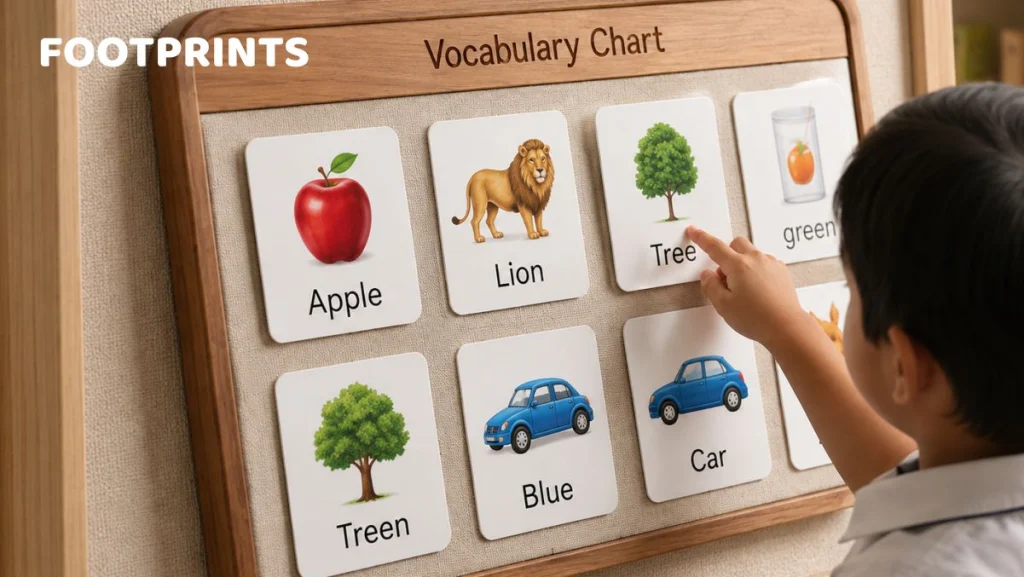
Introduce one letter sound each day using familiar objects around the house. For example, show an apple for “a” or a ball for “b.” Keep it playful and concrete.
2. Sound Games
Play “I Spy” using sounds instead of letter names. Say, “I spy something beginning with /b/” and let your child find the ball or book. This builds listening and sound recognition.
3. Blending Two Sounds
Once a few sounds are learned, practise blending two together. For example, /a/ + /t/ = at. Use simple combinations so children hear how sounds join.
4. Blending Three‑Sound Words
Move to CVC words like c‑a‑t or d‑o‑g. Encourage your child to say each sound slowly, then blend them into the full word. This is the foundation of independent reading.
Remember that one sound per day, or even slower, is perfectly fine. Mastery is more important than rushing through the alphabet.
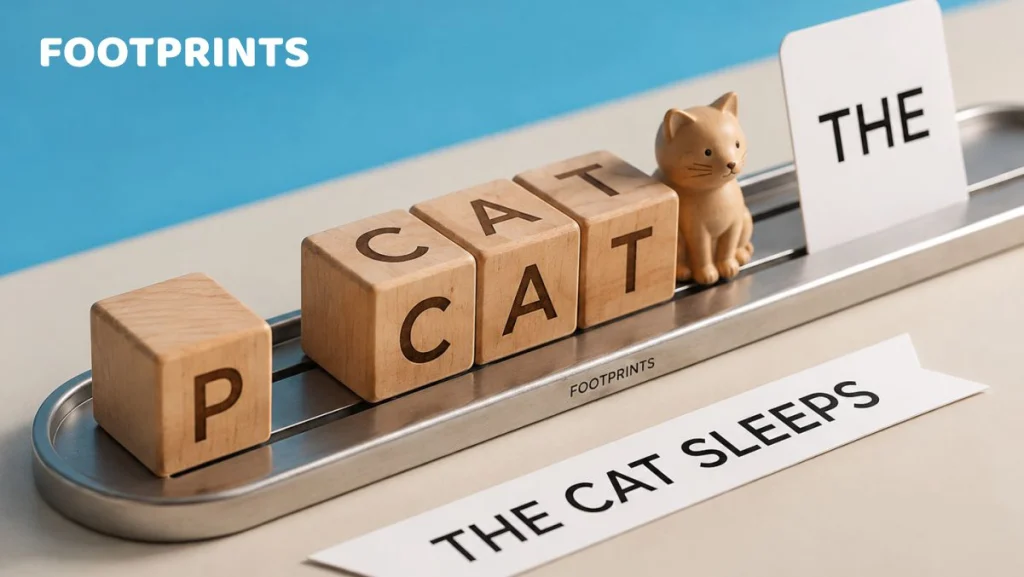
From Sounds to Words: Blending Practice
Blending means stretching out sounds slowly—like c‑a‑t—and then saying them faster until they become the word cat. This simple skill is the bridge between knowing phonics sounds and actually reading.
The natural first blending words are CVC words (consonant‑vowel‑ consonants), such as cat, dog, sun. They give children clear patterns to practise and succeed with.
You can refer to a complete list of two and three letter words for children.
What Comes After Phonics: Sight Words and Simple Sentences
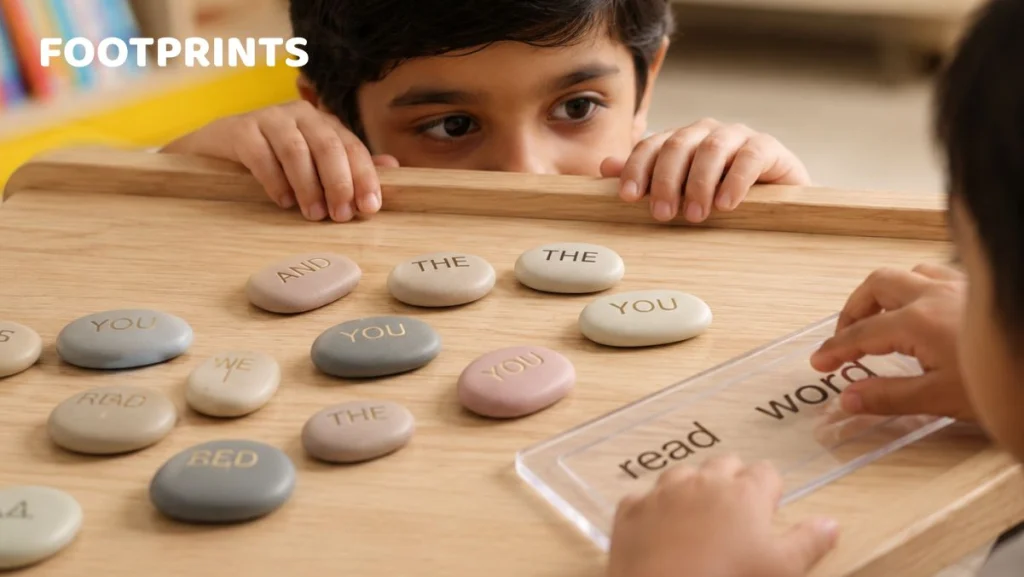
Not every word can be sounded out. For instance, common words like the, was, and said do not follow phonics rules. These are called sight words and children learn them by recognizing the whole word at once. Once a few sight words are mastered, kids can begin forming simple sentences that mix phonics words with sight words.
For full lists and practice ideas, you can refer to Sight Words for LKG and UKG.
Frequently Asked Questions
1. What age should a child start phonics?
Most children begin phonics around age 3–4, when they can recognize letters and enjoy sound games. Make sure that early exposure is gentle and playful.
NAEYC’s early literacy guidance supports teaching letter sounds through play and everyday interaction, keeping early reading joyful rather than pressured.
2. What is Jolly Phonics?
Jolly Phonics is a popular teaching programme that introduces letter sounds through stories, songs, and actions. It follows the same sound‑based principles of phonics but uses a structured, child‑friendly approach.
3. Should I teach capital or small letters first?
Start with small letters, since most words children read are in lowercase. Capitals can be introduced later for names and sentence beginnings.
4. My child knows the ABC song but cannot read — why?
The ABC song teaches letter names, not sounds. Reading depends on phonics—knowing that c‑a‑t blends into cat. Without sounds, children cannot decode new words.
5. How long does it take a child to learn all the phonics sounds?
It usually takes a few months depending on pace and practice. Teaching them one sound per day or even slower is fine. Mastery matters more than speed, and playful repetition helps children retain sounds.
To Sum Up
With some simple rules, parents can guide children from sounds to words, making reading a joyful and achievable journey:
- Sounds come before names – children need to hear and connect letter sounds before memorizing ABC names.
- One sound at a time works best — slow, steady practice builds mastery and confidence.
- Blending is the bridge to reading — stretching sounds like c‑a‑t and snapping them together unlocks real words.
UNESCO identifies early literacy as one of the strongest foundations of lifelong learning, and phonics-based approaches are central to how it develops.
At Footprints Preschool, we address phonetics and early sound awareness through active learning, embedding these concepts into daily preschool routines.

Shubham Tiwari is a childcare specialist and education content expert with over 5 years dedicated to India’s early childhood education landscape. His work sits at the intersection of child development research and practical parenting guidance — helping Indian families understand preschool selection, evaluate curriculum quality, recognise developmental milestones, and navigate child safety standards.
Over the course of his career in early childhood education, Shubham has developed deep expertise in the questions Indian parents ask most: when to start preschool, what to look for in a curriculum, how to identify speech delay early, and what genuine early learning looks like versus supervised play. His writing covers preschool admission processes, child safety policies, handwriting and language development, and how early experiences shape long-term brain development.
Shubham’s approach is research-first and parent-first — making early childhood education knowledge accessible to every family, regardless of background.
 View Fees
  Call Us