

Think of monsoons, and you think of cozy evenings on the balcony where you watch the rain pour down while you savor steaming hot delicacies. Yet, behind the charm of the season lie some hidden troubles, especially for children. The season often brings a surge of viral fevers, respiratory infections, allergies, and more, making it a time when extra care and vigilance are essential.
The key to a joyful monsoon season lies in some easy precautions. Here are some handy monsoon health tips. Whether your toddlers are at home or in a daycare, simple but effective monsoon care for children will keep them protected. Read this monsoon health guide for children to keep your little ones safe.
1. Vaccination
You need to make sure that you ask the child’s paediatrician for their vaccination schedule and follow it diligently. Typhoid and Hepatitis vaccines, among others, are extremely important as they keep the child protected from typhoid and hepatitis A caused by infected food and water. Similarly, do make it a point to ensure that the annual influenza vaccine isn’t missed.
The WHO calls immunization one of the most effective health interventions available, preventing millions of childhood illnesses every year.
2. Well-balanced diet
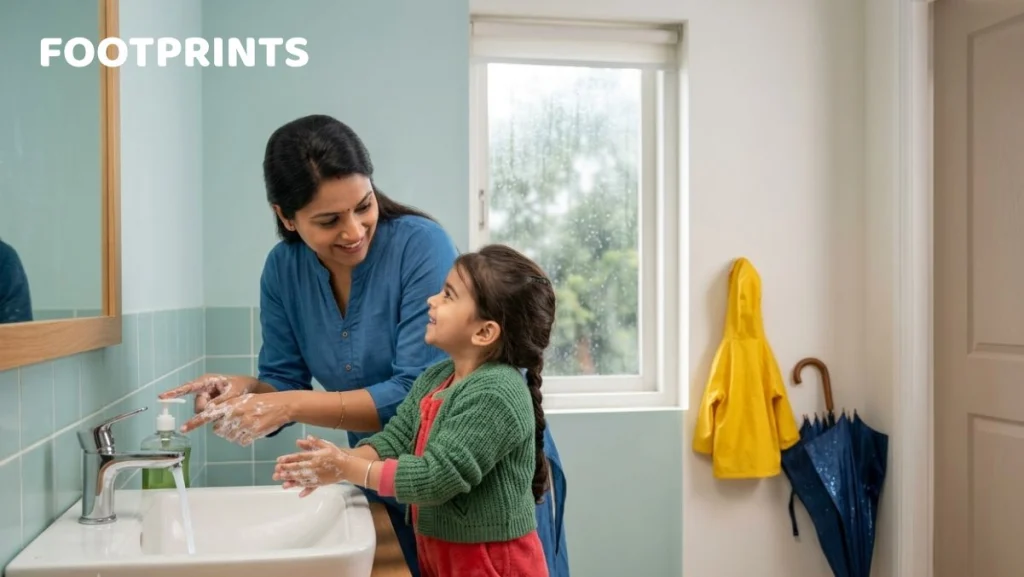
Monsoon is as good a time as any other to ensure that the child follows a nutritious diet. With many diseases doing the rounds, ensure that the food and water the child takes in are hygienic. You must also avoid raw food as much as possible, as well as ensure that the child drinks boiled water. Make sure also that the child washes their hands before every meal.
The answer to how to increase immunity in children lies in including immunity boosting foods such as tulsi leaves, ginger, turmeric, seasonal fresh fruits, and dry fruits in the diet. Probiotics in yogurt also help prevent bacterial, viral, and fungal diseases. Vitamin A-rich foods, especially those found in fruits and veggies, egg yolk, and more, are also good for building immunity. Pro-tip – Do ensure that the fruits are not cut and exposed before consumption. Hot beverages such as milk and vegetable soups also work well in this season!
Here is some healthy food for children to aim for, as well as food that you need to limit in the monsoon season:
| What to Give | Why It Helps | What to Limit |
| Warm home-cooked meals | Easier to digest, safer than outside food | Street food and chaat |
| Boiled or filtered water | Prevents water-borne illness | Ice and outside drinks |
| Seasonal fresh fruit | Vitamins that support immunity | Pre-cut fruit kept in the open |
| Curd and buttermilk | Supports gut health | Very cold dairy for young toddlers |
| Vegetable soups, dal water | Warm fluids plus nutrition | Excess fried snacks |
| Tulsi, ginger, turmeric in cooking | Traditional additions that soothe | Raw salads from outside |
UNICEF’s food and nutrition guidance for parents emphasises that a varied, home-prepared diet does more for a child’s immunity than any single special food.
3. Hydration
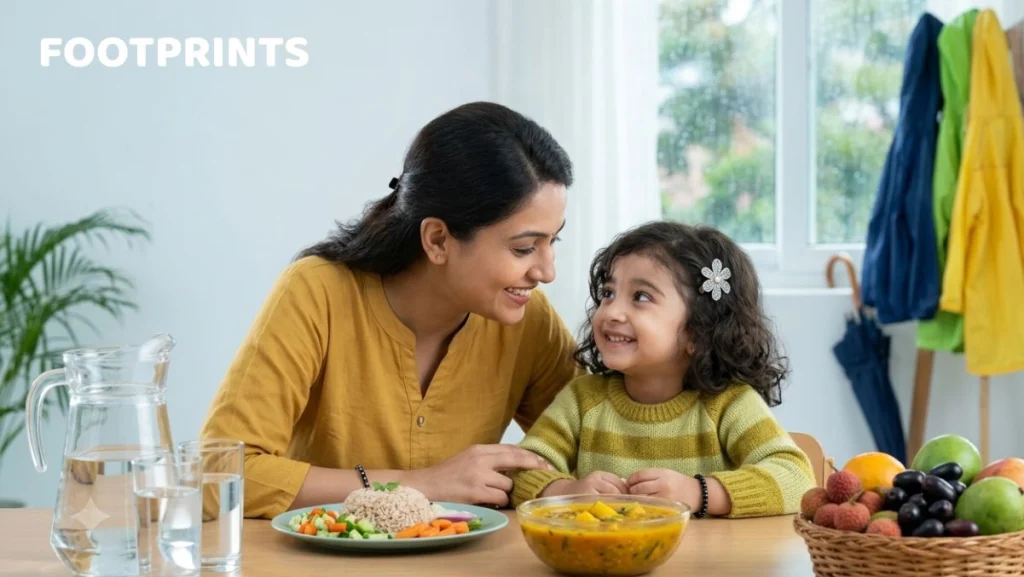
Children need age‑appropriate amounts of fluids to stay healthy, especially in the monsoon season when infections are common. While toddlers generally need around 4 cups of fluids daily, preschoolers need about 5 cups.
Offer warm fluids like clear soups, or warm water with honey and lemon (for children over 1 year) to soothe the throat and keep them comfortable.
It will help to remind them to sip some water every few hours.. Keeping their favorite tumbler filled with water handy will make the job simpler.
Remember to watch out for signs of low fluid intake. These include dry lips, fewer wet diapers or toilet trips, dark urine, unusual tiredness, or irritability.
4. Exercise
An important aspect of building immunity is physical exercise. Do ensure that the children get enough of it. If the weather does not permit outdoor activity, do some jumping, skipping, or other physical activities indoors to keep them healthy and active.
5. Keep surroundings clean
Since stagnant water spreads common monsoon diseases in children such as malaria and dengue, it is important to keep surrounding areas clean. Make sure that you watch out for potential culprit areas such as water coolers, plants, and more where water can collect unnoticed. A quick daily check and cleanup can go a long way in protecting children from the threat of diseases.
6. Right clothes
During this season, it is important to choose clothes that do not retain moisture. With fungal infections on the rise, wet clothes and shoes must be kept dry outside. You also need to be careful about any growth of germs on carpets, curtains, and more. Children must be asked to wash their feet properly with lukewarm water once they come from outside.
Additionally, remember that the child should wear long-sleeved clothing this season so that there is minimal exposed area prone to mosquito bites.
7. Keep distance from anyone unwell
Since monsoons are a period when diseases thrive, as far as possible, ensure that the child does not come in close contact with anyone who is sick. If someone at home is unwell, you need to take proper care to ensure that the place is kept clean and that infection-causing germs do not spread from one to the other. Body fluids, especially, transmit germs; you, therefore, need to ensure that the child is protected.
8. Mosquito Net
Protecting children from mosquito bites is one of the most effective ways to prevent monsoon diseases like dengue, malaria, and chikungunya. Nets and repellents are simple and powerful tools when used correctly. Remember to use mosquito nets both during nap times and at night. When using repellents, especially on younger children, make sure you check the product label and also follow your paediatrician’s advice. Installing window and door screens to reduce mosquitoes is prudent. Due care needs to be taken to keep them clean and intact as even small tears are enough to let mosquitoes in.
Frequently Asked Questions
1. What should a toddler eat during monsoon to stay healthy?
Paediatricians recommend freshly cooked, warm meals with plenty of fruits and vegetables. Avoid street food, especially items that are kept uncovered, as they may carry germs. Safe drinking water and balanced nutrition help strengthen immunity.
2. How do I protect my toddler from mosquitoes at night?
Use mosquito nets during sleep and apply child‑safe repellents only as per the label or your paediatrician’s advice. Keeping windows screened and eliminating stagnant water around the home further reduces mosquito exposure.
3. Should I stop outdoor play completely during monsoon?
HealthyChildren, the parenting site of the American Academy of Pediatrics, notes that daily active play supports children’s immunity, sleep, and overall health in every season. As for the monsoon season, choose safe, dry areas and avoid puddles or damp spaces where infections spread easily. Indoor play can be a good substitute on heavy rain days.
4. Which vaccines matter most before monsoon season?
Vaccines against typhoid, hepatitis A, and influenza are especially important, as these illnesses peak during monsoon. Paediatricians advise checking your child’s immunization schedule to ensure all age‑appropriate vaccines are up to date.
To Sum Up
Following these basic precautions can make sure the child can enjoy the magic that rains bring! If the child happens to fall ill despite all these precautions, do not panic. High fever, difficulty breathing, and severe cough could all be indicative of an infection. Do not, therefore, delay seeing a doctor. Similarly, if the child has bouts of vomiting or diarrhoea, keep them hydrated and see a doctor. With the right treatment, you will soon find your child healthy and happy again!
Here’s to making some delightful memories this monsoon season.
Keep following this space for more such informative content. At Footprints Play School we are committed to the child’s wellbeing.

Purvesh Sharma is a TED speaker, IIT-Delhi alumnus, certified life coach, and Co-Founder of Footprints Childcare — India’s safest preschool and daycare chain operating multiple centres across 30+ cities. He co-founded Footprints after recognising a fundamental gap: working parents in India needed a childcare option that combined genuine safety, research-backed curriculum, and real-time parent connectivity.
A certified life coach with deep exposure to behavioural science and developmental psychology, Purvesh leads parenting workshops and engagement programmes across Footprints centres — directly engaging with tens of thousands of Indian parents on the challenges of raising young children in urban India. As a parent himself, he brings lived experience to every piece he writes on child behaviour, tantrums, discipline, habit formation, and school readiness.
His writing is grounded in both the science of early childhood development and the real, daily decisions Indian parents face.
 View Fees
 Call Us