

Enough and more research has shown the importance of the first five years in a child’s life. This is the time when 90% of the child’s brain develops. This rapid brain development lays the groundwork for everything that follows, whether it is thinking, learning, emotional regulation, and social interaction.
According to the Harvard Center on the Developing Child, 90% of a child’s brain architecture is built in the first five years of life – making this period the most critical window for learning and development.
Parents often struggle with the question at this stage is preschool necessary for children? Let us try and answer this question.
Why the First 5 Years Are Critical for Child Development
The early years are often described as the foundation years. This is a period when the brain grows at its fastest. What happens during this time sets the stage for a child’s lifelong learning, health, and well-being.
UNICEF identifies early childhood as the most critical phase of human development – one in which the foundations for cognitive, social, emotional and physical wellbeing are laid for life.
Brain Development
- By age five, a child’s brain has reached about 90% of its adult size.
- Neural connections develop at an astonishing pace of over 1 million every second.
- Nurturing relationships shape how children think, feel, and respond to the world.
- Positive stimulation strengthens pathways for memory and attention as well as problem-solving.
Learning Capacity
- While children are natural learners, early exposure to literacy and numeracy goes a long way in building the foundation for academic success.
- Overall, a sense of curiosity and imagination that we develop now turns children into learners for life.
Foundation for Future
- Early experiences ensure school readiness but also long-term outcomes in terms of career success, happiness and more.
- A strong start equips children with life skills that enable them to navigate the ups and downs of life.
Key Areas of Child Development in the First 5 Years
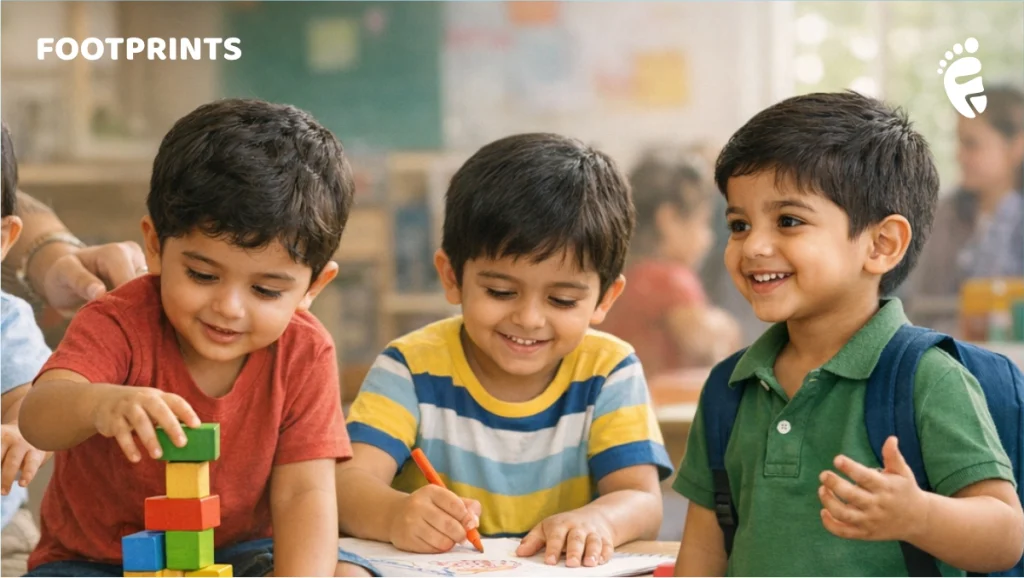
The first five years are a time of extraordinary growth. This is the time when children build the foundations of thinking, language, social development, and more that shape their future.
1. Cognitive Development (Thinking & Learning)
- Memory: This is the time children develop their memory as they begin to recall people, places, and routines.
- Problem-Solving: The early years also see development of their reasoning and problem-solving skills. Simple puzzles, stacking blocks, and everyday challenges can go a long way in enhancing these skills
- Curiosity: Natural exploration drives learning and discovery. Once the child’s curiosity is piqued, it turns them into lifelong learners.
2. Language and Communication Development
- Vocabulary: This is the time that the child’s vocabulary grows rapidly. Beginning with understanding no words, they understand up to 10,000 words by the time they hit the age of 5. You can achieve rapid vocabulary growth by exposing them to stories, songs, and conversations.
- Speaking: From babbling to forming complete sentences, children learn to express needs and ideas.
- Listening: The listening stage is also the time when they begin to understand instructions as well as stories. Overall their comprehension skills are heightened.
3. Social and Emotional Development
- Bonding: Secure relationships formed with caregivers at this time, foster trust and confidence in the child
- Sharing: This period is also a time of rapid growth in terms of social skills. They learn to take turns and cooperate with peers.
- Emotions: Children also undergo a wide range of emotions. Not only do they learn to recognise but also manage feelings like joy, frustration, or empathy.
4. Physical Development (Motor Skills)
- Fine Motor: This is a period of developing both gross & fine motor skills. Fine motor skills are enhanced through activities such as drawing, paying with playdough, and more.
- Gross Motor: Running, jumping, climbing, and coordination go a long way in helping develop gross motor skills.
5. Creativity and Imagination
- Play: Games can go a long way in encouraging problem-solving skills.
- Art: Activities such as drawing, painting, and building help in creative expression.
- Imagination: Storytelling and role-play expand creativity and innovation.
Truly, then, the early years are not just about hitting milestones; they are about building the whole child in terms of mind, body and heart.
Development Milestones in the First 5 Years
The key development milestones in early childhood include:
| Age | Key Development Focus |
| 0-12 months | Rapid brain growth, bonding with caregivers, crawling, first words |
| 1-2 years | Vocabulary expansion, walking and running, emotional expression, problem solving |
| 2-3 years | Sentence formation, improved memory, social skills, gross & fine motor skill development |
| 3-4 years | Complex problem-solving, storytelling, emotional regulation |
| 4-5 years | School readiness, empathy and teamwork, refined motor coordination, problem-solving skills |
How Preschool Supports Development in These Early Years
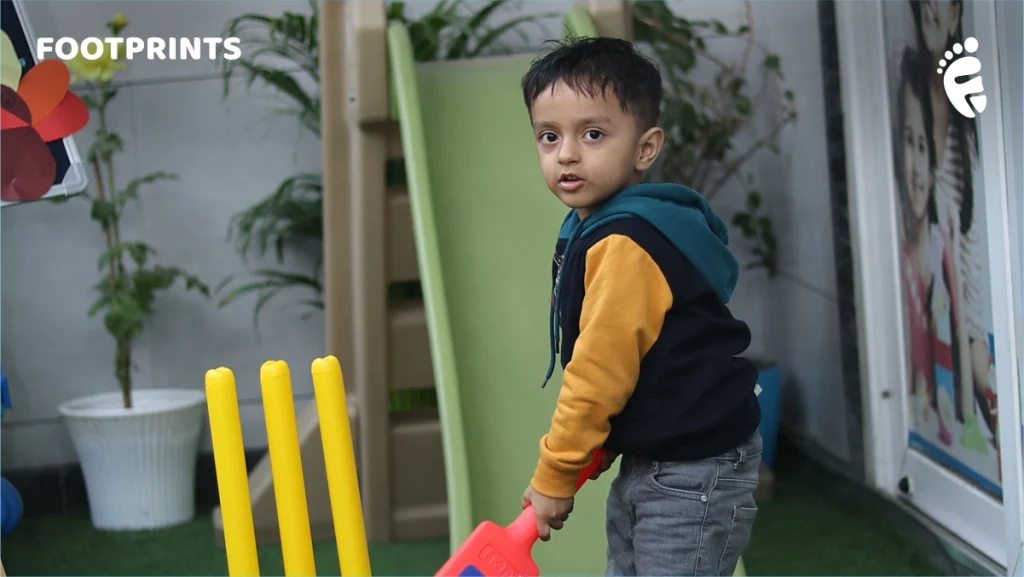
Preschool is more than just a stepping stone to formal schooling. It offers a nurturing environment where the child’s natural growth is enriched. Let us look at how it supports early childhood development:
Structured Learning
- Preschools offer age-appropriate activities that introduce early literacy, numeracy, and problem-solving skills in children.
- Having a structured routine helps children develop discipline and a sense of focus as well as the ability to follow instructions. A routine also provides the child with a sense of security.
- Guided exploration ensures that the child’s natural curiosity is channelled into meaningful learning experiences.
Social Interaction
- Daily play and group activities teach children how to share, cooperate, and resolve conflicts.
- Interaction with peers helps build empathy, communication skills, and confidence.
- Children also learn to navigate friendships and group dynamics. This not only prepares them for formal school but also for life at large.
The World Health Organization emphasises that nurturing care in the first five years – including responsive caregiving, adequate nutrition and early stimulation – directly shapes a child’s lifelong health, learning and behaviour.
What Parents Can Do at Home to Support Development
Parents can also help support child development at home by way of several activities. Some of these include:
Play-based learning
- It helps to encourage pretend play. Parents can also encourage them to take on building blocks, puzzles, and outdoor games.
- Overall, these help develop problem-solving, creativity, and social skills.
- Pro-tip: Allow time for some unstructured play as well. While you may worry about the child being bored, it actually enhances their creativity and imagination.
Reading
- Daily reading builds vocabulary as well as the child’s imagination.
- Storytime is also a wonderful time for developing a strong bond with the child.
- It also offers you coachable moments wherein you could spark their thinking and problem-solving abilities.
Frequently Asked Questions
1. Why are the first five years important for child development?
The first five years are a period of rapid brain growth, emotional bonding, and skill-building. Experiences during this time shape how children learn, interact, and thrive later in life.
2. What skills develop in early childhood?
In early childhood children build cognitive skills, language abilities, social-emotional skills, physical skills, and creativity.
3. How does preschool support development?
Preschool provides structured learning as well as social interaction. Trained educators help children strengthen early literacy, numeracy, and emotional regulation in a safe environment. It also teaches them precious life skills that help them navigate the ups and downs of life.
4. Can parents support development at home?
Yes. Parents can play a vital role through play-based learning, daily reading, and positive interaction. Everyday routines like storytelling and family playtime can also reinforce skills learned at preschool.
5. What activities help child development?
Activities such as pretend play, puzzles, outdoor games, art projects, singing, and reading aloud all nurture different areas of growth in the child. The key is to make learning fun so it does not seem like a chore.
To Sum Up
A preschool can play a vital role in the all-around development of the child. At Footprints Preschool, we have an unstinting focus on the child’s holistic development. We follow the scientifically developed HighScope curriculum that focuses on different content areas and allows for the child to learn while having fun.

Mirza Usman Habib is a senior early education content specialist with over 8 years dedicated to researching, writing, and explaining early childhood education for Indian parents. At Footprints Childcare, he has authored over 100 articles spanning child development milestones, preschool admission processes, teaching methodology comparisons (HighScope vs Montessori vs Playway), infant daycare selection, and the science of early brain development.
Usman’s approach is research-first: each article synthesises findings from leading authorities in early childhood education — including the HighScope Foundation, UNICEF, and the American Academy of Pediatrics — and translates them into practical, accessible guidance for working parents across India’s 30+ major cities.
His writing covers preschool selection guides, child safety checklists, developmental milestone trackers, and parent preparation guides for school admission. All child development content is reviewed by Amita Bhardwaj, Chief Delivery Officer and HighScope-certified trainer at Footprints Childcare.
 View Fees
  Call Us