

The monsoon season brings with it refreshing showers and the promise of cooler days. For young children, however, this is also the season of sniffles, fevers and the worry of mosquito-borne illness.
This guide walks you through everything parents need to know in this season – why children fall sick more often during monsoon, the common illnesses to watch for, monsoon health tips for children, immunity‑boosting basics, and clear signs of when a fever needs a doctor’s attention.
The good news, however, is that the majority of monsoon illnesses are mild and preventable. With everyday hygiene and consumption of safe food and water, as well as a few mindful daily routines, you can keep your child healthy and happy through the season.
Why Children Fall Sick More Often During Monsoon
It is important to recognise the three broad reasons children fall sick during the monsoon.
1. Humidity fuels germs.
First things first. The damp air of the monsoon creates the perfect ground for viruses and bacteria. Moisture tends to linger just about everywhere – on surfaces, in the air, and even on children’s hands, making it easier for germs to survive longer than usual. Infections, therefore, spread quickly through coughs and sneezes, as well as shared toys. Viral fever in children is the most common seasonal complaint. It often starts with mild sniffles and typically takes a few days of rest and recovery.
2. Waterlogging breeds mosquitoes.
During the monsoon season, water collects in places we often overlook. Think coolers, plant pots, buckets, and of course roadside puddles. These stagnant pools quickly become breeding grounds for mosquitoes. The result is a sharp rise in illnesses such as malaria and dengue. A simple weekly check and cleanup can go a long way in keeping children safe.
3. Indoor crowding increases contact.
With frequent rains, children spend more time indoors – be it in classrooms or at home. In these crowded settings, germs spread more easily because kids are in close contact and are sharing toys, books, and even snacks. Coughs, colds, stomach bugs, and conjunctivitis can pass quickly from one child to another. It is a reminder to parents to follow simple hygiene practices and maintain good ventilation indoors.
The Monsoon Illnesses Every Parent Should Know
While rainy days may feel refreshing, they also create three clear pathways for illness in children:
Mosquito‑borne illnesses
Diseases like dengue, malaria, and chikungunya rise sharply in rainy months because stagnant water becomes a breeding ground for mosquitoes. The WHO notes that vector-borne diseases such as dengue and malaria rise sharply in warm, wet conditions, which is why the monsoon months need extra vigilance.
These illnesses often bring symptoms such as high fever, body pain, and fatigue, making them important to watch out for. Preventing mosquito bites through simple measures like clearing water, using repellents, and ensuring children wear covered clothing can make a big difference in keeping children safe.
Water‑ and food‑borne illnesses
Contaminated water and unhygienic food are major culprits during the monsoon, leading to diseases such as typhoid, gastroenteritis, and hepatitis A. Flooding and poor drainage often mix sewage with drinking water, while food left uncovered attracts flies that carry infection.
These illnesses usually show up by way of stomach pain, vomiting or diarrhoea, and can leave children weak and dehydrated. The good news is that they are largely preventable. Safe drinking water that is boiled or filtered at home and freshly cooked meals are the strongest defences against the spread of these diseases.
Contact‑ and air‑borne illnesses
Crowded classrooms and damp indoor spaces make it easy for infections to spread from one child to another. Diseases such as viral fever, respiratory infections, and conjunctivitis are especially common during the monsoon. Good ventilation, proper hygiene, and keeping sick children at home are simple steps that help reduce the risk.
For a detailed look at common monsoon diseases in children, including symptoms, spread, and prevention tips, see our full guide.
Prevention: The Habits That Do Most of the Work
During monsoons, when infections spread more easily, simple routines in food, sleep, and play can go a long way in preventing diseases:
- No stagnant water – Remember to empty coolers, plant trays, buckets and more to stop mosquito breeding.
- Covered clothing at dawn and dusk – Dress children in long sleeves and pants, especially in the morning and evening hours when mosquitoes are most active.
- Boiled or filtered water – Safe drinking water prevents stomach infections like typhoid and gastroenteritis.
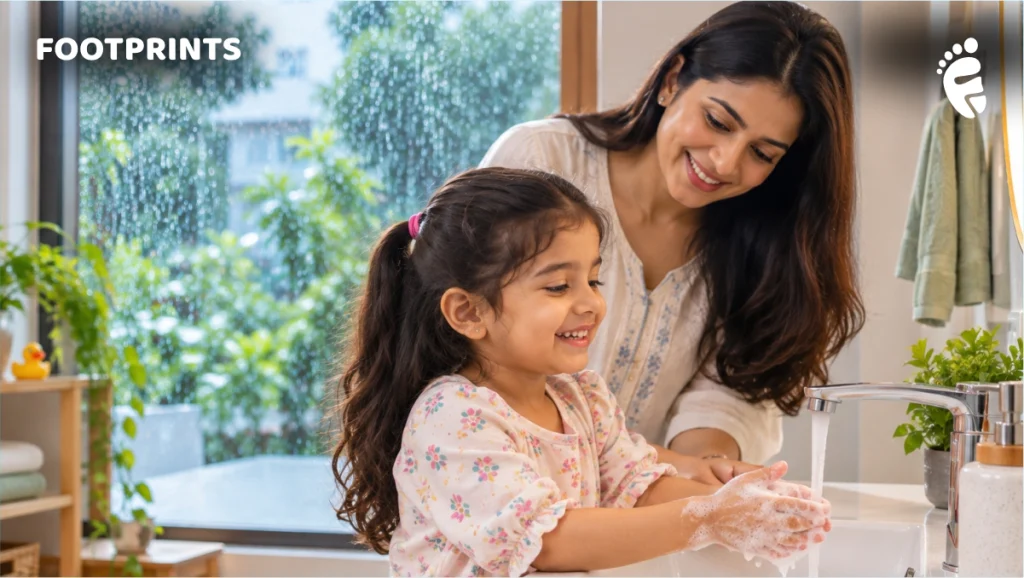
- Hand washing before meals – Simple soap‑and‑water hygiene cuts down on viral fever and stomach bugs.
- Vaccinations on schedule – Routine immunizations strengthen your child’s defence against seasonal diseases.
You can explore the full monsoon protection tips for toddlers for detailed guidance and also look at the dengue symptoms and prevention in children for step‑by‑step home safety.
How to Increase Immunity in Children (Honestly)
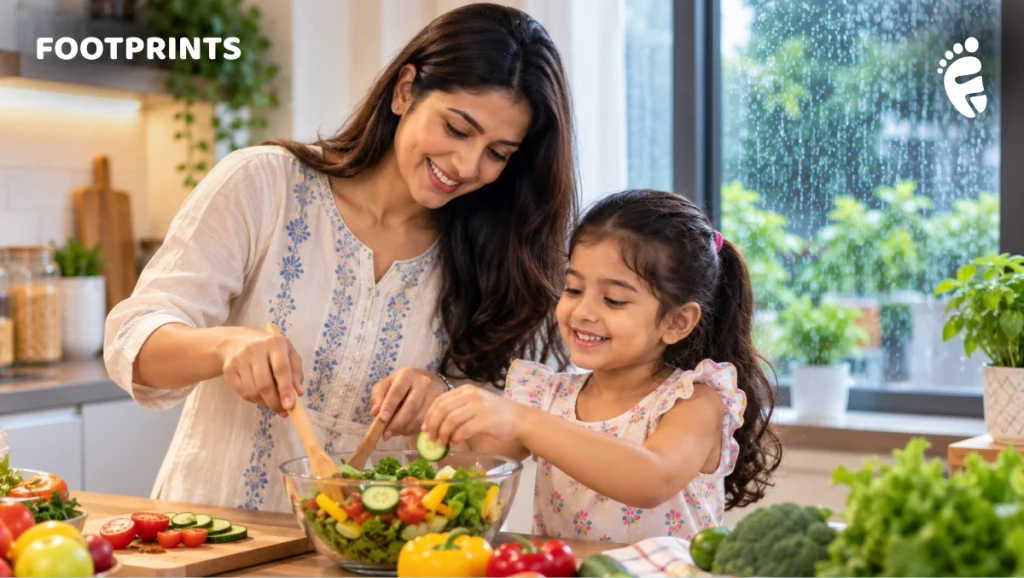
The fact is that no single food or product can magically build immunity. UNICEF’s parenting guidance emphasises that everyday basics such as nutritious food, clean water, hand washing, and timely vaccination protect children far more reliably than any single remedy.
- Balanced daily food – Fresh, home‑cooked meals with seasonal fruits, curd, and warm dishes like soups keep children nourished. Boiled or filtered water is essential in the monsoon.
- Adequate sleep – Rest helps the body repair and strengthens its natural defences.
- Physical activity – Play and movement keep children active and support their overall health.
- Hygiene – Hand washing before meals and after play reduces the spread of germs.
- Vaccinations – Staying on schedule ensures that children are protected against preventable diseases.
While several supplements may claim to be great immunity builders, make sure that you discuss them with your paediatrician.
Fever in Children: When to Worry and When to Wait
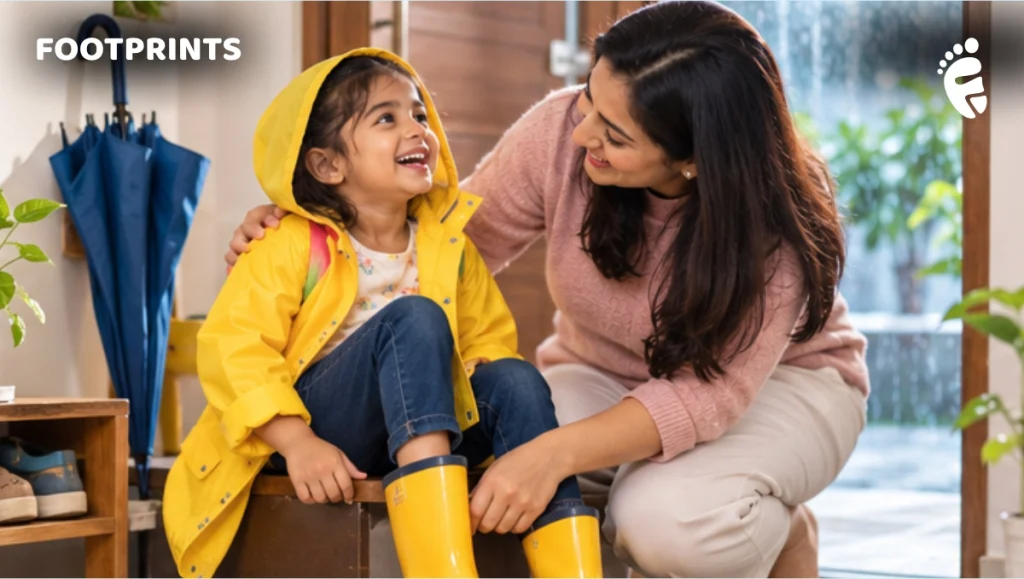
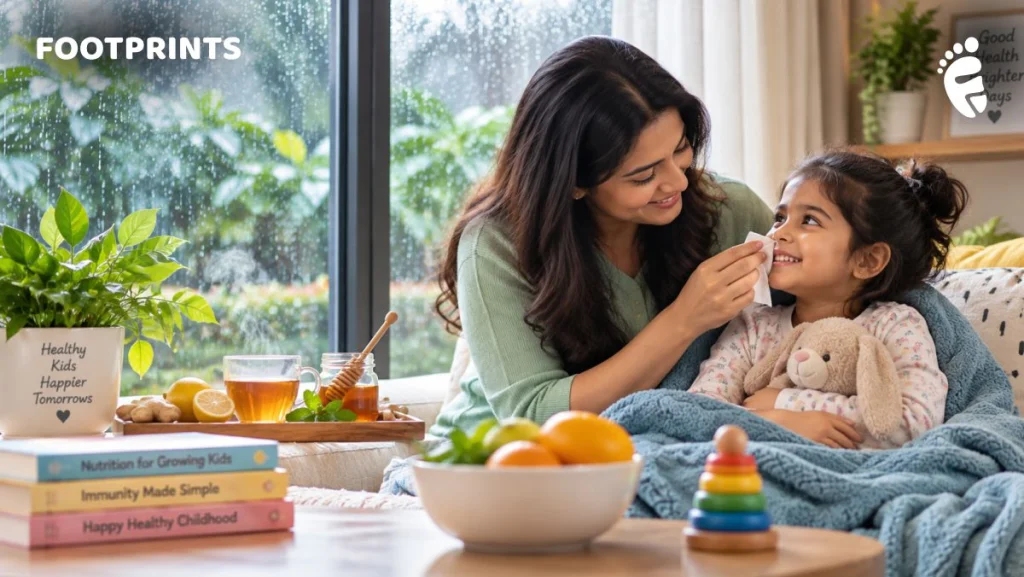
Most fevers in children during the monsoon are mild. If your child is suffering from fever, make sure they get plenty of rest and have frequent fluids. Remember also to dress your child in light clothing and monitor their comfort closely.
Seek medical attention right away if you notice:
- Fever above 102°F or lasting beyond 2 days
- Any fever in a baby under 6 months
- Refusal to drink fluids
- Unusual drowsiness or difficulty waking up
- Rash appearing along with fever
- Trouble breathing
HealthyChildren, the parenting site of the American Academy of Pediatrics, offers clear guidance on caring for a child with fever and the signs that mean it is time to call the doctor.
When in doubt, do not hesitate to call your paediatrician. Most fevers are manageable, and timely guidance ensures your child recovers safely.
Fever Red Flags at a Glance
| Usually Manageable at Home | Call the Paediatrician | Seek Care Immediately |
| Mild fever, child still playful | Fever above 102°F | Difficulty breathing |
| Drinking fluids normally | Fever lasting beyond 2 days | Refusing all fluids |
| Sleeping and waking as usual | Any fever in a baby under 6 months | Unusual drowsiness or confusion |
| Mild cold or cough alongside | Rash appearing with fever | Persistent vomiting |
Keeping Children Active and Happy on Indoor Days
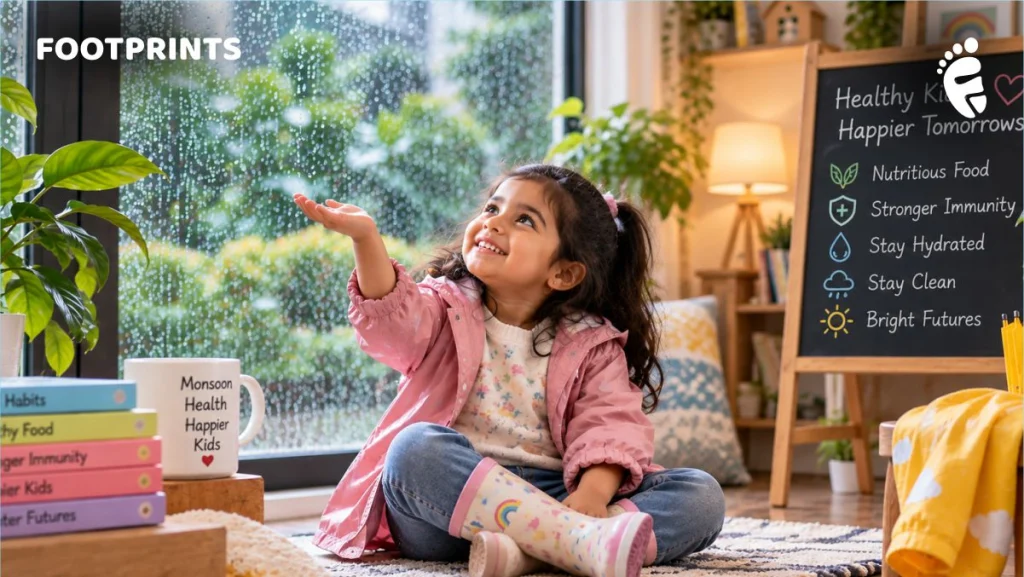
Rainy weeks often mean more time indoors for children and a chance that boredom levels could rise. On such days, simple games, dance sessions, and other creative activities can keep the child’s energy levels up and the spirits high.
You can explore our indoor activities for toddlers that turn rainy days into fun, memorable ones.
Frequently Asked Questions
1. Which monsoon diseases are most common in young children?
Viral fevers are most common in children during monsoon, followed by mosquito‑borne illnesses like dengue and malaria, as well as stomach infections from unsafe food or water. These tend to spread quickly in damp, crowded environments.
2. How do I build my child’s immunity during monsoon?
Immunity grows through everyday practices of balanced home‑cooked meals, boiled water, adequate sleep, hygiene, and vaccinations on schedule. No single food or product builds immunity alone, and consistency matters the most.
3. Is it safe to send my child to preschool during monsoon season?
Yes, if your child is healthy. Remember to follow good hygiene practices and ensure they have nutritious food and safe drinking water. Paediatricians advise keeping children home when they have fever, conjunctivitis, or diarrhoea to prevent spread.
4. How do I know if my child’s fever is serious?
See a doctor if the child’s fever rises above 102°F, lasts beyond 2 days, or comes with refusal of fluids, unusual drowsiness, rash, or breathing difficulty. When in doubt, see your paediatrician immediately.
To Sum Up
Healthy habits are the strongest shield against disease. Simple routines like ensuring safe drinking water, nutritious food, cleaning hands, and timely vaccinations do most of the prevention work. It will also keep panic at bay to remember that most monsoon illnesses are mild and that children usually recover fully with rest and care. Whenever you feel unsure, reaching out to the doctor is always the safest step.
Keep watching this space for more such informative content. At Footprints Play School we are committed to the child’s holistic growth.

Purvesh Sharma is a TED speaker, IIT-Delhi alumnus, certified life coach, and Co-Founder of Footprints Childcare — India’s safest preschool and daycare chain operating multiple centres across 30+ cities. He co-founded Footprints after recognising a fundamental gap: working parents in India needed a childcare option that combined genuine safety, research-backed curriculum, and real-time parent connectivity.
A certified life coach with deep exposure to behavioural science and developmental psychology, Purvesh leads parenting workshops and engagement programmes across Footprints centres — directly engaging with tens of thousands of Indian parents on the challenges of raising young children in urban India. As a parent himself, he brings lived experience to every piece he writes on child behaviour, tantrums, discipline, habit formation, and school readiness.
His writing is grounded in both the science of early childhood development and the real, daily decisions Indian parents face.
 View Fees
  Call Us