

It is 5 pm, your preschooler is restless, and you have work to finish. The easiest option is to hand over a screen. Not quite.
Keeping a young child busy at home does not necessarily need a screen or expensive toys. Instead, the best toddler activities at home can be set up using things that you already have.
In this post, you will find a breakdown of learning activities for children by age (1, 2, 3, and 4–5 years), as well as a quick‑reference table organized by how much time you have available.
Why Play Is the Best Learning Tool Your Child Has
According to the Harvard Center on the Developing Child, 90% of a child’s brain architecture is built in the first five years of life, making this period the most critical window for learning and development.
For children aged 1 to 5, play is how they explore the world and build new skills. Every time they stack cushions or chase a balloon, they are building motor skills, problem-solving skills and even emotional regulation.
The good news is that simple home activities often do more for development at this stage than expensive toys or structured classes. A simple cardboard box or even steel cups, bowls and spoons can spark more growth than a gadget could. Rotating these simple activities keeps the child’s curiosity alive. The important bit at this stage is not to aim for perfection but for variety.
You could look up some handy brain gym activities for children here. These simple movement‑based exercises are a fun way to support both physical and cognitive development at home.
Activities for 1 Year Olds – Learning Through the Senses
UNICEF identifies early childhood as the most critical phase of human development, one in which the foundations for cognitive, social, emotional, and physical wellbeing are laid for life.
At age one, children make sense of their world by exploring it with their senses. Play that engages the senses isn’t therefore just fun but it is also the foundation of how toddlers grow and connect with their surroundings. Here are some handy activities:
1. Texture Basket
Fill a basket with safe household items of different textures. Think a sponge, a wooden spoon and a soft cloth. Let your child explore the basket freely, noticing how each object feels.
2. Water Play
Place a shallow tub or bowl on a towel. Add cups and floating toys. Now let the child pour, splash and more. This not only gives them a joyful sensory workout, it also builds hand‑eye coordination.
3. Sound Jars
Use small containers filled with rice, pasta, or beads. Seal them tightly and let your child shake them to hear different sounds. Through this activity, children build rhythm awareness and fine motor skills. It also sparks curiosity about cause‑and‑effect, showing them that their actions create different outcomes.
4. Edible Finger Paints
Mix a little yoghurt with food coloring to create safe, edible paints. Spread it on a tray or paper and let your toddler dab and smear. This activity builds fine motor control while encouraging self‑expression.
Notice how none of these activities require fancy supplies. Instead everyday items become tools for exploration for these indoor activities for toddlers.
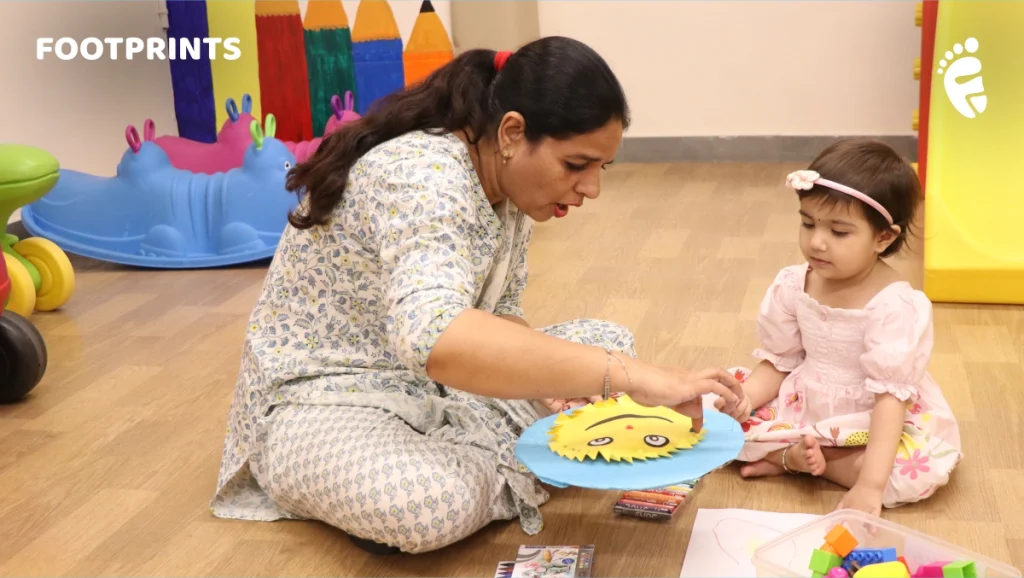
5. Language Building
Toddlers learn language best through everyday interactions. At this stage, every sound and gesture is a step toward communication. Here are some games you could try:
6. Name‑and‑Point Games
During daily activities, remember to point to objects. “Here is your cup,” “That is the spoon.” Linking words to familiar items helps toddlers connect sounds with meaning. Similarly narrating what you are doing can help build vocabulary. “ I am washing the apple,” “We are opening the door”– simple sentences such as these turn daily routines into language lessons.
7. Respond to Every Babble
Treat each babble as if it were a sentence. When your child says “ba‑ba” while pointing to the ball, reply with “Yes, that is your ball!” This builds the rhythm of conversation besides showing them that their sounds matter.
8. Sing Simple Songs
Short rhymes or songs with repetition (“Twinkle, Twinkle,” “Row, Row, Row Your Boat”) help toddlers pick up patterns in language.
9. Story Time with Pictures
Choose board books with large, clear images. Point to each picture and name it slowly. Even a few minutes a day builds vocabulary and also attention span.
10. Movement play
Toddlers at this age are eager to move, climb, and test what their bodies can do. Movement play channels their energy into safe exploration, helping them build balance, coordination, and also their confidence.
11. Cushion Climbing
Scatter sofa cushions on the floor and let your child crawl and climb over them. It is a simple way to burn energy while practising balance and building motor skills.
12. Crawl Tunnels
Drape a blanket over two chairs to create a tunnel. Encourage your toddler to crawl through and pop out the other side. This activity sparks curiosity and strengthens gross motor skills.
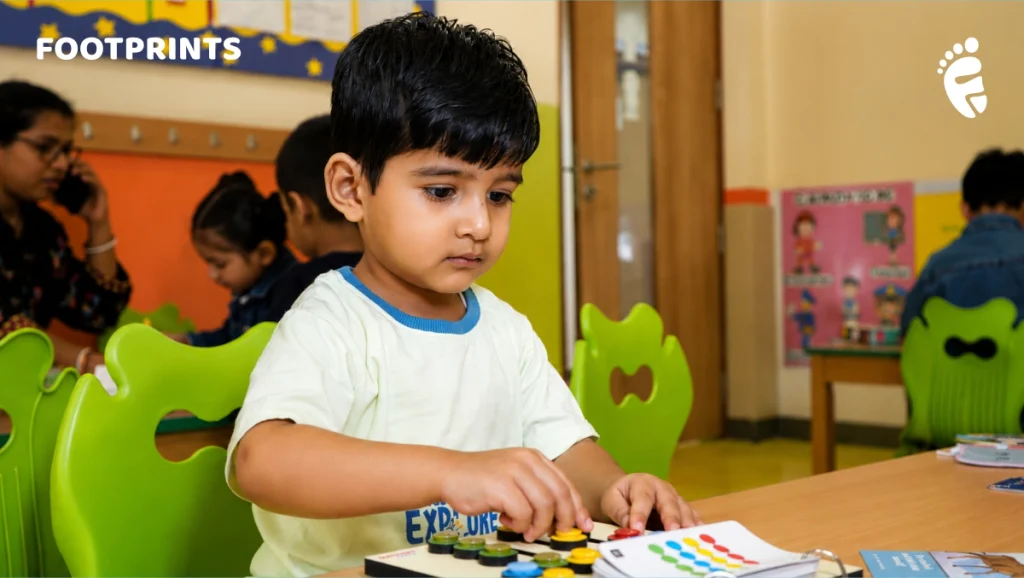
Activities for 2 Year Olds — Hands-On and High Energy
Two‑year‑olds are curious, energetic, and eager to test how things work. The best activities for 2-year-olds are therefore simple setups that let them experiment while also burning plenty of energy.
Cause‑and‑Effect Play
Toddlers love to make discoveries. This is a good time to introduce them to cause-and-effect play. Think stacking blocks and gleefully knocking them down or matching shapes to the right holes that introduces early categorization.
Early Pretend Play
At two, imitation is the heart of play. Let them feed a doll, talk on a toy phone, or copy household routines like sweeping or cooking. These small role‑plays give them a sense of independence and belonging while helping them practice language and social skills
Creative Mess Play
Supervised mess is developmental gold at this age. Finger painting, play dough, or even water and mud play allows toddlers to explore textures while strengthening fine motor skills and sparking their imagination.
You could deep dive into a whole range of Montessori activities for 2-year-olds here.
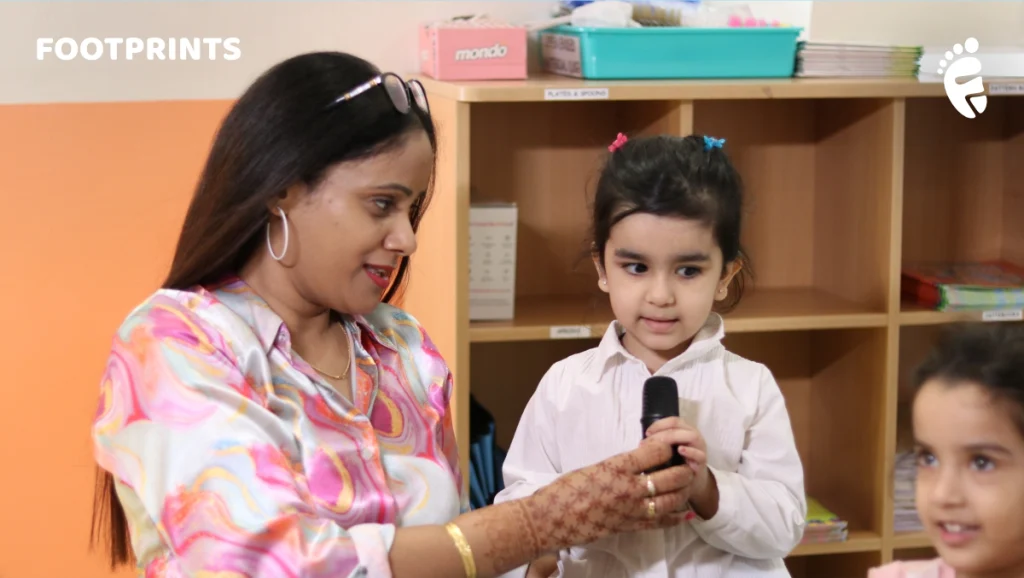
Activities for 3 Year Olds — Curiosity in Full Swing
By age three, children are bursting with curiosity. Play at this stage is about experimenting, expressing their creativity, and also beginning to follow a few simple rules.
Building and Construction
Three‑year‑olds are natural engineers. Give them blocks, cardboard boxes, or anything stackable, and watch them build towers, bridges, or forts. Through this kind of play, children practice problem‑solving, develop spatial awareness and fine motor skills. All of this while learning persistence and creativity.
Art Exploration
Art becomes more intentional at this age. Offer crayons, paints, or even vegetables for stamping, and add simple story prompts like “Draw a house for your toy.” Through art play, children build creativity, hand‑eye coordination and early self‑expression, while also learning focus and patience as they bring their ideas to life.
Simple Games with Rules
Rule‑following is a new and exciting skill at three. Matching cards, sorting by color, or taking turns in a simple board game teach patience, focus, and cooperation.
You can check out more art and craft ideas for preschoolers here.
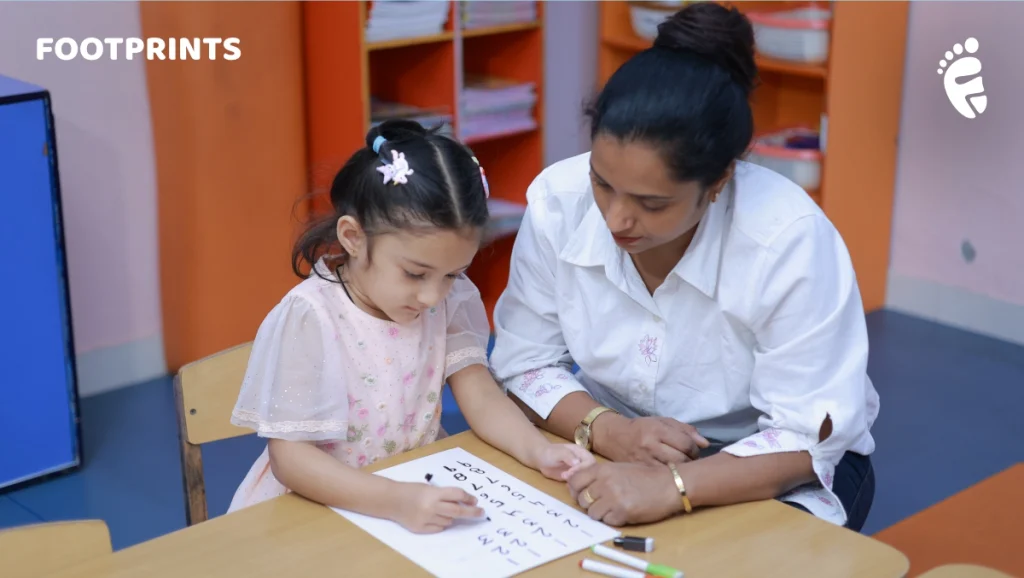
Activities for 4 and 5 Year Olds — Ready for Bigger Challenges
By ages four and five, children are ready for activities that stretch their imagination and social skills. Play now becomes more structured, but it should still feel joyful and creative.
Pre‑Literacy Play
Letter hunts around the house, rhyming games, and storytelling where your child decides what happens next all help build early literacy.
Pre‑Numeracy Play
Counting steps on the staircase, sorting laundry by color and size, or measuring ingredients while cooking together turn everyday routines into math practice.
Social Play
Board games with simple rules, collaborative building projects, and pretend play with roles and storylines encourage teamwork and communication.
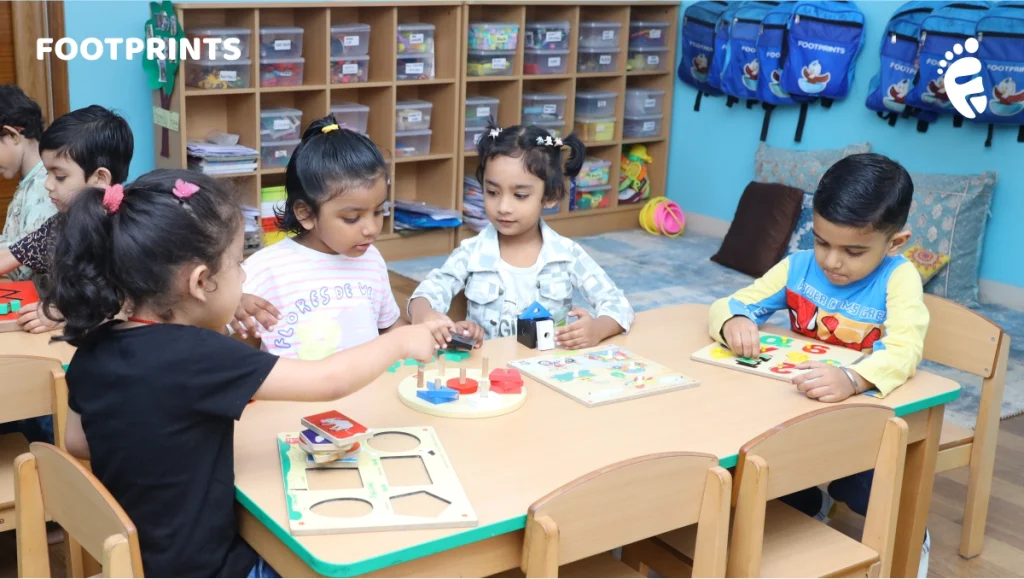
Quick Activity Ideas by Age and Time Available
Short on time? Pick activity ideas from this table based on your child’s age and how many minutes you have.
| Age | 5-Minute Activity | 15-Minute Activity | 30-Minute Activity |
| 1 year | Peekaboo with a scarf | Texture basket exploration | Water splash play in a tub |
| 2 years | Stacking cups or blocks | Play dough squishing and rolling | Cushion obstacle course |
| 3 years | Colour hunt around the house | Vegetable stamp painting | Pretend kitchen or shop play |
| 4-5 years | I-spy with letters | Story drawing (draw what happens next) | Build a fort and tell a story inside it |
For days when outdoor play is not an option, see our full list of indoor activities for rainy days.
How Play at Home Prepares Your Child for Preschool
If your child plays actively at home, he is already preparing for preschool in the best way possible. In fact, such children adjust to preschool more smoothly as they are already used to exploring and engaging with new ideas. Research shared by NAEYC shows that play-based learning builds the language, social, and thinking skills children need for school, often more effectively than instruction at this age.
Quality preschool programs often follow approaches like HighScope, where children plan an activity, do it, and then talk about it afterwards. Parents can mirror this pattern at home by asking simple questions such as, “What do you want to build?” and later, “Tell me about what you made.” The goal as parents is to give children chances to explore and later reflect and express themselves.
Frequently Asked Questions
1. How much playtime does a toddler need every day?
Toddlers thrive on active play spread throughout the day. Aim for at least an hour of physical play plus shorter bursts of hands‑on or pretend play. It does not need to be continuous as small chunks add up.
2. What are the best activities for a 2-year-old at home?
Simple cause‑and‑effect games like stacking and knocking down blocks, pretend play with dolls or toy phones, and supervised messy fun with play dough or water are perfect for this age.
3. How do I keep my child busy without a screen?
Rotate a few quick activities. Think of a texture basket or a colour hunt. Variety keeps boredom away, and even 10 minutes of focused play can reset your child’s energy.
4. Are structured activities better than free play for preschoolers?
Both matter. Structured games teach rules and cooperation, while free play builds creativity and independence. A healthy mix gives preschoolers the best foundation.
5. What household items make the best play materials?
Everyday objects like cardboard boxes, spoons, cushions, scarves, and laundry baskets spark the child’s imagination and can be safely repurposed into endless play setups.
To Sum Up
The best play activities are simple and don’t require elaborate setups or expensive toys. In fact, ten minutes of engaged play can easily beat an hour of expensive toys. When children explore, create, and imagine at home, they are not just entertained, they are also building a strong foundation for learning.
At Footprints Preschool we follow a research-backed, play-based early childhood framework centered on active participatory learning.

Purvesh Sharma is a TED speaker, IIT-Delhi alumnus, certified life coach, and Co-Founder of Footprints Childcare — India’s safest preschool and daycare chain operating multiple centres across 30+ cities. He co-founded Footprints after recognising a fundamental gap: working parents in India needed a childcare option that combined genuine safety, research-backed curriculum, and real-time parent connectivity.
A certified life coach with deep exposure to behavioural science and developmental psychology, Purvesh leads parenting workshops and engagement programmes across Footprints centres — directly engaging with tens of thousands of Indian parents on the challenges of raising young children in urban India. As a parent himself, he brings lived experience to every piece he writes on child behaviour, tantrums, discipline, habit formation, and school readiness.
His writing is grounded in both the science of early childhood development and the real, daily decisions Indian parents face.
 View Fees
  Call Us