

Many parents shy away from Montessori activities because they imagine it requires expensive wooden toys or specialized training. The truth, however, is that Montessori activities involve letting your child do real things, at their own pace, with their own hands. Think pouring water, sorting socks, or even peeling a banana. These are simple, practical tasks that build independence and joy.
This guide offers you 15 Montessori activities for 2-year-olds. These fun activities for preschoolers at home make use of items you already own.
Why Montessori Clicks So Well at Age 2
Age two is a sensitive period where children are naturally drawn to order, movement, and language. In fact, Zero to Three notes that toddlers learn best through everyday, hands-on experiences, which is exactly the principle Montessori activities are built on.
The overall guiding principle of Montessori activities is simple – “Help me do it myself.” In practice, this means giving your child the chance to carry out simple activities. What is important is not doing the activity for them, but setting up the environment so that they can succeed independently.
At home, too montessori looks just like it does in a classroom, only simpler. Instead of shelves of curated materials, you might offer the child a basket of toys or even everyday household items. This way, the principles of independence and hands-on learning are adapted to everyday family life.
5 Montessori Sensory Activities for 2-Year-Olds
According to the Harvard Center on the Developing Child, responsive, hands-on experiences in the early years literally shape the architecture of a child’s growing brain.
Go ahead and set up these sensory activities for the child:
1. Rice & Dal Sensory Bin
Fill a steel bowl or tray with uncooked rice or rajma. Offer a cup or small steel katori for scooping and pouring the rice into another bowl. This simple activity builds fine motor control and concentration.
2. Texture Tray
Collect everyday fabrics. These could be a cotton dupatta, a jute bag or a wool scarf. Place these fabrics on a low tray. Invite your child to touch and describe how each texture feels. This activity not only builds sensory awareness but also aids in language development.
3. Sound Shakers
Use empty plastic bottles or steel dabbas with lids. Fill one with chana, another with rice, a third with sugar and so on. Get the child to shake them and listen to the different sounds. The activity builds auditory discrimination as well as curiosity.
4. Nature Basket
Gather leaves, flowers, pebbles, shells and other such material from the park. Place them in a basket for your child to explore and sort. This activity builds the child’s connection with nature and also improves vocabulary.
5. Water Pouring Station
Set up a jug of water and a steel cup on a tray. Show your child how to pour from the jug to the cup. Remember to keep a small towel handy for spills. This sensory activity for toddlers builds hand-eye coordination as well as independence.
5 Practical Life Activities (Real Work, Toddler-Sized)
1. Transferring with Tongs
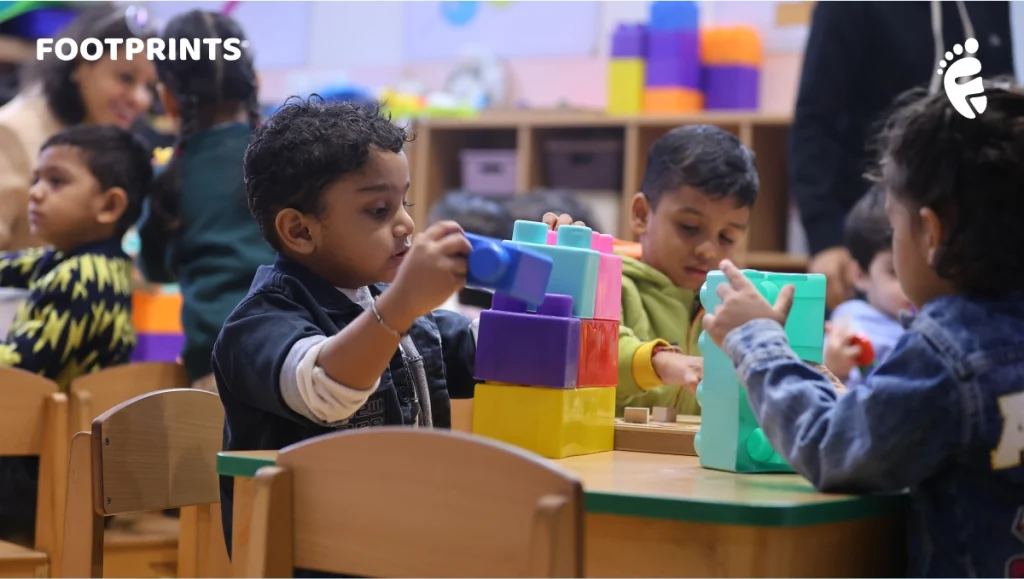
Place a few large objects like cotton balls, pieces of sponge or even chunks of roti in a steel bowl. Give your child a pair of child-safe tongs or a serving spoon and another empty bowl. Show them how to pick up each item and transfer it. This activity builds hand coordination and motor strength.
2. Sweeping with a Small Broom
Give your child a child-sized broom. Sprinkle a few grains or paper bits on the floor and show them how to sweep into a dustpan. This activity not only builds motor coordination but also a sense of responsibility. Protip- Supervise closely to ensure your child doesn’t put grains or small debris in their mouth.
3. Sorting by Colour or Size
Collect everyday items like bangles or toy blocks. Encourage the child to sort them into different bowls by colour or size. If you are using any small items make sure they don’t have any choking hazard. This activity builds focus as well as early math concepts.
4. Folding Cloth
Offer small handkerchiefs or napkins. Show your child how to fold them into halves or quarters. This Montessori activity for toddlers helps build concentration and independence,
5. Watering Plants
Give your child a small steel lota or watering can. Let them pour water into indoor plants. Keep a cloth nearby for drips. The activity not only builds motor control it also instills a sense of responsibility and care for living things.
5 Language and Thinking Activities
1. Object-to-Picture Matching
Place everyday items- think a spoon, cup, ball alongside printed or drawn pictures of the same. Now invite your child to match the object to the picture. The activity builds symbolic thinking and vocabulary.
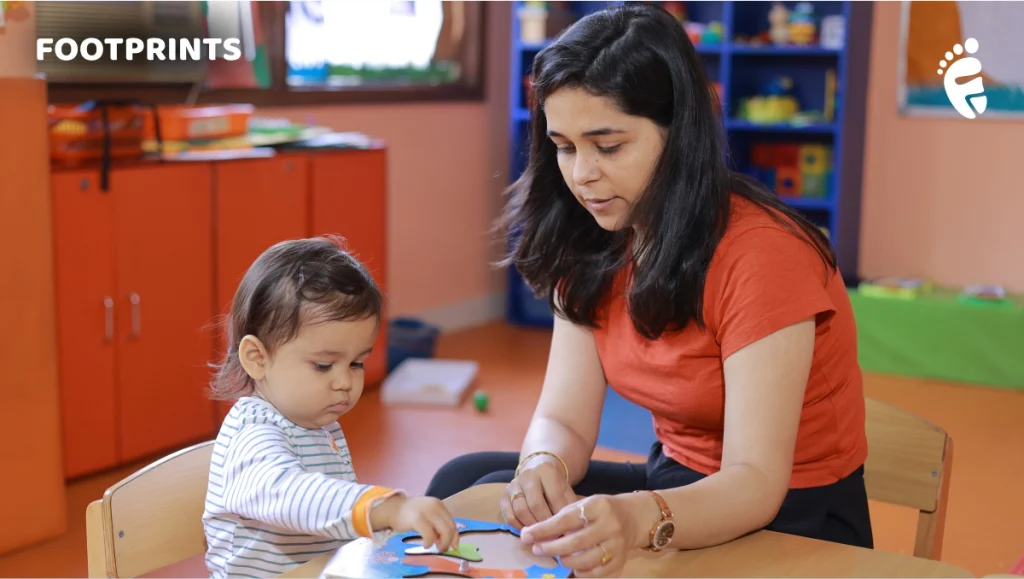
2. Two-Piece Puzzles
Cut a sturdy cardboard sheet into simple two-piece shapes such as circle, square or a triangle. Now show your child how to fit them back together. This will build spatial awareness and problem-solving skills in the child.
3. Name-and-Point During Routines
During everyday activities such as mealtime or dressing, name the item being used – “This is your plate,” “Here are your socks.” Encourage the child to do the same. The activity builds comprehension and language skills.
4. Story Basket
Fill a basket with objects from a familiar story. Now retell the story while the child pulls out the relevant items as the story progresses. The activity builds the child’s imagination and narrative skills.
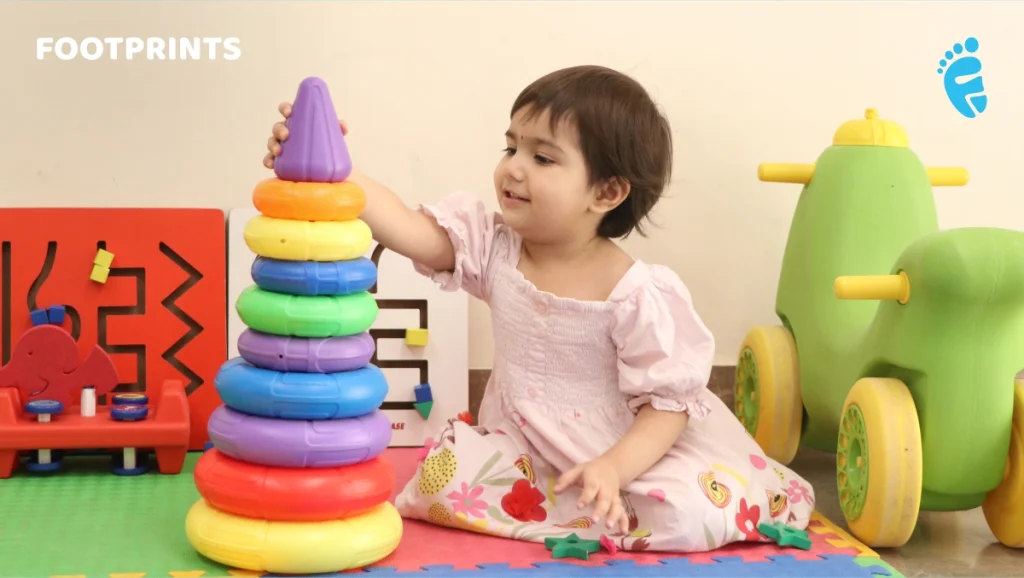
5. Stacking & Nesting
Offer the child steel katoris or plastic containers of different sizes. Encourage the child to stack them up. By this seemingly simple activity sparks their logical thinking
Setting Up a Montessori Corner at Home (Without Spending Much)
To set up a Montessori corner at home, you do not need a fancy playroom or any expensive furniture. A simple floor mat and one low shelf with child-friendly material is enough. The key is to create an environment where toddlers feel capable and trusted.
NAEYC‘s guidance on developmentally appropriate practice supports giving toddlers real, self-directed tasks at their own pace, which is the heart of the Montessori approach.
Three things that you need to take care of in setting up a corner include:
- Placing shelves with the material at the child’s height where your toddler can reach them independently.
- Using only 4–6 activities at a time and then rotating them weekly to keep interest fresh.
- Ensuring there are trays or baskets available so “putting away” becomes part of the activity itself.
The goal here isn’t perfection. All you need to do is to ensure that the materials are within reach, they are limited in number, and easy to return, so that your child learns independence and order naturally.
You could also build a full home routine that includes brain gym activities for children.
Frequently Asked Questions
1. What age should a child start Montessori activities?
Montessori can begin as early as infancy. Age 2, however, is a wonderful time as children are at a stage where their brains are wired for mastering movement and organizing their world. At this stage, simple everyday tasks become powerful learning opportunities.
2. Do I need to buy Montessori toys for my 2-year-old?
No, you don’t need expensive materials. Real-life objects and experiences can offer learning. Think steel bowls, spoons, dal, cloth, and cups at home. These can be just as effective as store-bought toys.
3. How long should a Montessori activity session last for a toddler?
It is best to keep a session short and flexible. Usually 5 to 15 minutes work well. The key is to follow your child’s interest.
4. What if my child just throws the materials?
Throwing is normal for children. You can redirect it by offering a safe “throwing basket” with soft balls or beanbags.
5. Is Montessori better than regular play for a 2-year-old?
Montessori activities help toddlers build independence, focus, and real-life skills, while giving them the joy of play.
To Sum Up
It is important to remember that children thrive when they get to do everyday tasks themselves. All you need to do is to let the child follow their own pace and rhythm. With no fancy gear required to set up Montessori activities, you are good to go with everyday objects.
At Footprints Preschool, we integrate Montessori-inspired, play-based methods that build independence and motor skills in children.

Shubham Tiwari is a childcare specialist and education content expert with over 5 years dedicated to India’s early childhood education landscape. His work sits at the intersection of child development research and practical parenting guidance — helping Indian families understand preschool selection, evaluate curriculum quality, recognise developmental milestones, and navigate child safety standards.
Over the course of his career in early childhood education, Shubham has developed deep expertise in the questions Indian parents ask most: when to start preschool, what to look for in a curriculum, how to identify speech delay early, and what genuine early learning looks like versus supervised play. His writing covers preschool admission processes, child safety policies, handwriting and language development, and how early experiences shape long-term brain development.
Shubham’s approach is research-first and parent-first — making early childhood education knowledge accessible to every family, regardless of background.
 View Fees
  Call Us