

In making the choice of a preschool, parents often tend to focus on looking at the facilities that the school has on offer. A very important factor, however, is child safety at preschool. In fact, schools are not just places of learning, they also carry a legal responsibility to protect children from harm.
India has clear legal protections to ensure children are safe in schools, and every parent should be aware of them. This article simplifies key child safety laws so parents can understand them and also use them as a practical guide when evaluating preschools.
Why Parents Should Know Child Safety Laws
Parents often assume that safety in preschools is just about the right infrastructure. Child safety, however, is a legal right that is backed by strong protections in India. It is important that parents know about it, since:
- Awareness empowers parents. It is when you are aware that you can demand accountability from schools.
- Prevention is better than cure. Familiarity with laws ensures parents can spot any red flags.
- Confidence in decision-making. Once you make sure that the school is compliant with safety standards, it is easy to make a decision.
What Is the POCSO Act?
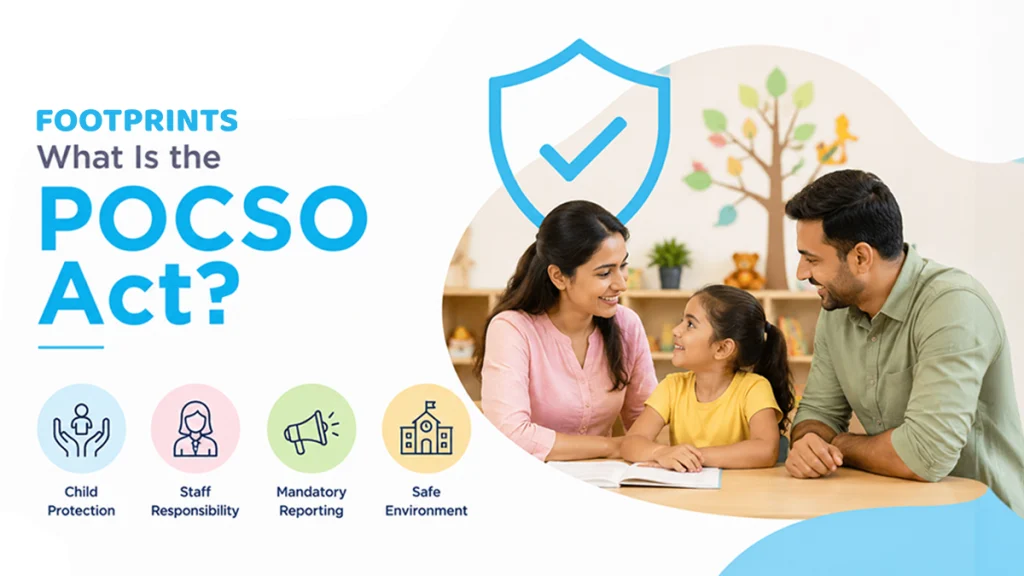
The POCSO Act stands for the Protection of Children from Sexual Offences Act. It was created to safeguard children from abuse and exploitation and to ensure they grow up in a safe environment.
Why It Matters for Parents
- The Act is designed to protect all children under 18 years of age.
- Institutions must follow the law and create safe spaces for children.
- Schools must have clear policies, trained staff, and a culture where children feel secure and protected.
- Teachers, staff, and even parents need to report any suspicion of abuse.
The POCSO Act makes child safety at preschool a legal responsibility, not just a promise.
How the POCSO Act Relates to Preschools
- The POCSO Act directly affects how preschools operate every single day. Overall, it sets expectations to lay down policies, train staff and overall build a safe environment.
- Preschool staff must be aware of the Act and need to be trained to recognize signs of distress or unsafe behavior. It is this awareness that ensures that teachers and caregivers act quickly if something feels wrong.
- Preschools are expected to have clear child protection policies. These need to cover supervision, staff conduct as well as safe caregiving practices.
- Preschools now include “safe touch” and “unsafe touch” awareness programs. These are simple, age-appropriate lessons that empower children to understand boundaries and also to speak up if they feel uncomfortable.
- If staff suspect or witness any form of abuse, they are legally required to report it.
The POCSO Act makes child safety at preschool a shared responsibility.
Understanding the Right to Education (RTE) Perspective
While most of us know of the Right to Education Act (RTE), we need to know that it also emphasizes that schools must provide a child-friendly environment. This means that learning spaces need to be safe and supportive.
Child-Friendly Environment
The RTE Act expects schools to create spaces where children feel welcomed, respected, and secure. Safety is seen as an integral part of the learning experience. The Act recognizes that safety is a core part of education. It ensures that children can focus on growth and learning without any fear.
School Responsibility Toward Children
Schools carry a responsibility to protect children’s rights. This includes:
- Ensuring safe infrastructure and practices
- Training staff to be sensitive and supportive
- Ensuring policies are child-friendly
The RTE Act, therefore, makes child safety at preschool a fundamental part of education and overall child well-being.
Important Child Safety Laws Parents Should Know
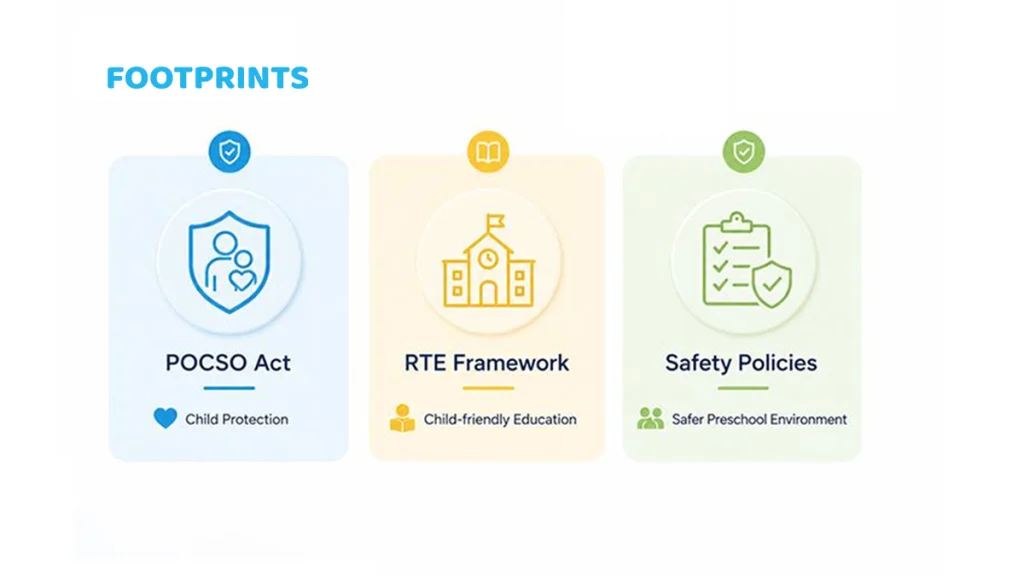
| Law / Framework | Purpose | Why It Matters for Parents |
| POCSO Act | Child protection | Encourages the safety and dignity of children |
| RTE Framework | Child-friendly education | Encourages safety and dignity of children |
| School Safety Policies | Institutional safety rules | Improves accountability by requiring schools to adopt clear safety measures, staff training, and monitoring systems. |
Safety Policies Parents Should Ask About in Preschools
In making the choice of a preschool, parents should actively look for these non‑negotiable safety policies:
Staff Verification
You need to confirm that background verification, reference checks, and identity validation have been undertaken for every staff member.
CCTV Policies
Ask about camera coverage, live access for parents, and clarity on who monitors footage. Do check to see that the CCTV is AI enabled so that proactive rather than reactive measures can be taken.
Emergency Response System
Ensure that the preschool has fire drills, medical response training, and clear evacuation protocols.
Child Protection Training
Check to see that teachers and caregivers are trained in safe caregiving practices, child psychology, and awareness of the POCSO Act.
Visitor Management
Check to see that the school maintains visitor logs, controlled entry, and secure drop‑off as well as pick‑up procedures.
You could look for a full preschool safety audit checklist for parents here
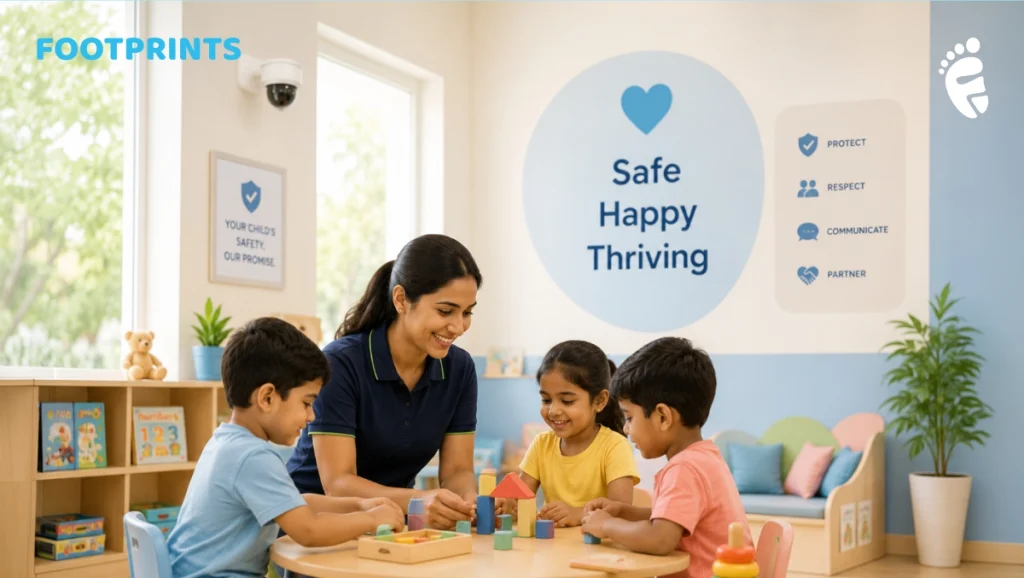
Common Misconceptions About Child Safety Laws
Here are some common misconceptions that parents often have:
1. Safety laws only apply to big institutions
Reality: Laws like the POCSO Act and RTE apply to all institutions, including preschools and daycare centers.
2. CCTV cameras are enough to meet legal safety requirements.
Reality: While CCTV cameras help, laws emphasize also on trained staff, reporting responsibilities, and child protection policies besides surveillance alone.
3. Safety laws are too complicated for parents to understand.
Reality: The laws are designed to be practical protections. While parents may not need to know the legal jargon they do need to understand the provisions.
4: Right to Education is only about academics.
Reality: The RTE Act requires schools to provide a child‑friendly, safe environment as part of the right to education.
How Good Preschools Build Safer Environments Beyond Legal Compliance
Good preschools ensure that they create a culture of safety and trust. This is done through:
Training
Teachers and caregivers receive regular training in aspects such as safe caregiving practices, child psychology, emergency response and more.
Transparency
Reliable preschools are open about their policies. Whether it is staff verification, CCTV coverage, or visitor management. It is this transparency, which, in turn, builds parent trust.
Parent Communication
Good preschools also lay a strong emphasis on parent communication. From sharing emergency protocols to updating families about safety drills, they ensure that parents feel included and reassured.
Monitoring Systems
Strong preschools use systematic monitoring that prevents risks before they escalate. In fact, you should also be aware of the need for AI CCTV vs basic CCTVs in preschools.
Overall, true safety comes from a proactive culture, not just compliance with laws.
Frequently Asked Questions
1. What is the POCSO Act in schools?
The Protection of Children from Sexual Offences (POCSO) Act is a law that safeguards children under 18 from abuse. It applies equally to schools and preschools and among other things requires staff to be trained and responsible for reporting concerns.
2. Do preschools follow child safety laws in India?
Yes. Preschools are expected to comply with child safety laws like POCSO and the Right to Education (RTE) Act. They must create safe, child‑friendly environments and have clear protection policies.
3. What safety policies should schools have?
Parents should look at aspects such as staff verification, CCTV coverage, emergency response systems, child protection training, and visitor management policies.
4. How does the RTE Act support child safety?
The RTE Act emphasizes that education must happen in a safe, child‑friendly environment. Safety is seen as part of learning, ensuring dignity and protection alongside academics.
5. Can parents ask about preschool safety policies?
Absolutely. Parents have every right to ask schools about their safety measures, staff checks, and compliance with child protection laws.
To Sum Up
It is important that parents are aware of child protection laws in India. It is equally important that in making the choice of the right preschool for your child, you evaluate it based on the kind of safety protocols it follows. At Footprints Preschool, we are fully committed to ensuring child safety. Whether it is maintaining safe infrastructure or training the staff adequately, for us, safety is a way of life not just a matter of legal compliance.

Shubham Tiwari is a childcare specialist and education content expert with over 5 years dedicated to India’s early childhood education landscape. His work sits at the intersection of child development research and practical parenting guidance — helping Indian families understand preschool selection, evaluate curriculum quality, recognise developmental milestones, and navigate child safety standards.
Over the course of his career in early childhood education, Shubham has developed deep expertise in the questions Indian parents ask most: when to start preschool, what to look for in a curriculum, how to identify speech delay early, and what genuine early learning looks like versus supervised play. His writing covers preschool admission processes, child safety policies, handwriting and language development, and how early experiences shape long-term brain development.
Shubham’s approach is research-first and parent-first — making early childhood education knowledge accessible to every family, regardless of background.
 View Fees
  Call Us