

The admissions form for preschool is filled and the start date is set. Now comes the big question: what should parents actually do in the months before preschool begins?
Rest assured that the preparation that you need to make is not to do with academics. No child needs to read or write before preschool. Instead getting ready for preschool means preparing the child with key skills that will help make the transition smooth.
This guide lays out the six key skill areas – Self‑care, Language, Social skills, Motor skills, Emotional development and Routine, with clear goals for each along with simple ways to practise them at home. The focus is on playful, everyday activities that strengthen independence and joy.
How Much Time Do You Actually Need to Prepare?
For most children, 2–3 months is enough to get comfortable with the basics of preschool readiness – things like language, social play, and simple routines. The one exception is self‑care skills, especially toilet independence, which often need a longer runway of closer to 6 months.
While on the subject of preschools, if you are still deciding whether to send your child at all, start here instead. While between 2 and 3 years is considered to be the right age for preschool, it is important to remember that preschool readiness matters far more than age.
Six Skill Areas and When to Start
Here is a handy reckoner on the various skills, when you need to start working on each of them and what you need to aim for:
| Skill Area | What to Aim For | Practise at Home By | Start Working On It |
| Self-care | Toilet independence, washing hands, drinking from a cup | Letting the child try before you step in | 3–6 months before starting |
| Language | Asking for water, food, the toilet in words | Narrating routines, waiting for answers | From age 2 |
| Social | Sharing, taking turns, playing near other children | Playdates, park visits, turn-taking games | 2–3 months before |
| Motor | Holding a crayon, stacking, opening a tiffin box | Art, clay, buttoning practice | From age 2 |
| Emotional | Short separations without distress | Short goodbyes with grandparents first | 2–3 months before |
| Routine | Sleeping and waking at set times, eating on schedule | Shifting bedtime gradually | 1 month before |
UNICEF notes that everyday routines and responsive conversation at home build the language, social, and thinking skills that help children settle into group learning.
On the very first day of preschool, three self‑care skills matter the most – using the toilet independently, washing hands, and eating from a tiffin without help.
1. Self-Care Skills: Toilet, Hands, Food
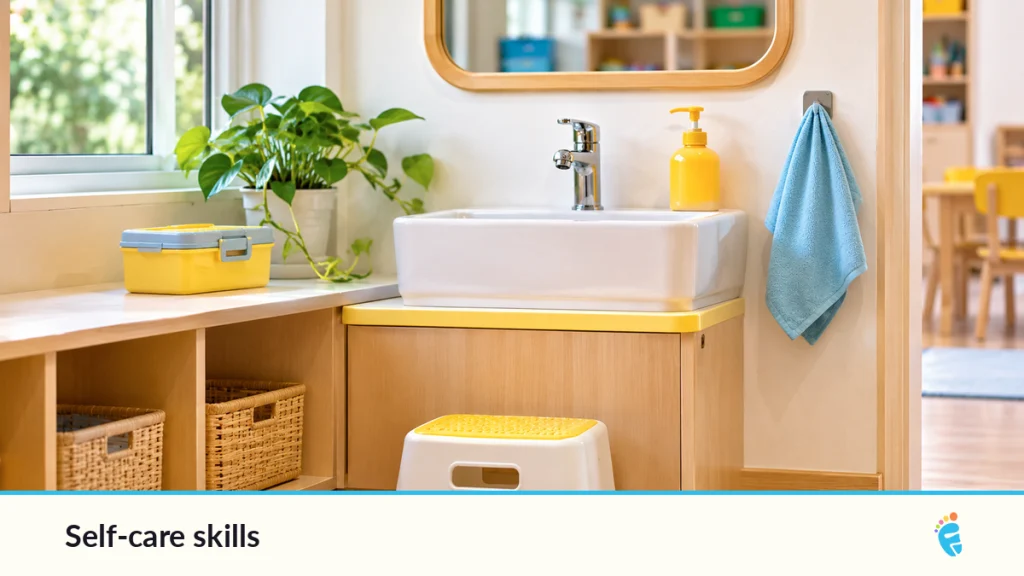
Of these, toilet independence is the single biggest preparation task. Children need time to practise pulling clothes down, sitting securely, and cleaning up. This takes months, not weeks, and therefore you need to start early. You can get a step-by-step guide on potty training for toddlers here.
As for handwashing, it needs to be practiced at home by letting your child reach the sink with a stool, rub soap and rinse thoroughly. The goal isn’t perfection but habit. Pro tip: Children learn by trying slowly, not by being rushed.
The third skill, eating from a tiffin, means that children need to learn to open their own box, manage a spoon, and finish without constant help. You can encourage practice during family meals by giving them their own small container and letting them eat at their own pace.
These self‑help skills grow naturally when children are given time and space to try. The more they practise at home, the more confident they will feel in the preschool setting.
2. Language Skills: Being Able to Ask for What They Need
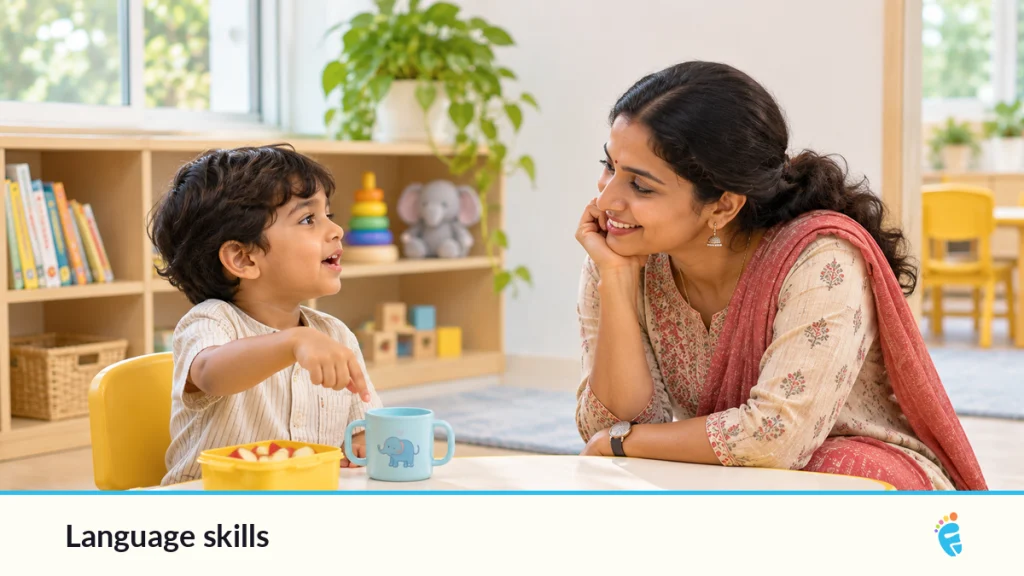
Children don’t need to be able to speak perfectly before preschool. However, they should be able to communicate three essentials – “I need the toilet,” “I am hungry or thirsty,” and “I do not feel well”. These simple phrases ensure teachers can respond quickly to their needs.
At home, you can build these skills through everyday habits:
- Talk through what you are doing (“We are washing hands now,” “We are opening the tiffin”).
- Ask questions and allow your child time to answer them, instead of rushing to do it yourself.
- Read aloud daily as stories expand vocabulary and encourage expression.
- Name feelings. Say “You look tired” or “You are happy” to help them connect words with emotions.
Children tend to develop language skills at different speeds and that is perfectly fine. In case you are concerned about the child’s late talking, feel free to reach out to your paediatrician.
3. Social Skills for Children: Sharing, Turns and Playing Alongside
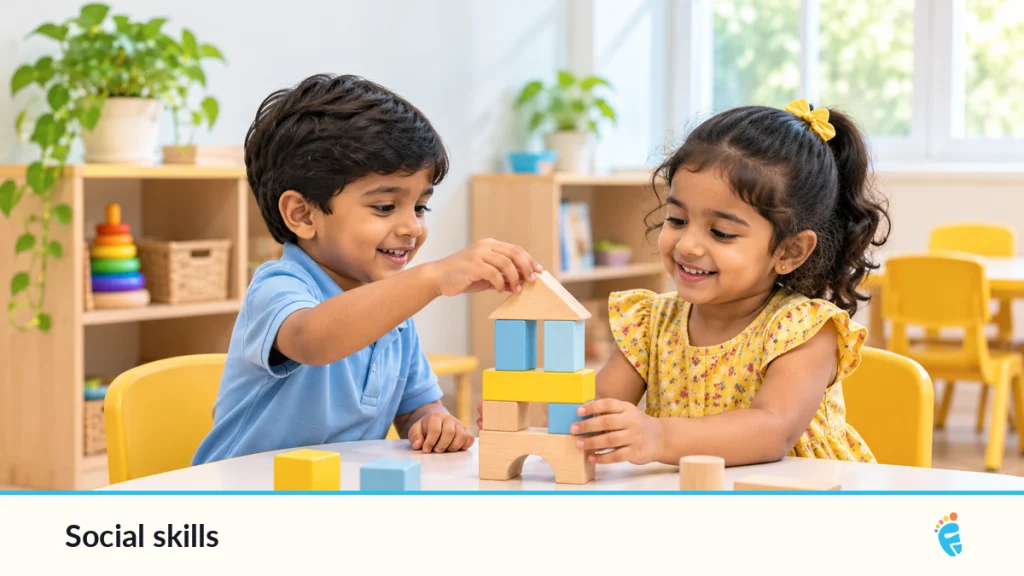
Social skills for children develop gradually and it is important that you keep your expectations real. For instance, at age two, most children play alongside each other rather than with each other. Preschool builds on this foundation by encouraging turn‑taking and cooperative play.
Here are some simple ways to help children develop social skills:
- Park visits – Being around other children helps them observe and imitate social behaviour. NAEYC’s guidance for families shows that unstructured play with other children is where sharing, turn-taking, and cooperation genuinely develop.
- Playdates – Short, supervised sessions where children learn to share space and toys are useful.
- Turn‑taking board games – Simple games tend to teach patience and waiting.
- Waiting for a turn at home – Whether it is choosing a song or using a toy, give them opportunities to wait calmly.
- Sharing a snack – Sharing with a sibling or parent builds generosity and awareness of others.
These everyday experiences gently prepare children to share and play alongside peers and are the building blocks of preschool social life.
4. Fine Motor Skills Activities: Building Hands That Are Ready to Work
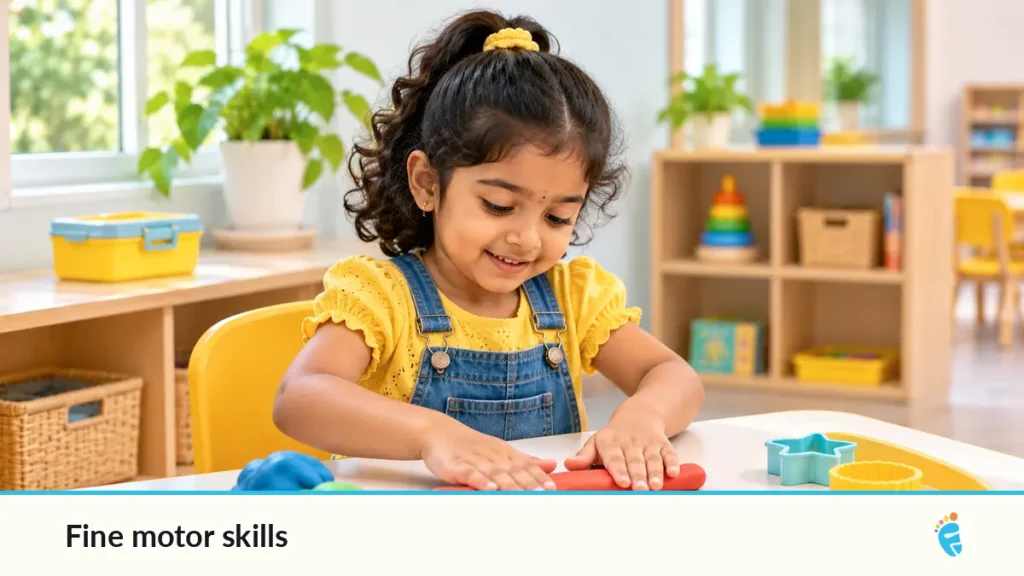
Before a child can write, their hands need strength and control. In fact, hand strength matters for everyday preschool tasks, be it opening a tiffin, holding a crayon, managing buttons and zips or using a spoon. These abilities grow through playful practice and art is the easiest way to build these muscles
Here are six everyday fine motor skills activities you can try at home:
- Clay or Dough Play – Squeezing, rolling and shaping builds whole‑hand strength.
- Paper Tearing Collage – Tearing paper into pieces helps strengthen finger muscles.
- Threading Beads or Pasta – Sliding beads or pasta onto a string improves pincer grip as well as hand‑eye coordination.
- Buttoning and Zipping Practice – Using old shirts or jackets to button and zip builds finger dexterity and independence.
- Tongs or Chimta Challenge – Picking up cotton balls or toys with tongs strengthens grip and precision.
- Water Pouring – Transferring water between cups or jugs develops wrist control and stability.
These activities also help in developing pencil grip which is a key aspect of writing. You can read more on how to build the right pencil grip here.
5. Getting the Routine Right Before Day One
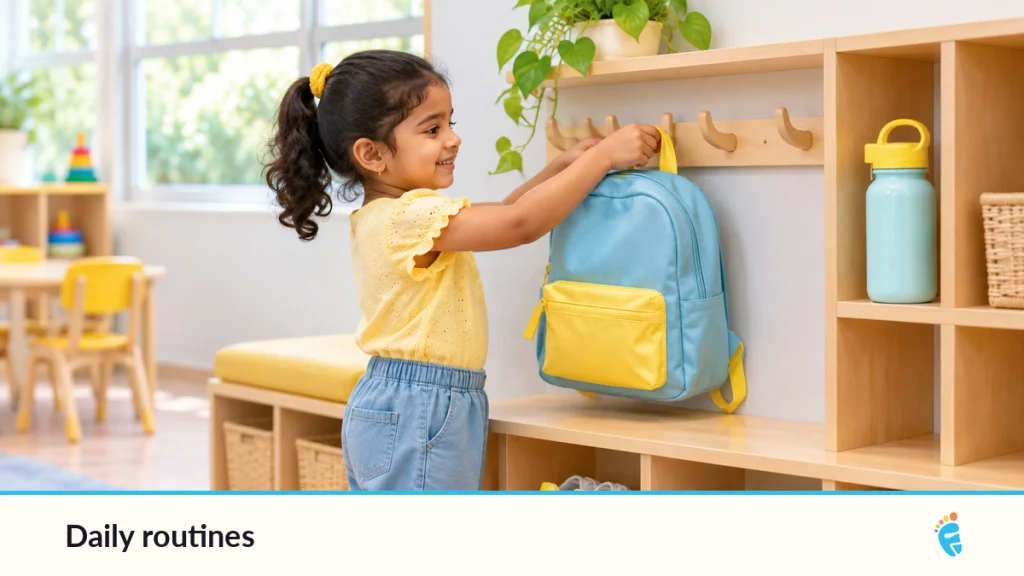
One of the most overlooked parts of preschool preparation is shifting sleep and meal times to match the preschool day. Make sure you start about a month ahead so the change feels natural:
- Move bedtime gradually about 15 minutes earlier every few nights until it matches the school schedule.
- Wake your child at the school‑day time in advance so mornings feel familiar.
- Serve lunch at the preschool hour to align their body clock with the new routine.
A tired child struggles with everything else, no matter how well prepared they are in other skills. A steady routine gives them the energy and calm they need to thrive.
6. The First Day of Preschool and the Weeks After
When it comes to the D-day, a little preparation can go a long way. Make sure you visit the centre beforehand and meet the teacher so the child knows what to expect on the first day.
In the days prior to beginning preschool, do talk with your child about preschool. Activities such as packing together the night before – choosing a snack, water bottle, or even a comfort item will keep the child involved.
It helps to keep in mind that settling takes days to weeks and that crying at drop‑off is normal and does not mean your child isn’t ready. With consistency and reassurance, most children adjust steadily.
Here is help on how to handle separation anxiety in preschoolers.
What You Do NOT Need to Teach Before Preschool
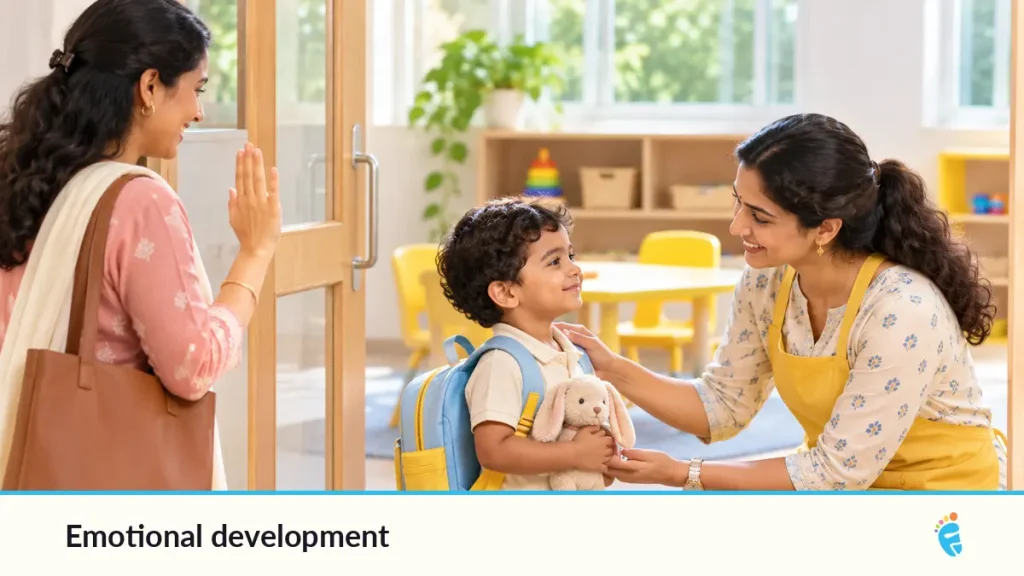
Parents often worry about “academic” skills before preschool. The truth is these are not required on day one. Preschool is designed to introduce them gently, through play and routine.
- Reading – Children do not need to be able to read before preschool. Teachers use stories, songs, and picture books to spark early literacy.
- Writing letters – No child is expected to write at this stage. Preschool focuses on fine motor play that prepares hands for writing later.
- Counting to 100 – Early numeracy is taught through games, blocks, and everyday routines. Recognising small numbers and patterns is enough.
- Knowing the alphabet by heart – Singing rhymes and playful exposure will build this naturally in preschool. Memorisation isn’t required.
- Sitting still for long periods – Preschoolers learn through movement. Short group times gradually build attention span and hence long stillness isn’t expected.
By leaving these worries aside, parents can focus on what truly matters and help make the transition smooth.
Frequently Asked Questions
1. How many months before preschool should I start preparing?
For most children, 2-3 months is enough to practise routines, social play, and language. Self‑care skills like toilet independence often need closer to 6 months so ensure you start those early.
Zero to Three explains that toddlers learn best through everyday routines and play, which is why preparation works better woven into daily life than taught as lessons.
2. Does my child need to be fully toilet trained before starting?
Most preschools expect daytime toilet independence, but many accept children still finishing the process. Ask your centre for their requirements directly.
3. Should my child know the alphabet before preschool?
No. Preschool introduces letters through songs, stories, and play. What matters is curiosity and comfort with language, not memorisation.
4. What if my child does not talk much yet?
Variation in speech development is normal in children. Focus on everyday habits like narrating routines and reading aloud. In case you are concerned about delayed speech do reach out to your paediatrician.
5. How do I prepare a shy child for preschool?
Start with short playdates, visits to the preschool, and practice separations with trusted caregivers. Gentle exposure builds confidence over time.
To Sum Up
Preschool preparation needs to be practical, not academic. The answer to how to make a child independent are small daily habits – washing hands, sharing a toy or following a routine. Gentle practices can help build independence naturally, without turning play into coaching sessions.
Above all, remember that a settled, confident child matters more than an advanced one. When children feel secure in their self‑care, language, and routines, they walk into preschool ready to thrive at their own pace.
At Footprints Preschool, we work at helping children learn by doing through direct, hands-on experiences with objects, people, ideas, and events.
Reviewed by Amita Bhardwaj, Chief Delivery Officer at Footprints Preschool & Daycare. Amita brings expertise in HighScope curriculum delivery and early childhood education.

Mirza Usman Habib is a senior early education content specialist with over 8 years dedicated to researching, writing, and explaining early childhood education for Indian parents. At Footprints Childcare, he has authored over 100 articles spanning child development milestones, preschool admission processes, teaching methodology comparisons (HighScope vs Montessori vs Playway), infant daycare selection, and the science of early brain development.
Usman’s approach is research-first: each article synthesises findings from leading authorities in early childhood education — including the HighScope Foundation, UNICEF, and the American Academy of Pediatrics — and translates them into practical, accessible guidance for working parents across India’s 30+ major cities.
His writing covers preschool selection guides, child safety checklists, developmental milestone trackers, and parent preparation guides for school admission. All child development content is reviewed by Amita Bhardwaj, Chief Delivery Officer and HighScope-certified trainer at Footprints Childcare.
 View Fees
 Call Us