

Toddlers are fascinated by the variety of forms in their environment as they start to explore it, from the square blocks they play with to the round sun in the sky. The basis for many elements of a child’s development is laid by the fundamentals of shape recognition. In fact, recognizing shapes is more than just recognizing circles, triangles, and squares. It acts as a foundation for more complex ideas in math, science, and the arts.
Kindergarten goers also develop critical cognitive abilities through recognizing shapes and distinguishing between them. Let us explore the fascinating process of learning with shapes and show how teaching children to recognize shapes encourages their cognitive development, creativity, and critical thinking.
Importance of learning Shape Recognition
Visual Abilities
Learning to recognize and differentiate between various shapes aids in the development of their visual perception. Later on, this capacity for recognizing small variations will help with the differentiation of letters, numerals, and more complicated geometric patterns.
Spatial Awareness
Recognizing shapes helps toddlers develop spatial awareness, which goes on to help them comprehend how items connect to one another in space. Many tasks in later life, like reading maps, putting puzzles together and even driving, depend on this awareness.
Problem Solving
Early problem-solving activities are carried out by toddlers when they match shapes and put puzzle pieces together. This establishes the foundation for critical thinking skills, which are necessary in many facets of life.
Language Development
Letters are made up of various shapes. Learning to distinguish between shapes, therefore, helps children distinguish letters and eventually to read fluently. Besides, introducing new vocabulary words through shape-related learning helps to develop language skills. Toddlers are better able to express themselves and communicate effectively when they can describe forms and their properties.
The advantages of shape recognition are many. It is time now to look at some innovative ideas to help toddlers in the process of shape recognition.
Fun ideas for toddlers and preschoolers
Hands-on activities with shapes are a great way to get the child involved and for them to absorb the learning while experiencing shapes with all their senses. Here, therefore, are some fun activities.
Shape Containers
Sorting activities can go a long way in teaching children different shapes. All you need to do is give them different containers, preferably in the shapes of objects that you want sorted. Ask the child to sort the different shapes and put them into the respective containers. As opposed to asking them to sort triangles, squares, etc., you could even ask them to sort shapes with three sides and four sides, for instance.
Movement Games
Children love games, and what better way than games to teach them shapes? Toddler playtime can involve simply calling out the name of a shape and letting the child make that shape with their body. You will be amazed at their creativity. It goes without saying that lessons such as these go a far longer way than showing them simple charts and expecting them to learn the shapes.
Play dough
Play-dough is a great prop to teach shapes. You can ask the child to carve out different shapes using play-dough and shape cutters. This activity will have them regaled for hours. Truly, learning can be much more than a chore!
Cookies
What if learning shapes could become a gastronomical experience? Go ahead and bake cookies in different shapes with the child. It will be fun to gobble up the squares and rectangles at the end.
Household Objects
Shape activities for kindergarten can also be around household objects. Create your own version of “ Simon Says”. Each time you call out a shape, let the child look for household objects in the shape and bring them over. It will be a fun exercise to bond over.
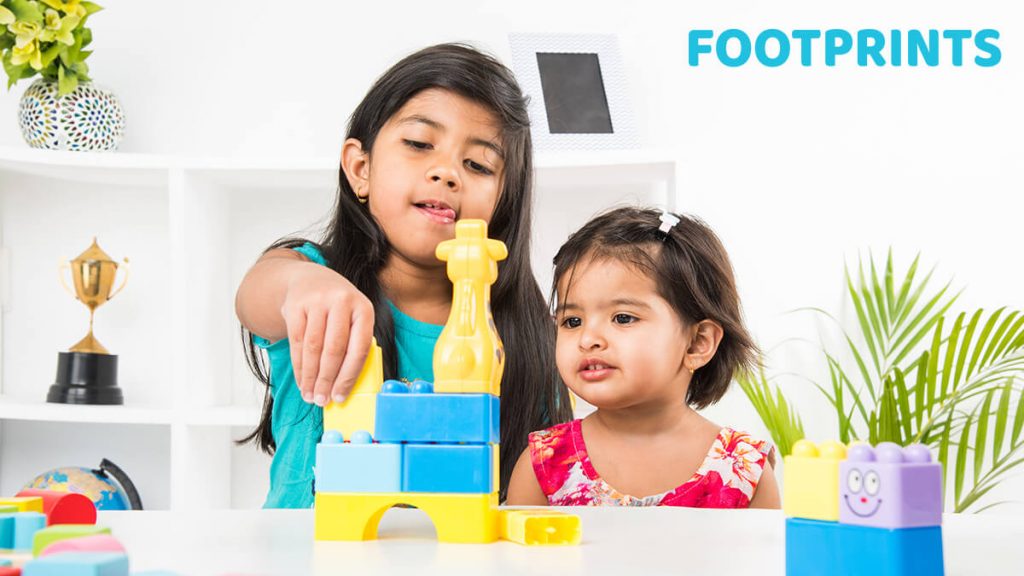
Building Blocks
Use those blocks to get the child to build structures using different shapes. Alternatively, you could even turn this into a drawing exercise where they draw pictures using shapes.
Blindfold
Now, this is one activity that is bound to ensure lots of fun, laughter, and learning. All you need to do is lightly blindfold the child. Put together a range of shapes in a bag. Let the child bring them out one at a time, describe the shape, and then call out its name. For instance, with a circle, let the child describe that it has no corners before calling it a circle. This way, the facets of various shapes will be imprinted in the child’s mind.
Stamps
Speaking of imprinting, let the child create shape stamps using a sponge, potato, or any other material. Let them stamp these shapes using poster colour.
Nature Hunt
Shape activities for kindergarten can revolve around a nature hunt. Take your child on a nature walk to a nearby park. Get them to point out or collect things in various shapes. This not only encourages outside exploration but also improves their capacity for observation. Alternatively, you could start a shape-hunt by exploring the home. Give a list of shapes (circle, square, triangle, rectangle, etc.) and ask them to look for things in the real world that fit each shape. This activity develops observational skills and relates shapes to common objects.
Obstacle Course
Set up a little obstacle course with cushions, hula hoops, and cones for an obstacle course extravaganza. As they navigate the course, let them call out the name of the shape. Your child is honing their gross motor abilities and learning shapes in the process.
Shape Collages
Create a collage station with a variety of colorful construction papers that have been cut into various shapes. These shapes can be used by kindergarteners to make their own inventive works of art. Creativity, fine motor abilities, and knowledge of shape recognition are all encouraged by this activity.
Shape Puzzles
Simple shape puzzles can be made using cardboard or foam sheets. Children may put the puzzle together by cutting shapes into pieces. This enables kids to investigate how various forms fit together and develop their problem-solving abilities.
Storytime with Shapes
Pick a book with graphics that prominently emphasize shapes. Discuss the forms the kids noticed after you’ve read the story to them,
Vocabulary, understanding, and critical thinking are all improved by this activity.
Shape Relay Race
Set up a race in which kids pick up foam shapes and drop them into corresponding shape cutouts in succession. This physical activity encourages cooperation, coordination, and shape perception.
To Sum Up
Encouragement and patience are key during any learning, and shape recognition is no different. As children take on the journey of recognizing shapes, show them lots of support and appreciation. Honour little triumphs. Celebrate your child’s success when they correctly identify a shape or finish an activity involving shapes to give them more self-confidence.
You also need to remember to make the learning enjoyable and entertaining, like Footprints Preschool
makes. Toddlers learn best through interactive experiences and engaging activities. In conclusion, interacting with toddlers and preschoolers and teaching them new concepts doesn’t have to be difficult. With a little creativity, you can have oodles of fun and also add to their learning. Keep in mind that the key to making lasting memories with your children is to keep everything lighthearted, playful, and full of laughter. As parents and caregivers, we have the honour of assisting these impressionable minds as they go out on their voyage of learning and exploration through the fascinating world of shapes.

Amita is an experienced educator with over 30 years of experience. She has an outstanding understanding of child development, having worked with various age groups for prestigious businesses. She has been dedicated to handling Footprints’s Curriculum and Delivery department for the past decade. Amita’s credentials include being one of India’s few HighScope Curriculum certified trainers and volunteering as a course leader for Landmark Education, the world’s largest training firm.
 View Fees
  Call Us