

Updated: 23-March-2026
What are Human Body Parts? (Quick Answer for Parents)
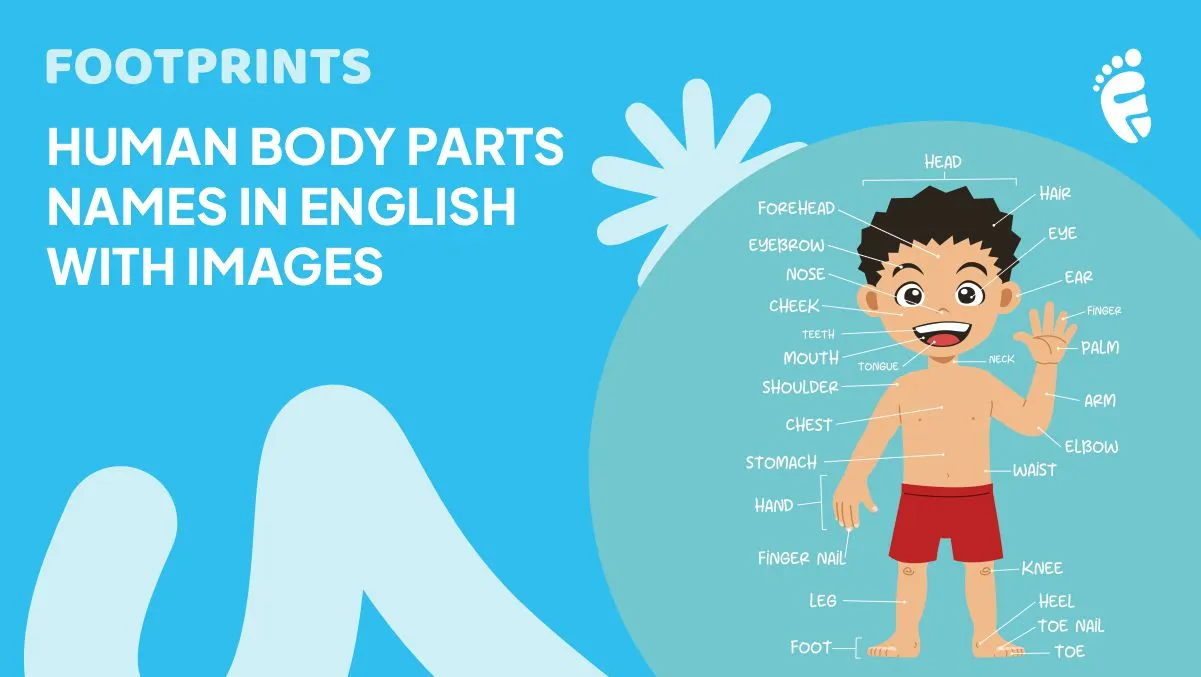
The human body is made up of many parts, and each part has a special function that helps us live, grow, and stay healthy. Common body parts include the head, eyes, ears, nose, hands, and legs, along with internal organs like the heart, brain, and lungs. Teaching children the names of body parts is one of the first steps in early learning, as it helps them understand their body, express themselves better, and build confidence in everyday situations.
Understanding body parts also helps children communicate clearly when they feel pain or discomfort. For example, a child who knows the word “stomach” can easily explain where it hurts. This simple knowledge plays a big role in both learning and health awareness from a young age.
Quick Summary
- The human body is made up of external and internal parts
- Each body part has a unique function
- Learning body part names improves communication skills
- It builds body awareness and confidence in children
- Teaching can be made fun through games, songs, and activities
List of Human Body Parts Names for Children
Before going into details, here’s a simple and easy table that helps children quickly understand common body parts and their uses.
| Body Part | Function | Example for Children |
| Eyes 👀 | Help us see | Reading books |
| Ears 👂 | Help us hear | Listening to music |
| Nose 👃 | Helps us smell & breathe | Smelling flowers |
| Mouth 👄 | Helps us eat & talk | Eating food |
| Hands 🖖 | Help us hold things | Writing, drawing |
| Legs 🦵 | Help us walk/run | Playing |
| Heart 🫀 | Pumps blood | Keeps us alive |
| Brain 🧠 | Controls body | Thinking |
This table is a great starting point for parents who want to introduce body part names in a simple and structured way.
The Importance of Understanding Body Parts
Understanding body parts is not only important for medical professionals but also for parents and children alike. It lays the foundation for a child’s understanding of their physicality and helps them navigate the world around them. By knowing the names of their body parts, children can effectively communicate any discomfort or pain they may be experiencing, enabling parents to provide appropriate care. Additionally, knowledge of body parts promotes body positivity and self-acceptance as children learn to appreciate the uniqueness and beauty of their bodies.
External Body Parts and Their Functions
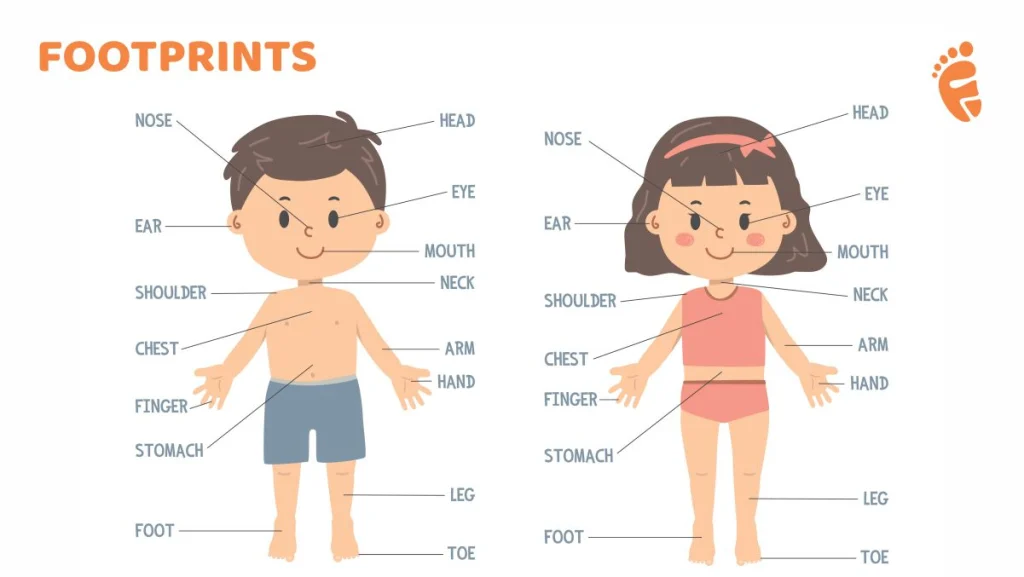
External body parts are the parts of the body that we can see and touch. These are usually the first ones children learn because they are easy to identify and relate to.
Let’s Begin with the Head and Facial Features
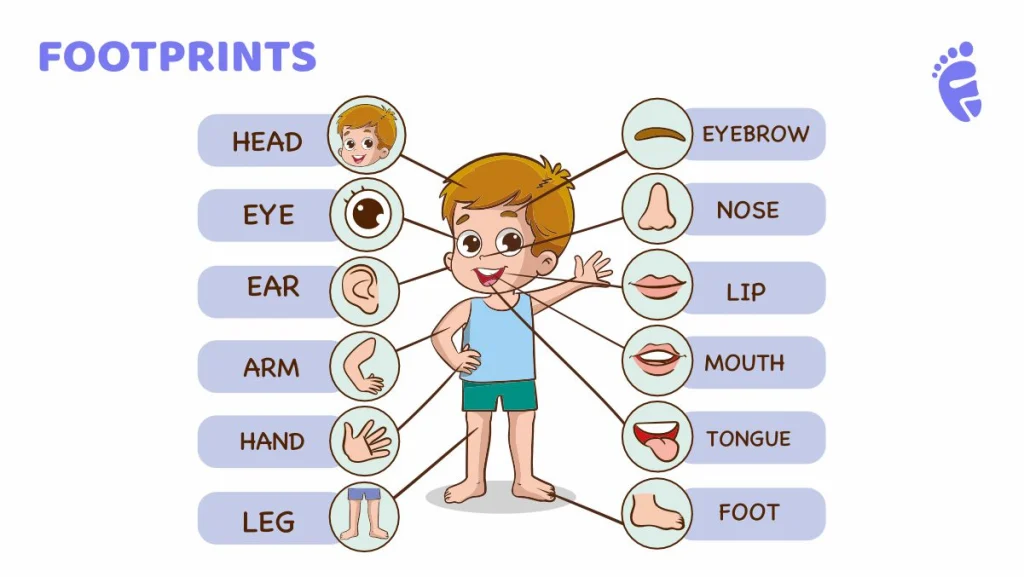
The head is one of the most important parts of the body as it contains the brain and major sensory organs. Children often learn facial features first because they use them every day:
1. Eyes👀
Eyes allow us to see everything around us. From reading books to recognizing faces, eyes play a very important role in daily life.
2. Ears 👂
Ears help us hear different sounds, such as music, voices, and environmental noises. They also help maintain balance.
3. Nose 👃
The nose helps us breathe and smell different things. It also acts as a filter to keep dust and germs out.
4. Mouth 👄
The mouth is used for eating, speaking, smiling, and expressing emotions. It is an essential part of communication
Moving on to the Upper Body Parts
The upper body includes parts that help us perform daily activities like lifting, holding, and interacting with objects:
1. Shoulders and Arms
These help us lift, carry, and move objects. They also allow us to perform actions like throwing and hugging.
2. Chest and Back
The chest protects vital organs like the heart and lungs, while the back supports our posture and helps us stand straight.
3. Hands and Fingers
Hands and fingers are extremely important for fine motor skills such as writing, drawing, eating, and playing.
Let’s Explore the Lower Body Parts
The lower body helps us move from one place to another and maintain balance:
1. Legs and Feet
Legs and feet allow us to walk, run, jump, and participate in physical activities. They are essential for mobility.
2. Hips and Waist
These parts support the body and help maintain balance while standing, sitting, and moving.
Learning about our body parts is like solving a cool puzzle. As we understand each piece, we appreciate how it all fits together to help us live our best lives. Stay tuned for more exciting adventures in learning about our amazing bodies!
Internal Body Parts Names and Functions
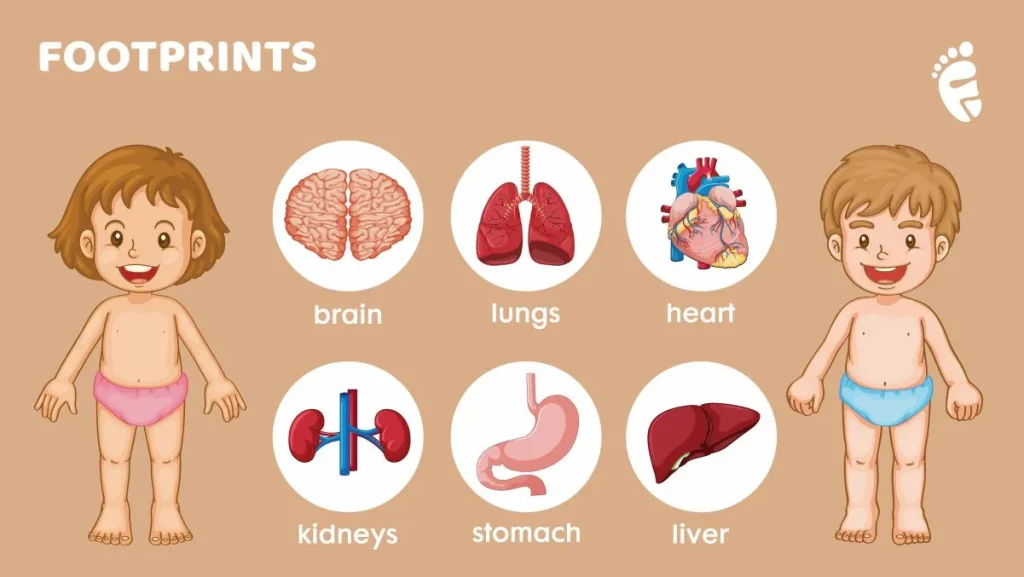
Internal body parts are important organs inside the human body that help us stay alive and healthy. Learning these human body parts names helps children understand how their bodies work.
Let’s Start with Our Vital Organs
1. Heart 🫀
The heart works like a pump that circulates blood throughout the body. It supplies oxygen and nutrients to every part.
2. Lungs 🫁
Lungs help us breathe by taking in oxygen and releasing carbon dioxide. Breathing is essential for survival.
3. Brain 🧠
The brain is the control center of the body. It helps us think, feel, learn, and control movements.
3. Liver
The liver is like a cleaning station. It helps process what we eat and drink, removing harmful stuff and keeping the good stuff to give us energy.
4. Kidneys
Kidneys are like amazing filters. They clean our blood and remove waste in the form of urine. Drinking water helps keep our kidneys happy!
5. Stomach
The stomach is like a mixing bowl for our food. It churns and mixes what we eat, breaking it into smaller pieces so our body can use the nutrients.
Skeletal System for Children: Bones and Joints
1. Bones
Bones are like our body’s building blocks. They give us shape, protect our organs, and help us move. Remember to drink milk for strong bones!
2. Joints
Joints are like hinges that connect our bones and allow us to bend and move. They help us run, jump, and play!
Why Should Children Learn Body Parts Names?
Learning body parts is more than just memorizing names—it is a key part of early childhood development. When children understand their body, they become more confident and aware of themselves.
It also improves communication skills, as children can clearly express their needs, feelings, and discomfort. For example, instead of crying, a child can say, “My leg hurts,” which helps parents respond better.
Additionally, learning body parts encourages children to develop healthy habits such as washing hands, brushing teeth, and taking care of their body. It builds a strong foundation for both physical and emotional well-being.
Easy Ways to Teach Body Parts to Children
Teaching body parts doesn’t have to be boring or complicated. In fact, the more fun and interactive it is, the better children learn.
Parents can start by pointing to body parts during daily routines, such as while getting dressed or bathing. This helps children connect words with real-life actions.
Using songs and rhymes is another effective way, as repetition helps children remember names easily. Visual aids like flashcards and picture books also make learning more engaging.
Consistency is key. Repeating names regularly and encouraging children to identify their own body parts helps reinforce learning over time.
Fun Activities to Teach Body Parts
Children learn best through play, so incorporating activities into learning makes a big difference.
Games like “Simon Says” are a great way to teach body parts while keeping children active. For example, “Touch your nose” or “Clap your hands.”
Drawing activities can also help, where children draw a human figure and label body parts. Puzzle games and matching exercises improve recognition and memory.
Mirror play is another fun idea, where children look at themselves and identify different body parts. This builds both awareness and confidence.
Tips to Help Children Remember Body Part Names
Helping children remember body parts requires patience and consistency. Instead of forcing memorization, focus on making learning natural and enjoyable.
Use simple language and repeat words in daily conversations. For example, while eating, you can say, “Use your hands,” or while walking, “Move your legs.”
Encouraging children to speak and identify body parts on their own also strengthens their understanding. Positive reinforcement, like praising them when they answer correctly, boosts confidence and interest.
Frequently Asked Questions
1. What are the main parts of the human body?
The main parts include the head, torso, arms, and legs, along with internal organs like the heart, brain, and lungs.
2. How do you teach body parts to children?
You can teach body parts using songs, games, flashcards, and daily activities like pointing and naming.
3. Why is it important for children to learn body parts?
It helps children communicate better, understand their body, and develop confidence.
4. What are external body parts?
External body parts are visible parts like eyes, ears, nose, hands, and legs.
5. What are internal body parts?
Internal body parts include organs like the heart, lungs, brain, stomach, liver, and kidneys.
6. At what age should children learn body parts?
Children can start learning body parts as early as 1.5 to 2 years through play and interaction.
7. How can I make learning body parts fun for my child?
You can use games, songs, drawing activities, and daily interactions to make learning enjoyable.
To Sum Up
Learning body part names is one of the first and most important steps in a child’s early education. It not only helps children understand their body but also improves their communication, confidence, and overall development. With simple teaching methods, fun activities, and consistent practice, parents can make this learning both effective and enjoyable. At Footprints Play School, we believe in making learning interactive and meaningful, helping children explore concepts like body parts in a way that stays with them for life.

Amita Bhardwaj is one of India’s few certified HighScope curriculum trainers, trained and certified by the US-based HighScope Educational Research Foundation — the same framework underpinning over 50,000 preschools across 20+ countries. As Chief Delivery Officer at Footprints Childcare, she has spent the last decade architecting the curriculum and learning outcomes across 230+ centres serving 60,000+ children across India.
With over 30 years in early childhood education, Amita has worked across infant care, toddler development, preschool pedagogy, and educator training. She is also a certified course leader at Landmark Education, the world’s largest personal development organisation, which informs her approach to child-centred learning and growth.
Amita writes on child development milestones, early brain development, age-appropriate activities, infant safety, and curriculum best practices. All parenting content published under the Footprints Childcare blog is reviewed and approved by her before publication.
 View Fees
  Call Us