

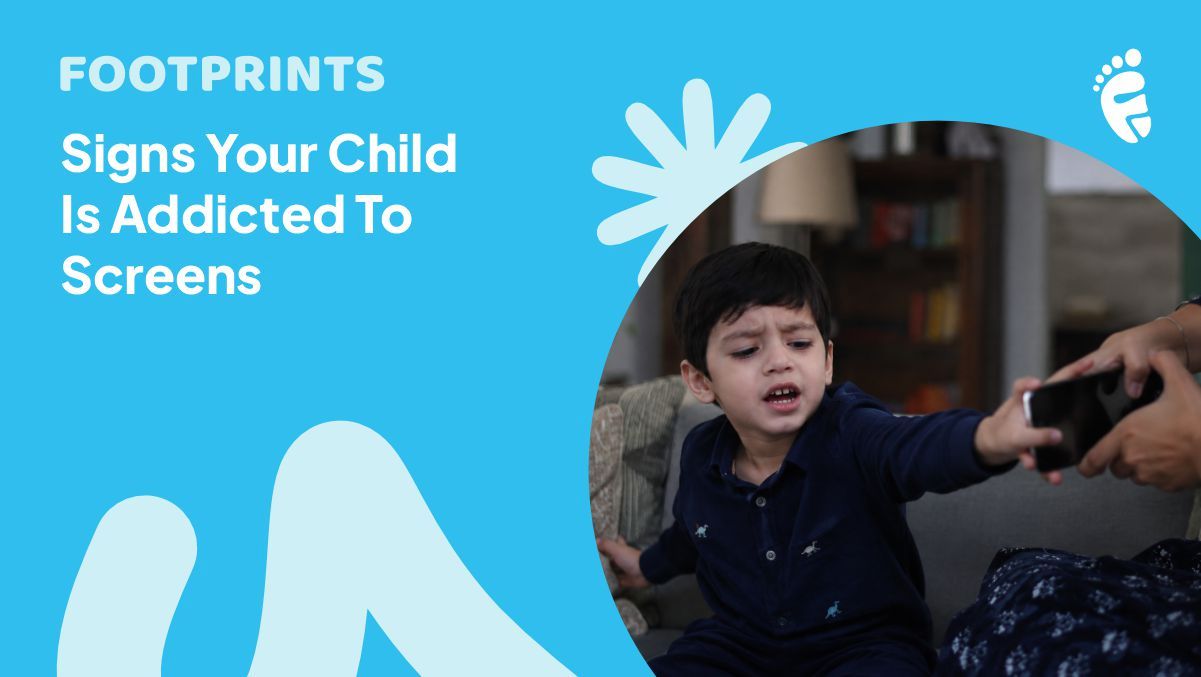
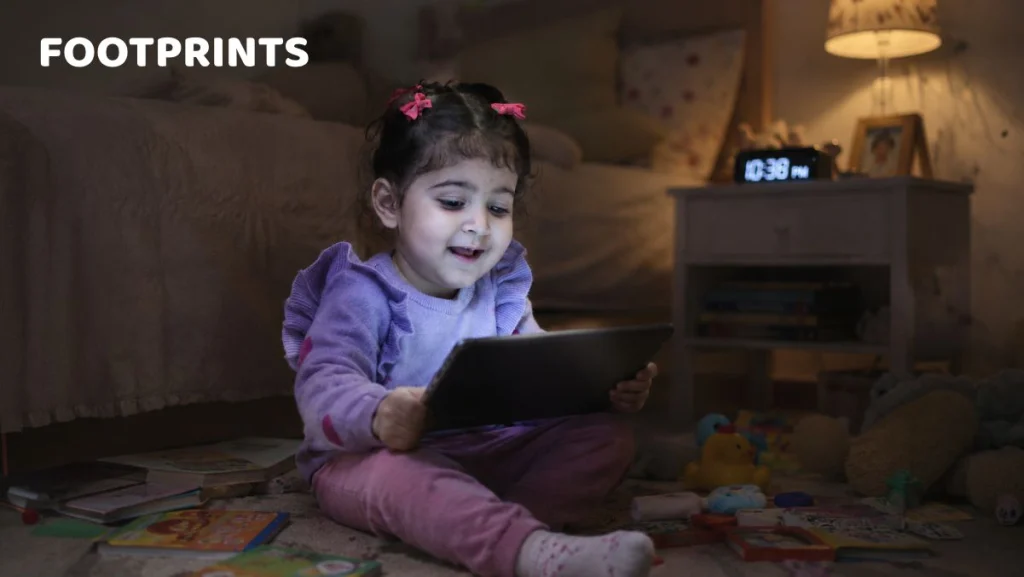
A 4-year-old gets up in the morning and asks for his favourite YouTube show to be played, while still rubbing his eyes. Scenes like this are becoming a common occurrence in many households.
For many children, it can be just a phase. However, if you notice the child crying, screaming or becoming too aggressive the moment the screen is taken away or if he shows no interest in anything else, odds are that screen use has shifted from enjoyment to dependency.
This post walks you through the specific signs of screen dependency, why young children are more susceptible, how screen time and child development are closely connected, and a practical plan to break the pattern and control the harmful effects of mobile phones on children.
Is It Really Addiction? What Screen Dependency in Young Children Actually Looks Like
While parents are concerned about mobile addiction, it is important to begin by understanding what really happens in the child’s brain that can lead to problematic screen use.
The first thing to note is that the brain’s dopamine reward system responds to screens the way it responds to other compulsive behaviours. Add to that the fact that in young children the prefrontal cortex that is responsible for impulse control is still developing, and you can see why the effect is compounded.
What makes screens particularly habit forming in children, include:
- Variable rewards- the child does not know what video will come next and is kept hooked. This, in fact, is one of the most powerful psychological drivers of compulsive behaviour.
- Autoplay- With no natural stopping point there isn’t an “ end” to trigger the brain to stop watching.
That said, the distinction between normal and problematic screen use isn’t viewing hours alone but also how the child behaves around screens and without them.
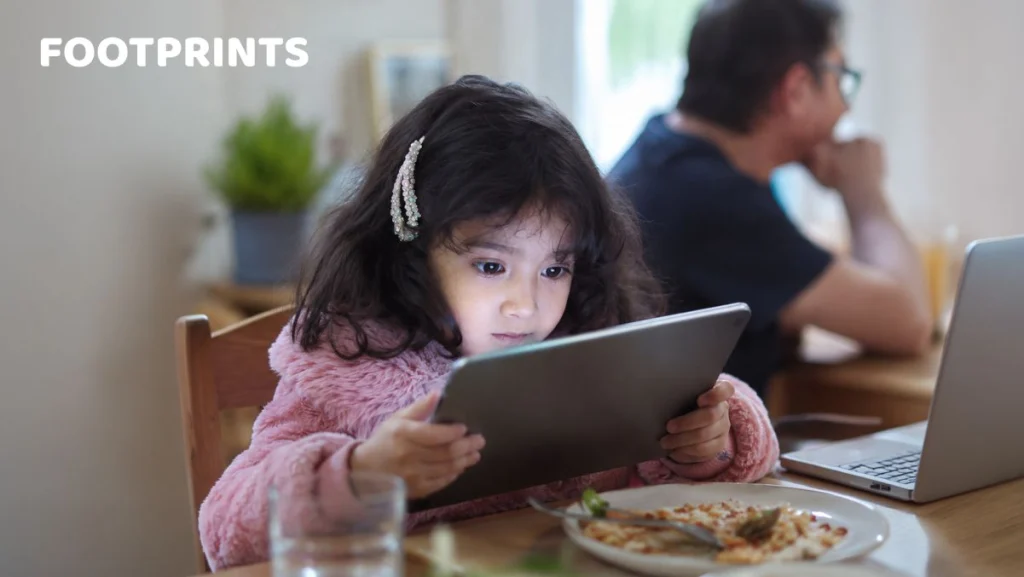
10 Signs Your Child May Have a Screen Dependency
There are several signs of excessive use of mobile phones in children. Here are the 10 most important signs to watch out for:
- Always wanting more – The child is never content with the agreed time and every session ends with a negotiation or even a fight.
- Disproportionate meltdowns – You witness crying or aggression on taking away the screen and it lasts for more than 5-10 minutes.
- Loss of interest in activities they previously enjoyed – Toys, outdoor play, drawing, and books have all lost appeal
- Inability to self-entertain – Boredom sets in within 2–3 minutes of any offline activity.
- Screen use is the first request every morning – It comes before food, before greetings, before anything else
- Sneaking or lying to access a screen – Taking a device when no one is watching, or denying they have been watching are other signs to look out for.
- Use of screen as an emotional crutch – The screen is needed to calm down when upset, or to fall asleep
- Aggressive or irritable behaviour – It is seen specific to screen removal and is not present in other contexts
- Declining engagement with family, friends – The child prefers to be alone with a device
- Sleep is disrupted – The child experiences difficulty in falling asleep, night waking, or waking up overtired.
If you notice 4 or more of these signs consistently over 2-3 weeks, screen use has likely shifted from habit to dependency. The good news, however, is that with a consistent plan, you may be able to break the habit between 2-3 weeks.
Normal Screen Behaviour vs. Dependency Warning Signs
| Sign to Watch For | Normal Screen Behaviour | Dependency Warning Sign |
| Reaction when screen is removed | Mild protest, settles within 2–3 minutes | Prolonged crying, aggression, cannot be distracted |
| Interest in other activities | Happily moves to toys, outdoor play, drawing | Refuses all alternatives, keeps asking for screen |
| First request of the day | Asks for breakfast, a parent, a toy | First words every morning are about a screen or video |
| Behaviour during screen time | Watches with curiosity, sometimes gets up to play | Glazed expression, does not respond when called, irritable if interrupted |
| Ability to self-entertain | Can play independently for 10–20 minutes | Cannot engage with anything for more than 2–3 minutes without a screen |
| Sleep pattern | Falls asleep within normal timeframe | Difficulty sleeping, wakes at night, overtired |
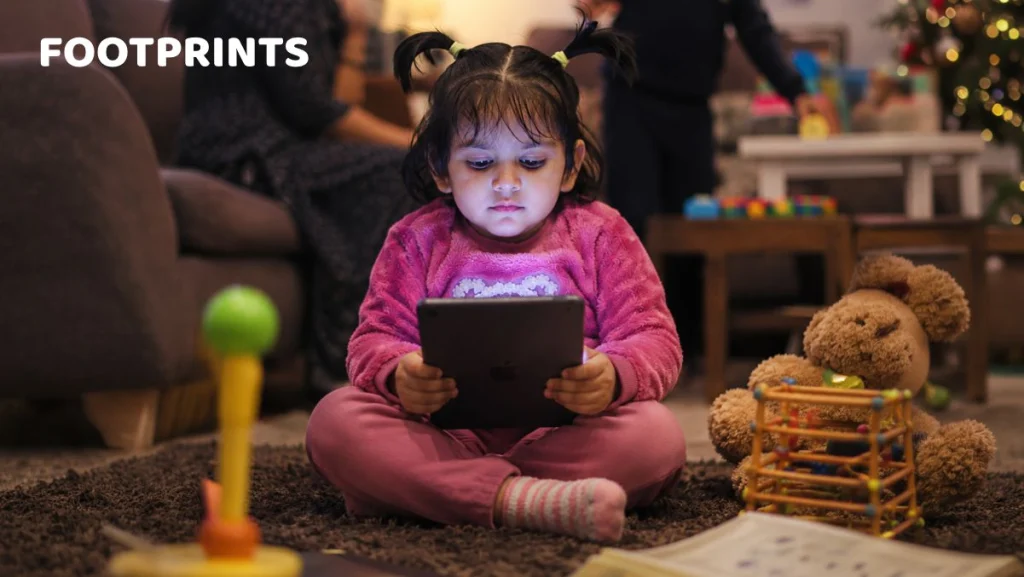
Why Young Children Are More Susceptible to Screen Dependency
Many ill effects of mobile phones are directly tied to brain physiology. Increased susceptibility in young children is on account of:
- Delayed maturation: The prefrontal cortex (responsible for impulse control, reasoning, and decision-making) develops into the mid-20s. In a toddler or a preschooler, it is barely functional.
- Dopamine sensitivity: This is higher in younger brains. Hence the reward signal from a new video or a game level is felt more intensely in children than in adults.
- Habit forming: The habits formed in the early years shape how the brain sets up its attention and reward systems for the long term
- Clearly then, the responsibility for setting limits, until the child’s own regulation develops, lies with the caregivers.
Recent findings published in PubMed Central also suggest that excessive screen exposure may be associated with behavioural, emotional, and developmental challenges in children, reinforcing the importance of healthy screen habits.
How to Break the Screen Dependency — A 5-Step Plan
The answer to how to get rid of phone addiction lies above everything else, in consistency. Here is a handy 5-step plan
Step 1 – Reduce gradually, not overnight
- While a sudden withdrawal may work for some children, in most, it tends to create strong resistance.
- A 2-week reduction plan is more a sustainable option. In week one, cut current screen time by 30%. Follow this up by cutting another 30% in week two. Thereafter hold it at the new limit.
- Make sure you announce the change calmly before it begins.This will give the child time to adjust mentally.
Step 2 – Set firm, consistent daily limits with a visible timer
- Ensure you stick to the daily limit and that it is enforced by all adults in the household,
- Any inconsistency shown amongst parents or grandparents is a recipe for failure.
- Use a visual timer such as a sandclock to indicate screen time. A phone alarm is not recommended.
Step 3 – Replace with something equally engaging, not just ‘better’
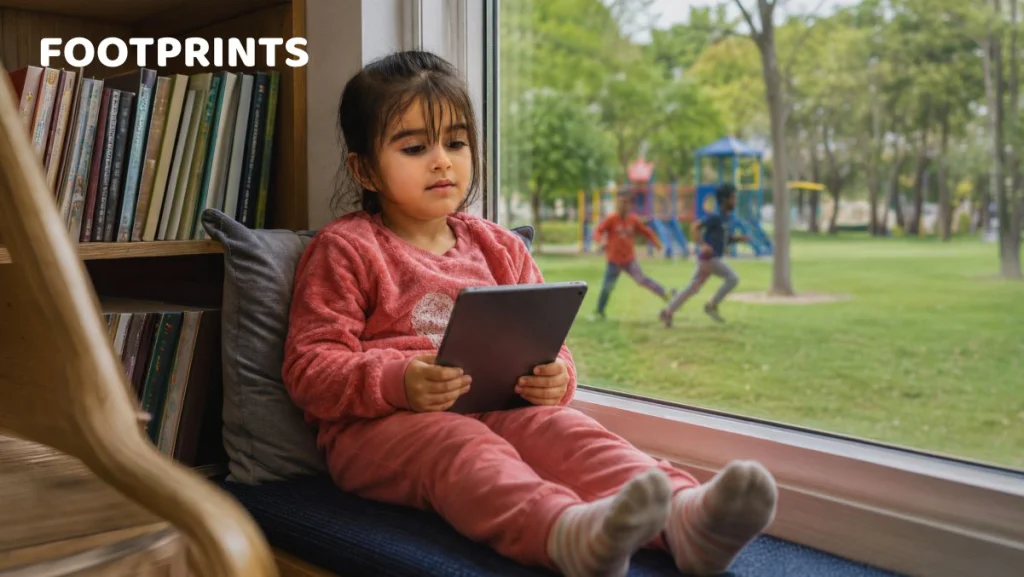
- Ensure that the screen time is replaced with something that the child is genuinely interested in.
- Keeping 4–5 offline options handy always helps. Think sticker books, clay, sensory materials, simple puzzles, water activities and more.
- UNICEF highlights that play-based experiences are essential for supporting children’s cognitive, emotional, and social development during the early years, making offline activities a valuable alternative to excessive screen use.
- The first 3–5 days of any new routine face the most resistance. Handy alternatives can reduce friction.
Step 4 – Rebuild tolerance for boredom intentionally
- Screen dependency lowers a child’s ability to tolerate boredom. Resist the urge to fill it fully, as it is here that creativity takes root.
- Ensure you begin with 5-10 minutes of unstructured time daily and increase it slowly over weeks.
Step 5 – Address the sleep piece in parallel
- Screen dependency and poor sleep reinforce each other — an overtired child seeks screens more, and more screentime worsens sleep
- The American Academy of Pediatrics recommends establishing healthy digital media habits, including limiting screen use before bedtime, to support better sleep and overall well-being in children.
- Ensure you cut down on the evening screen habit while reinforcing the bedtime routine, in parallel.
What Not to Do When Breaking a Screen Habit
While trying to break the screen habit in the child, steer clear of the following 4 aspects:
- Do not shame the child. Remember that screen dependency is a habit and not a character flaw. Do not therefore shame the child for his or her excessive screen usage. It only tends to make the behaviour worse.
- Do not go cold turkey without a plan. Removing screens with no replacement activity and without a gradual transition plan tends to create distress in the child
- Do not replace one screen with another. Swapping the tablet for the TV, or the phone for a laptop only relocates the dependency.
- Do not give in after resistance. Giving in to a child’s meltdown only teaches the child that resistance eventually works.
Frequently Asked Questions
1. Can a 2-year-old really be addicted to screens?
While “addiction” in toddlers looks different from adults, the brain’s reward system can be overstimulated by constant screen use. Signs include tantrums when the device is removed, loss of interest in toys or play, and compulsive seeking of screens.
2. Is screen addiction linked to autism?
No direct link has been proven. However, screen dependency can mimic some autism-related behaviours. If you have concerns beyond screen behaviour- around communication, social interaction or development do reach out to your paediatrician.
3. How long does it take to break a screen habit in a young child?
Many families see improvement within 2–3 weeks of setting consistent limits, replacement with other activities, and strong routines. Consistency is key.
4. Should I use parental controls or app timers?
It is better to put visual timers such as a sandclock for young children. However, they are only part of the solution. Co-viewing, redirecting to play, and modeling healthy habits are extremely effective.
5. When should I consider professional help for my child’s screen use?
Seek help if screen use interferes with sleep, eating, or social interaction.If your child shows extreme irritability without screens or if you are unable to manage screen habits despite consistent efforts, do reach out for professional help.
To Sum Up
Screen dependency in young children is common these days. Watch out for recognisable signs such as disproportionate meltdowns, loss of interest in other activities, and more. The key to reduced screen dependency lies not in banning screens altogether but gradually restoring balance, one consistent day at a time. The goal is to ensure that the child can play without a screen, sleep without one and accept screen time limits without it turning into a battle.
At Footprints Play School, our focus is on the child’s holistic development. We follow the HighScope Curriculum that is based on more than 50 years of research on early childhood development and that centres on active learning.

Purvesh Sharma is a TED speaker, IIT-Delhi alumnus, certified life coach, and Co-Founder of Footprints Childcare — India’s safest preschool and daycare chain operating multiple centres across 30+ cities. He co-founded Footprints after recognising a fundamental gap: working parents in India needed a childcare option that combined genuine safety, research-backed curriculum, and real-time parent connectivity.
A certified life coach with deep exposure to behavioural science and developmental psychology, Purvesh leads parenting workshops and engagement programmes across Footprints centres — directly engaging with tens of thousands of Indian parents on the challenges of raising young children in urban India. As a parent himself, he brings lived experience to every piece he writes on child behaviour, tantrums, discipline, habit formation, and school readiness.
His writing is grounded in both the science of early childhood development and the real, daily decisions Indian parents face.
 View Fees
  Call Us