

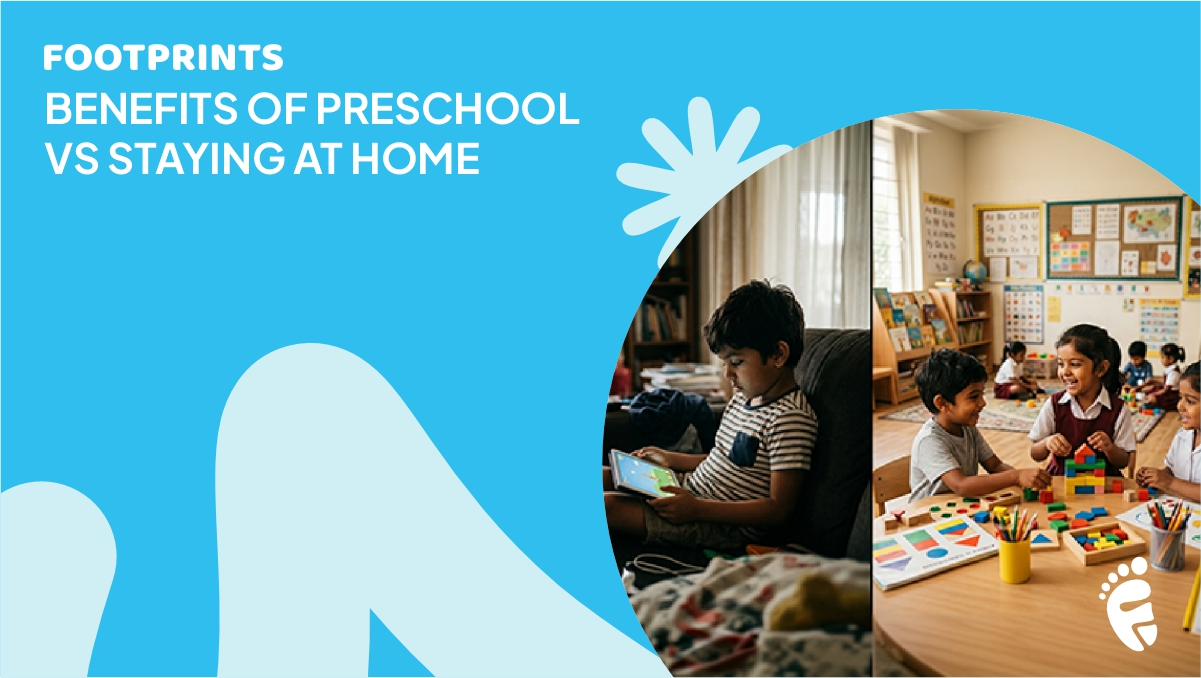
An early confusion in the minds of parents is often the benefits of preschool vs staying at home. Both these options come with their own pros and cons. The choice truly depends upon what your long-term goals are for the child. If you have also been researching the importance of preschool education, here is a deep dive into the subject.
Preschool vs Staying at Home – What’s the Difference?
Let us begin by understanding both these learning environments.
Preschool
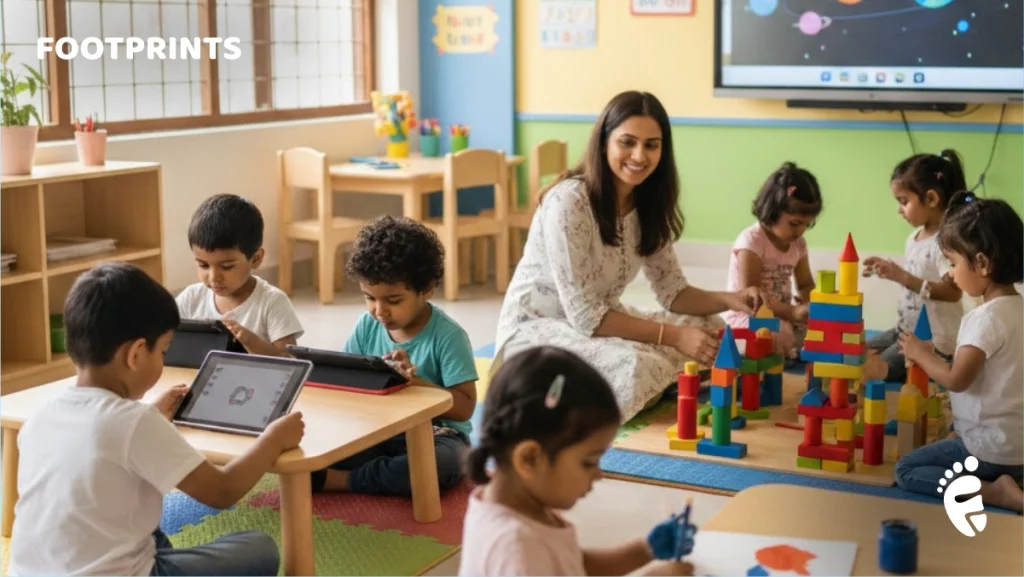
By definition, a preschool is a formal early childhood education setting designed for children typically in the age group of 2–5 years, before they enter kindergarten. It is run by trained educators and follows a structured curriculum. The learning environment in a preschool has the following characteristics:
- It is structured with daily routines, planned activities and an age-appropriate curriculum
- Offers social exposure in terms of interaction with peers and group learning.
- Focuses on a wide range of skills such as cognitive, language, motor and socio-emotional skills.
- Teachers act as important facilitators and guides.
The American Academy of Pediatrics recognises that quality early childhood programmes support healthy development across cognitive, language, and social-emotional domains — and that the quality of the learning environment matters more than whether it is home-based or centre-based.
Staying at Home
Here, children remain at home under the care of parents, guardians, or caregivers, without attending a formal preschool program. The learning environment in this case is largely:
- Unstructured, where learning happens through daily routines, family explorations.
- There is flexibility as activities depend on the child’s interests and the caregivers’ choice.
- There is individualized attention but limited exposure to group dynamics.
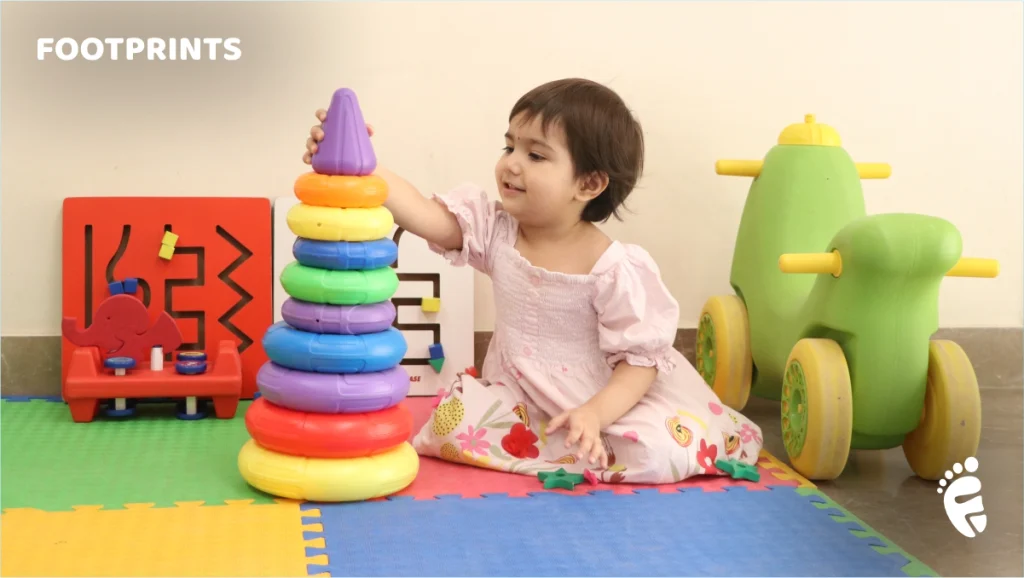
Key Benefits of Preschool for Children
The key benefits that preschools offer to children include:
1. Structured Learning
- Preschools follow a scientifically developed, planned curriculum that introduces children to early literacy, numeracy, and problem-solving skills.
- The curriculum allows for activities that are designed to build cognitive, motor, and language development step by step.
- Structured learning also ensures children are school-ready, bridging the gap between play and formal education.
2. Trained Teachers
- Preschool educators are trained in child development, and therefore, they understand how young minds learn best.
- They offer the necessary guidance that helps children progress from simple tasks to more complex ones.
- They are trained to identify early learning challenges and offer the right support.
3. Social Interactions
- Preschool offers opportunities for peer-to-peer engagement
- Through group play and collaborative activities, children learn empathy, communication, and teamwork
- Early socialization goes a long way in building confidence.
4. Routine
- A consistent routine helps build security in children.
- Routine also teaches them time management, responsibility, and self-regulation
- It also lays down the foundation for discipline and independence.
According to Zero to Three, children’s social development accelerates significantly when they have regular, consistent interactions with peers — an experience that is difficult to replicate in a home-only setting, especially in urban nuclear families.
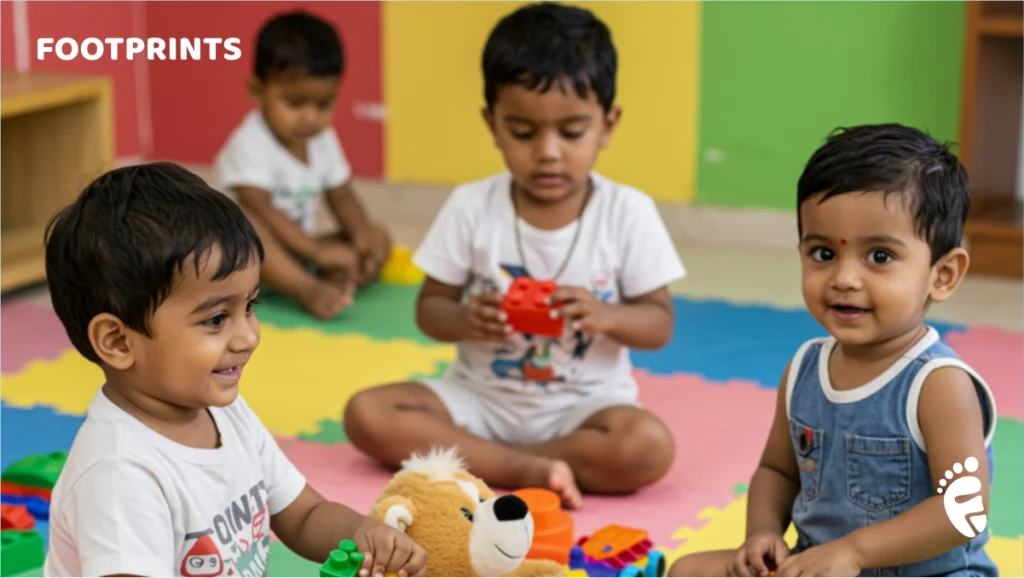
Benefits of Staying at Home for Young Children
Staying at home brings the following advantages:
1. Comfort
- Home offers a familiar, comfortable environment for children.
- It is a place where they can relax and explore things at their own pace.
2. Flexible Learning
- Parents can tailor activities according to the child’s unique interests.
- Everyday tasks such as cooking, gardening can become learning opportunities.
3. Parental Bonding
- Staying at home strengthens the parent-child relationship on account of shared time and experiences.
- There are many bonding opportunities over play, reading and more.
Preschool vs Staying at Home: Key Differences
| Factor | Preschool | Staying at Home |
| Structured Learning | High level of structured learning | Low structure |
| Social Interactions | Strong peer interaction | Limited interaction |
| Routine | Consistent routine | May lack routine |
| Parental Bonding | Limited time | Strong bonding opportunities |
| Comfort | Takes time to adjust | Familiar environment |
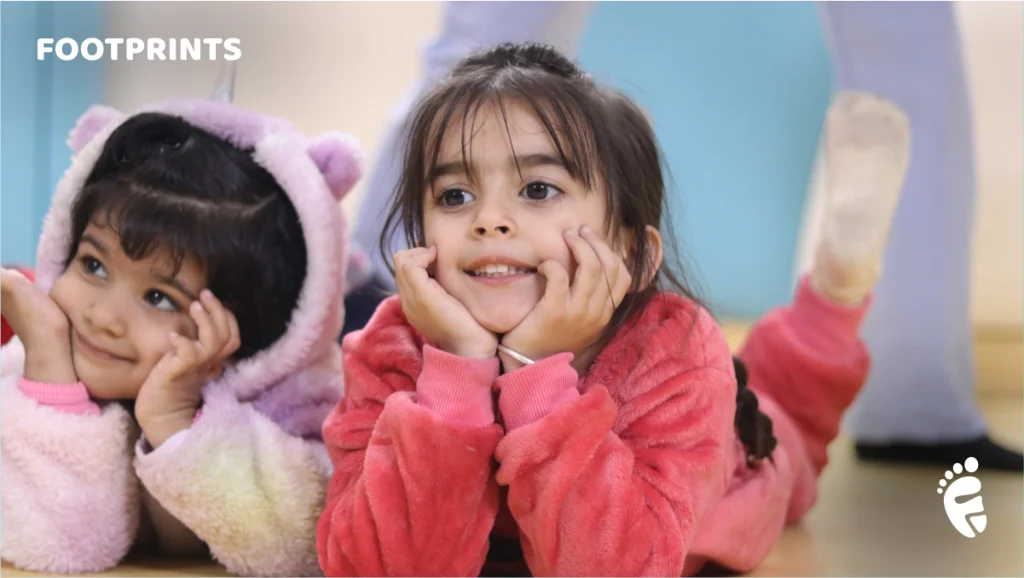
Social and Emotional Development – Preschool vs Home
In making the decision of preschool vs homeschool, you also need to consider the child’s social and emotional development. Preschool tends to offer higher opportunities of social and emotional development as there are opportunities for:
- Peer learning- Children learn by interacting with peers. Group activities encourage collaboration and problem-solving.
- Sharing – Structured play teaches children to share their belongings. Besides, teachers guide children through conflicts.
- Emotional growth- Preschool offers opportunities to manage emotions in group contexts. Children tend to learn self-regulation, patience and more.
Which Option Is Better for Your Child?
Given the different pros and cons of both options, there is no one-size-fits-all. The choice truly depends on what skills you envisage for your child and what the child’s personality and family values warrant.
When Staying at Home May Work Well
Overall, staying at home can work well when there is a strong parental environment. The caregivers must have the necessary time to engage with the child. Also, the home learning environment needs to be robust so that the child can be taught age-appropriate skills.
When Preschool Is More Beneficial
Among the benefits of preschool for children is the fact that it offers the child the right social environment. It is also the right choice in ensuring structured learning for the child that helps in overall holistic development.
The Harvard Center on the Developing Child emphasises that responsive, back-and-forth “serve and return” interactions are the core driver of healthy brain development — and quality preschool teachers are specifically trained to provide these interactions consist
Frequently Asked Questions
1. Is preschool better than staying at home?
The choice depends on the child and family circumstances. While preschool offers structured learning, socialization, and preparation for formal schooling, home care provides comfort, flexibility, and deeper parental bonding. Both can support healthy development. It is important that you choose the one that aligns with your child’s needs and your family’s values.
2. Can parents teach everything at home?
Parents can teach many essential skills like language, values, daily life lessons. However, preschools provide trained educators, peer learning, and structured activities that may be harder to replicate fully at home. A balanced approach often works best where parents nurture at home, while preschool adds exposure to group learning.
3. Does preschool help in social development?
Yes. Preschool is a key setting for social growth. It teaches children to learn to share, cooperate, and resolve conflicts. Peer interaction also builds confidence, empathy, and communication skills.
4. What are the disadvantages of staying at home?
The disadvantages include limited peer exposure, unstructured learning and transition challenges to formal school later.
5. Is preschool necessary for every child?
No. Some children thrive at home with attentive caregivers. However, many others benefit greatly from the structured environment of a preschool.
To Sum Up
When you need to make a choice between preschool vs staying at home, it is important to make an informed choice based on your child’s temperament, family situation, and long-term goals that you have for your child.
At Footprints Play School we offer a conducive environment that helps in the holistic development of children. We follow a scientifically developed HighScope Curriculum that focuses on different content areas and promotes active learning.

Aditya brings over ten years of expertise as a Senior Marketing Strategist. He’s an expert at developing captivating marketing tactics that regularly provide excellent outcomes. His innovative strategies have demonstrated a track record of increasing organizational reach and engagement, showcasing his extensive knowledge of the contemporary marketing landscape.
 View Fees
  Call Us