

A preschool curriculum refers to a structured framework which is designed to guide early childhood learning and development. It often combines play, academics, and social experiences to help children build foundational skills. There are a range of educational philosophies and pedagogical beliefs, based on which there are a wide range of preschool curriculums. The ones that are commonly in use include Montessori, HighScope, play-based and theme-based curricula.
A wide range of curriculum also means that parents are often confused about which one to choose. Here is a handy guide that will help address all your queries and help you make an informed choice.
What Is a Preschool Curriculum?
A preschool curriculum is a structured learning plan that helps build foundational skills in children. It has space for building early literacy skills but also for the development of social skills as well as emotional skills. It also helps develop critical life skills that are essential for later life. Preschool curriculums often also lay emphasis on hands-on classroom activities.
Each approach, however, differs in terms of basic philosophy towards learning as well as aspects such as the role of the teacher, the environment offered, and daily activities.
Why Preschool Curriculum Is Important for Early Childhood Development
The primary reason why a preschool curriculum is extremely important for childhood development is that 90% of the child’s brain develops by the time he is 5 years of age. In these crucial years more than 1 million new neural connections are formed every second. A scientifically developed preschool curriculum is vital for the child’s long-term growth, as it supports holistic development. Among other things, it also helps in the child’s socio-emotional development while also making them school-ready.
Key Areas Covered in a Preschool Curriculum
To better understand what children learn in preschool, here are the specific skills and learning activities introduced during early childhood education:
Language and Communication Skills
Early years are the time when the child’s vocabulary develops rapidly. By the time they are five years of age, they know as many as 10,000 words. To ensure this, they need to have exposure to language and conversation. At preschool children are exposed to rhymes, songs, conversation, intentional play and a lot more. This goes a long way in developing vocabulary and also developing their overall communication skills.
Early Math Concepts
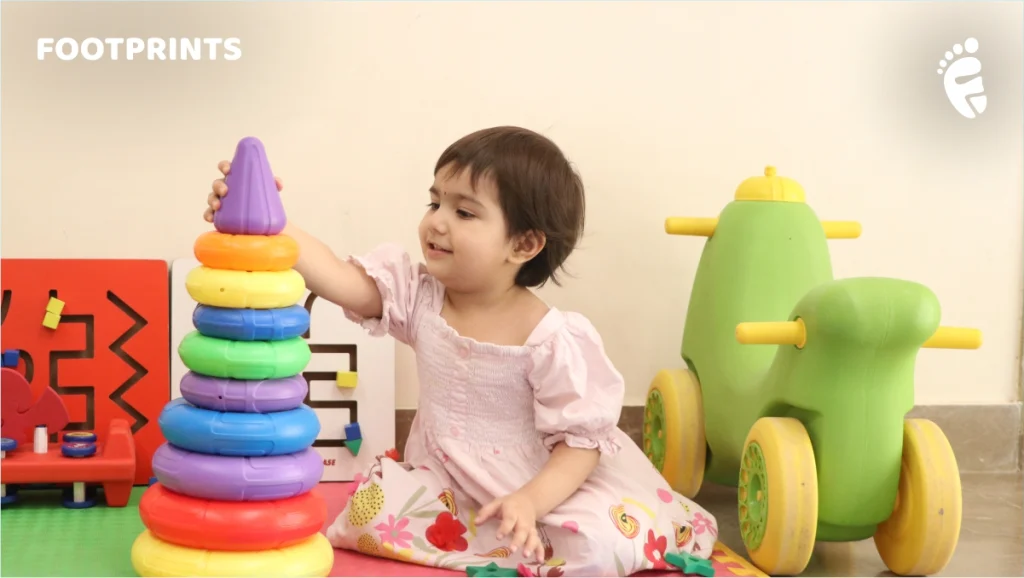
Early years are also the time for their cognitive abilities to sharpen. At this time, preschool exposes them to early math concepts. These include the basics of numbers, shapes and patterns. They learn these through a wide variety of activities, such as:
- Play-based activities: Counting blocks, sorting toys, or arranging beads.
- Daily routines: Counting steps, comparing snacks, or noticing patterns in clothing.
- Hands-on exploration: Using cubes, puzzles, and shape sorters.
- Storytelling & Songs: Rhymes like “Five Little Ducks” reinforce counting
The above activities not only lay a strong foundation for later maths but also foster cognitive growth and confidence building. Children also gain independence by applying math in daily routines.
Motor Skills Development
Preschool is also the time to strengthen both fine and gross motor skills. Not only does this support children in their physical growth, but it also equips them to undertake day-to-day tasks independently.
Some of the activities that help in motor skill development include:
- Drawing
- Clay modelling
- Threading beads
- Running
- Jumping
Social and Emotional Development
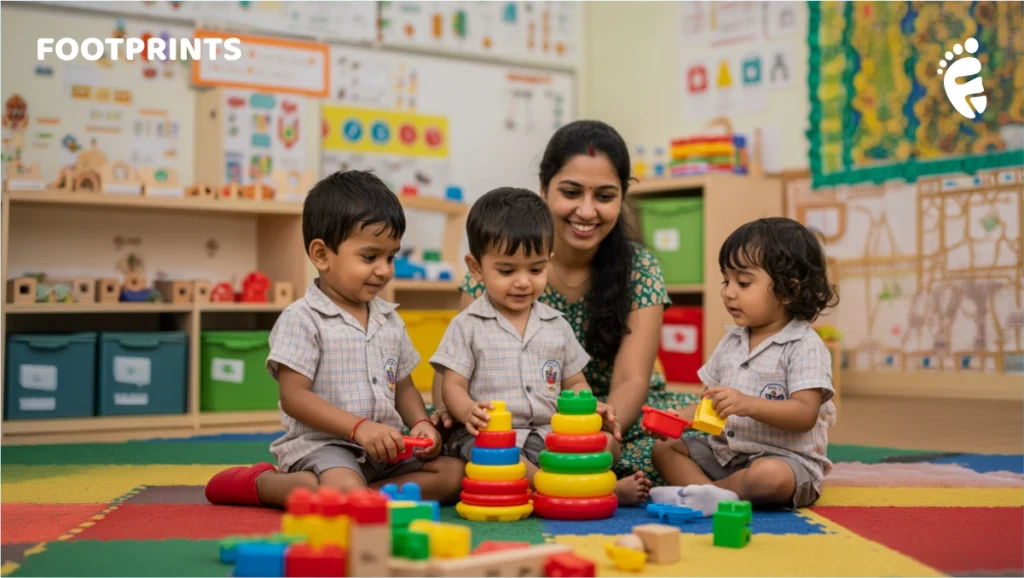
At preschool children learn to share, work in teams, wait for their turn and more, laying the foundation for social skills. These skills help them build empathy, cooperation and resilience.
Additionally, they also learn about their own feelings. Teaching children about feelings involves helping them identify, name, and safely express emotions. It also involves validating that all feelings are okay, but not all behaviours are. By using storybooks, modelling emotional regulation and more, important lessons are driven home.
Creativity and play-based learning
At preschool children also give wings to their creativity through a number of activities. They learn art, music, dance and more, thereby giving free rein to their creative instincts. It not only offers exposure to different forms; children also learn to develop confidence in their unique abilities. All of this sparks joy as well as helps them in emotional expression.
| Learning Area | Skills Developed |
| Language | Communication and vocabulary |
| Math | Numbers and basic patterns |
| Motor Skills | Coordination and movement |
| Social Skills | Sharing and cooperation |
| Creativity | Art, music and imagination |
Types of Preschool Curriculum Approaches
While there are several different types of preschool curriculum, the ones that are widely popular include:
1. Montessori Curriculum
Pioneered by Dr Maria Montessori, this is a child-centred curriculum. The focus in the Montessori curriculum is on five core areas. These include:
- Practical Life: Developing independence and concentration through everyday tasks.
- Sensoria l: Refining the five senses and helping children understand their surroundings.
- Mathematics: Mathematical concepts through hands-on material
- Language: Phonetic learning, reading and writing.
- Culture: Overall understanding of the world and the child’s place in it.
The Montessori curriculum is designed to foster independence in children and to contribute to their holistic development. The role of teachers is that of offering guidance as opposed to traditional instruction. Peer learning also plays a very important role in this methodology. In fact, the classrooms are organised in three-year age spans.
2. HighScope Curriculum
The HighScope curriculum approach is based on more than 50 years of research of early childhood development. The emphasis is on active learning. The curriculum is structured across eight content areas and uses 58 key development indicators. The focus is on encouraging independence and problem-solving as well as socio-emotional development. Some of the key features of the approach include:
- Active, activity-based learning.
- Children plan what they want to do and later reflect on their learning
- Teachers act as facilitators and use 58 indicators to gauge child development
The eight content areas in this approach include:
- Approaches to learning
- Social & emotional development
- Physical development & health
- Language & communication
- Mathematics
- Creative Arts
- Science & Technology
- Social studies
The HighScope curriculum believes in nurturing the whole child. It also works towards sparking a love for learning that turns children into active, lifelong learners.
3. Play-Based Curriculum
The essential philosophy of this approach is that play is not “just fun”. It is the way children make sense of the world, develop skills, and build confidence. The emphasis is on play-based exploration. The curriculum focuses on a range of sensory games as well as other activities that allow the child to have fun while learning important concepts. The use of guided play and child-centred activities results in the holistic development of children.
4. Theme-Based Curriculum
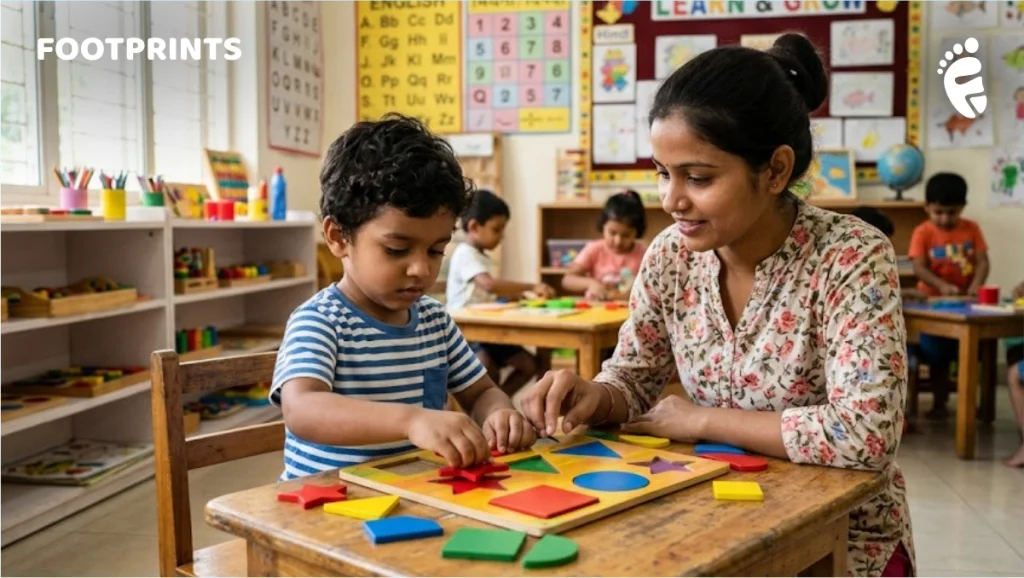
In this curriculum the emphasis is on organising learning around specific themes. Think of topics like seasons or animals. The emphasis is also on combining literacy, math, art, social skills and more while dealing with a theme. Essentially, it is playful yet structured. Importantly, it connects everyday experiences to learning, keeping the children engaged.
Components of a High-Quality Preschool Curriculum
While different curriculums vary based on their approach, some of the common aspects of a high-quality play school curriculum include:
Teachers with Training in Early Childhood Education
It is imperative that teachers be trained in the specific approach to be able to deliver the curriculum effectively. In effect, a good curriculum is only equal to the teachers who deliver it effectively.
Research-Based Curriculum That Works for All Children
The curriculum needs to have its basis in scientific research. That way it ensures that it is using tried and tested means to make a valuable difference in the lives of young children.
Play-Based Learning Activities
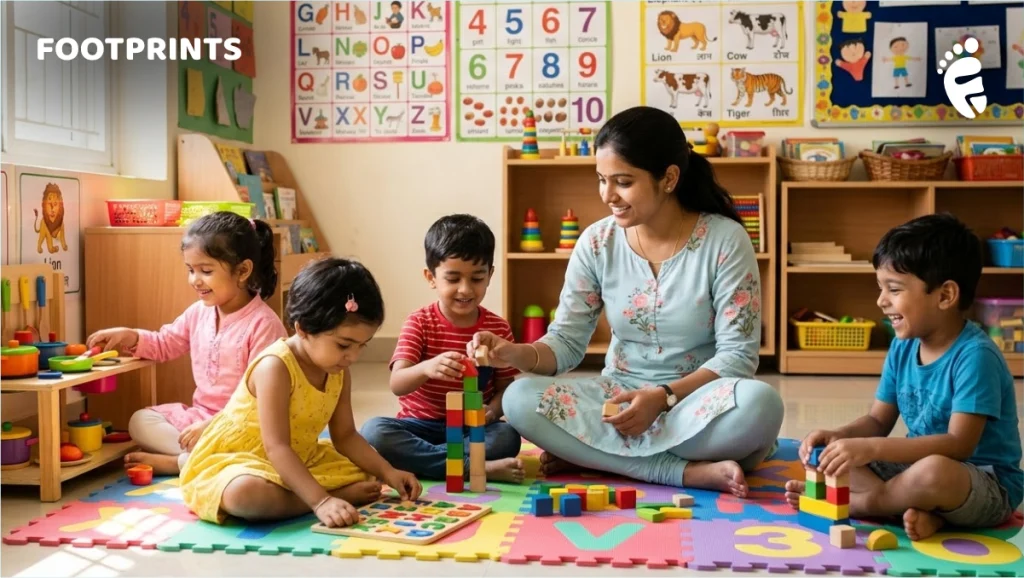
An extremely crucial aspect of early childhood education is that it should spark love for learning and not turn it into a chore. To that extent the role of play-based activities cannot be overstated. They keep children engaged while teaching them important concepts.
Age-Appropriate Learning Goals
A high-quality curriculum must map itself with age-appropriate learning goals. In doing so, it ensures that real learning outcomes are achieved
Family Engagement in Early Learning
A preschool needs to act as a parenting partner. It is imperative, therefore, that there is not only transparent communication with parents on the child’s progress, but parents are also engaged in the learning journey.
How Parents Can Evaluate a Preschool Curriculum
Evaluating a preschool curriculum is an important aspect for parents to see if it fits with the child’s learning style and their overall family values. Some of the aspects to look for
Learning Approach and Teaching Methods
In evaluating each approach, it is important that you look for:
- A balance between structured and exploratory learning
- Whether or not the curriculum focuses on sparking curiosity, creativity and independence in the child.
- It has a focus on activity-based learning.
Age-Appropriate Learning Goals
It goes without saying that the learning goals need to be in sync with the developmental stage of preschoolers. Pro tip – Do check to see that there is some amount of flexibility built in that caters to the unique abilities of each child.
Variety of Learning Activities
The curriculum must also include a wide range of activities that keep children engaged and also offer them enough exposure. The activities should span the whole spectrum of cognitive, social, emotional and physical development.
Teacher-Child Interaction
Teachers should play the role of providing an important scaffolding and act as facilitators for the child’s growth as opposed to offering instructions.
Focus on Overall Development
The curriculum should facilitate the child’s overall growth, including social, emotional, physical and cognitive development.
Frequently Asked Questions About Preschool Curriculum
1. What subjects are taught in preschool?
A preschool focuses on a wide range of areas, including developing language and literacy, numeracy, and social and emotional skills. Besides, it also helps the child in terms of being school-ready.
2. Is preschool curriculum academic or play-based?
While preschool curriculums may differ depending on the approach they follow, overall it is important that they follow an activity-led and play-based approach that does not treat learning like a chore. That way the child will grow up falling in love with the concept of learning.
3. What is the best preschool curriculum for young children?
There is no single “best” curriculum. It depends on the child’s learning style and family priorities. Make sure you evaluate all the curriculums thoroughly and choose what you think works best for your child.
4. What is the HighScope curriculum in early childhood education?
Developed over 50 years ago, it has a strong basis in research. The core principle is that children learn best through active, participatory learning with teachers acting as facilitators.
5. What is the difference between HighScope and a play-based curriculum?
HighScope is a structured, research-based curriculum that emphasises active learning and daily routines. A play-based curriculum, on the other hand, is more flexible, focusing broadly on child-led exploration and social development.
6. How does a preschool curriculum support child development?
Preschool education offers holistic development for the child. This includes developing the following skills:
- Cognitive: Builds problem-solving, memory, and early academic skills.
- Social-emotional: Encourages cooperation, empathy, and self-regulation.
- Language: Expands vocabulary, communication, and storytelling.
- Physical: Strengthens motor skills through play and movement.
- Creativity: Fosters imagination and innovation through art and exploration.
To Sum Up
While there is no one-size-fits all, a thorough evaluation of the various preschool curriculums can go a long way in being able to identify one that works best for your child.
At Footprints Preschool, we follow the scientifically developed HighScope curriculum, a research-backed, child-centred approach where children get hands-on experiences. We are committed to the child’s overall development.

Shubham Tiwari is a childcare specialist and education content expert with over 5 years dedicated to India’s early childhood education landscape. His work sits at the intersection of child development research and practical parenting guidance — helping Indian families understand preschool selection, evaluate curriculum quality, recognise developmental milestones, and navigate child safety standards.
Over the course of his career in early childhood education, Shubham has developed deep expertise in the questions Indian parents ask most: when to start preschool, what to look for in a curriculum, how to identify speech delay early, and what genuine early learning looks like versus supervised play. His writing covers preschool admission processes, child safety policies, handwriting and language development, and how early experiences shape long-term brain development.
Shubham’s approach is research-first and parent-first — making early childhood education knowledge accessible to every family, regardless of background.
 View Fees
  Call Us