

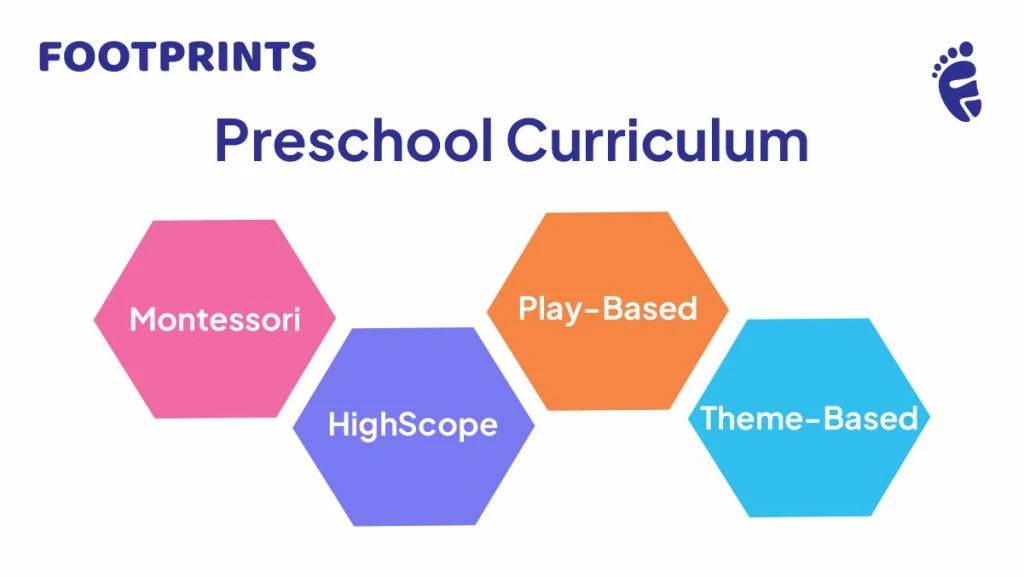
There are a number of preschool curricula that are designed to cater to different learning styles and developmental needs. These include Montessori, Play-based, Highscope as well as several other theme-based approaches. Each of them focus on a different way in which children tend to learn.
What this also means is that parents are often left confused. Typically, questions from parents include “ what is the difference” and, importantly “, which is better”.
In this blog, we will explore the different types of preschool curriculum along with the approaches they follow to enable you to make the choice that feels right for your child.
What Are Preschool Curriculum Approaches?
Essentially, preschool approaches refer to the different educational philosophies and frameworks that determine how children learn. Each approach accordingly may focus on play, structured academics or child-led exploration. Each approach also differs in terms of aspects such as the environment, the role of the teacher as well as daily activities.
Why Do Different Preschools Follow Different Curriculum Approaches?
Different preschools have different educational philosophies and pedagogical beliefs. Curricula is also chosen to match different learning styles of children. Some programs prioritize socio-emotional development of children as well as their independence, while others are focused on academic readiness and cognitive skills.
Common Types of Preschool Curriculum
While there are several different types of preschool curriculum, the ones that are widely popular, include:
1. Montessori Curriculum
Pioneered by Dr Maria Montessori, this is a child-centred curriculum that focuses on five core areas. These include:
- Practical Life: The focus is on developing independence and concentration through everyday tasks.
- Sensorial: The emphasis is on refining the five senses and helping children understand their surroundings.
- Mathematics: It introduces mathematical concepts through hands-on material
- Language: The emphasis is on phonetic learning, reading and writing.
- Culture: The curriculum is designed to foster an overall understanding of the world and the child’s place in it.
The overall focus of the Montessori Curriculum is to foster independence in children and contribute to their holistic development. The role of teachers is that of guidance as opposed to traditional instruction and children are encouraged to learn at their own pace. The emphasis is also on peer learning, whereby children are typically grouped in three-year age spans to be able to learn from each other.
2. HighScope Curriculum
Based on more than 50 years of research on early childhood development, it has a strong focus on active-learning. The HighScope curriculum approach uses 58 key developmental indicators (KDIs) across eight content areas. The goal is to encourage independence, problem solving and socio-emotional development. The core components of the approach include:
- Active participatory learning, whereby children learn through hands-on experiences.
- Plan-do-review, whereby children plan what they want to do, carry out the plan and then reflect on their experiences.
- 58 specific indicators guide teachers in observing and supporting development.
- Teachers act as facilitators not as instructors
- Classrooms are organized into well-defined interest areas with accessible materials
Different content areas in this approach include:
- Social and Emotional Development
- Physical Development and Health
- Language, Literacy, and Communication
- Mathematics
- Creative Arts
The overall focus in the HighScope curriculum is on nurturing the whole child and sparking a lifelong love of learning.
3. Play-Based Curriculum
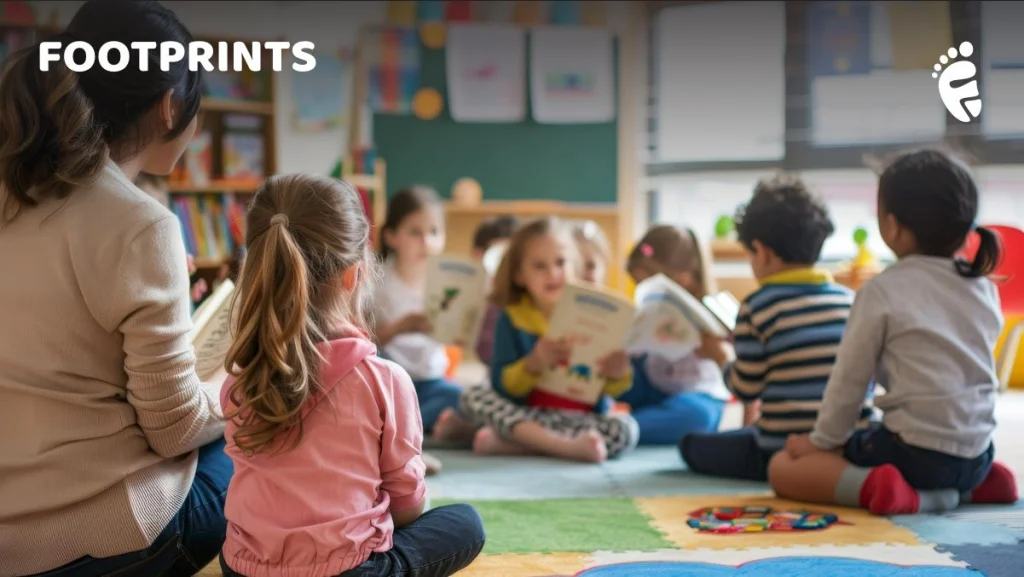
As its name suggests, a play-based curriculum focuses on play-based exploration. Its focus is on child-initiated activities that are supported by the teacher. The curriculum relies on a host of sensory games and other activities that are designed to ensure cognitive, social, emotional and physical development of children. The key aspects of the approach include:
- Child-centred activities
- Teachers acting as facilitators
- Holistic development of children
- Use of guided play
Overall on account of the play-based technique, student engagement is high while stress remains low.
4. Theme-Based Curriculum
A theme-based preschool curriculum broadly organizes learning around central topics (like “Seasons,” “Animals” ). It combines literacy, math, art, and social skills into one integrated unit. The emphasis is on helping children connect ideas and thereby to support holistic development.
A theme-based curriculum is structured yet playful. Overall, it makes learning meaningful by connecting everyday experiences to academic skills.
Comparison of Preschool Curriculum Approaches
| Curriculum Type | Focus Area | Learning Style |
| Montessori | Independence, self-paced learning, sensory exploration | Child-led, hands-on with specialized materials; teacher as guide |
| HighScope | Active participatory learning, cognitive and social development | Plan–Do–Review cycle; children make choices, teachers scaffold learning |
| Play-Based | Social-emotional growth, creativity, problem-solving | Free play and guided play; learning through exploration and imagination |
| Theme-Based | Integrated learning across subjects, engagement through central topics | Teacher-designed themes ; structured activities tied to one idea |
How to Choose the Right Curriculum for Your Child
When it comes to choosing the right curriculum for your child, there is no one-size-fits-all approach. You need to make the decision of preschool teaching methods based on the child’s personality and overall learning style. Go with what you think will work best for the child and enhance his or her learning.
Frequently Asked Questions
1. Which preschool curriculum is best for children?
There isn’t a single best curriculum. The choice of the right curriculum depends on your child’s personality, learning style, as well as your family values.
2. What are the different types of preschool curriculum?
The different types of preschool curriculum include:
- Montessori – Its focus is on independence, hands-on materials, self-paced learning.
- HighScope – The emphasis is on active learning with a daily “Plan–Do–Review” cycle.
- Play-Based – It focuses on free play and guided play for social-emotional growth.
- Theme-Based – It offers integrated learning around central topics.
3. What is the difference between Montessori and play-based learning?
A Montessori curriculum focuses on a structured environment with specialized materials. It is child-led but guided by teachers. The overall emphasis is on independence and practical life skills. A play-based curriculum, on the other hand, emphasizes creativity, imagination, and social interaction. Learning happens naturally through play rather than structured materials.
4. Is the HighScope curriculum suitable for all children?
The HighScope curriculum is effective for many children because it balances structure with choice. Children who thrive on routine tend to do well with this curriculum.
5. Do all preschools follow the same curriculum?
No. Preschools choose different approaches based on their educational philosophy. Some also tend to blend methods.
6. How to choose the right curriculum for preschool?
The choice of the right curriculum will depend on the learning style of the child and your overall priorities.
To Sum Up
It is important that you undertake thorough research on the various types of preschool curriculum and spend time observing your child to understand his learning style. The right choice will go a long way in setting up your child for long-term success.
At Footprints Play School, our emphasis is on the holistic development of the child. To that end, we follow the scientifically developed HighScope curriculum with its emphasis on active learning.

Aditya brings over ten years of expertise as a Senior Marketing Strategist. He’s an expert at developing captivating marketing tactics that regularly provide excellent outcomes. His innovative strategies have demonstrated a track record of increasing organizational reach and engagement, showcasing his extensive knowledge of the contemporary marketing landscape.
 View Fees
  Call Us