

Updated: 07-April-2026
How Many Letters Are There in the Alphabet?
The English alphabet has 26 letters, from A to Z. These letters form the foundation of reading, writing, and communication. Among them, there are 5 vowels (A, E, I, O, U) and 21 consonants. Learning all letters and their sounds is one of the first and most important steps in early education.
Understanding the alphabet is a key part of what children learn in preschool, as it helps build language skills, improves memory, and prepares them for reading and writing.
Alphabet A to Z: Complete List
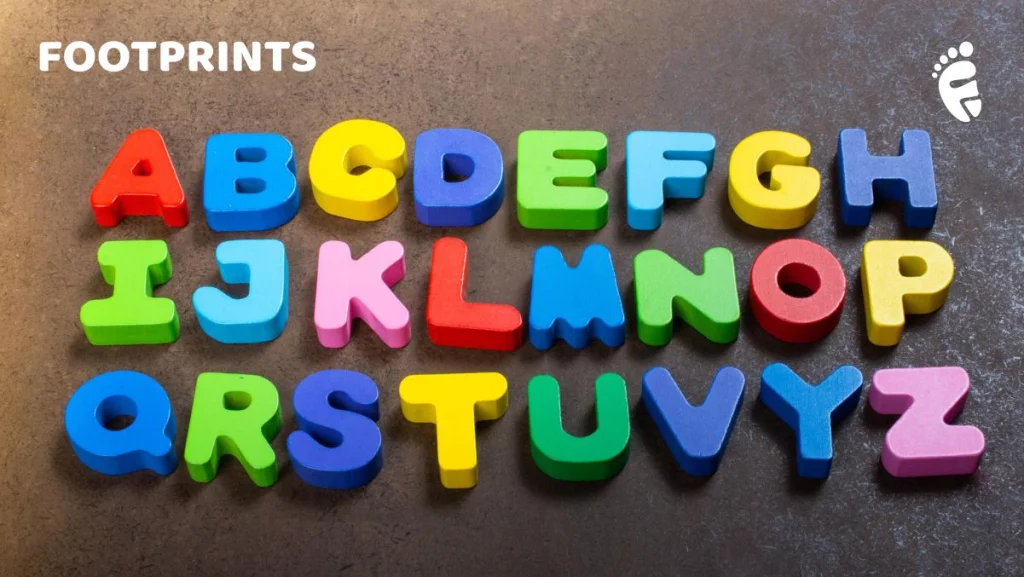
Here are all the letters in the English alphabet:
A, B, C, D, E, F, G, H, I, J, K, L, M, N, O, P, Q, R, S, T, U, V, W, X, Y, Z
Learning the alphabet A to Z helps children recognize letters, form words, and understand language patterns more effectively.
Alphabet Overview Table (Easy to Understand)
| Category | Details |
| Total Letters | 26 |
| Vowels | A, E, I, O, U |
| Constants | 21 letters |
| Most Used Letter | E |
| Rarely Used Letters | Q, X, Z |
| Alphabet Order | A to Z |
This table gives a quick overview of the English alphabet in a simple format.
Interesting Facts About Alphabets
The English alphabet is full of surprising and fun facts that make learning more exciting.
Letter A
The letter “A” is one of the shortest words in English, along with “I”. It is also one of the most commonly used letters.
Letter B
The letter “B” is often silent in words like “debt” and “subtle,” which can sometimes confuse learners.
Letter C
The letter “C” can have both hard and soft sounds, like in “cat” and “circle.”
Letter E
“E” is the most used alphabet in English, appearing in many common words.
Letter G
The letter “G” can be silent in some words, like “sign,” while clearly heard in words like “go.”
Letter J
The letter “J” was the last letter added to the English alphabet.
Letter K
“K” is silent in words like “knee” but clearly pronounced in “keen.”
Letter N
The shape of “N” is believed to have been inspired by ancient symbols representing a snake.
Letter O
The shape of the letter “O” is over 3000 years old and has remained almost unchanged.
Letter S
“S” is one of the most commonly used starting letters in English words.
Letter W
“W” is called “double U,” but it actually looks like a “double V.”
Letter X
“X” is one of the least used letters but often stands out in words.
Letter Z
“Z” is pronounced as “Zed” in some countries and “Zee” in others.
Did You Know This About the Alphabet?
Here are some additional fun facts:
- The English alphabet once had 27 letters, including “&” (ampersand)
- Some letters can be silent, making English unique
- Not all languages follow the same alphabet system
These alphabet facts make learning more interesting and engaging.
How Many Vowels Are in the Alphabet?
There are 5 vowels in the English alphabet:
A, E, I, O, U
Vowels are important because they are used in almost every word. Without vowels, it becomes difficult to form meaningful words.
Alphabet A to Z Number (Fun Learning Concept)
Sometimes, letters are also linked with numbers to make learning easier:
| Letter | Number |
| A | 1️⃣ |
| B | 2️⃣ |
| C | 3️⃣ |
| D | 4️⃣ |
| E | 5️⃣ |
This pattern continues up to Z = 26. This method is often used in fun learning activities.
Alphabets in Different Languages
Not all languages use the same alphabet system, which makes learning languages even more interesting.
1. The Hindi Alphabet
The Hindi alphabet consists of 44 letters, including 33 consonants and 11 vowels. It is written in the Devanagari script and is phonetic, meaning words are pronounced exactly as they are written. This makes it easier for children to learn pronunciation compared to English.
Cool fact- Hindi has contributed several words to the English language. Think- guru, yoga, karma, cheetah, bungalow, and avatar.
2. The Spanish Alphabet
The Spanish alphabet has 27 letters, including the special letter “ñ.” It is very similar to the English alphabet but has more consistent pronunciation rules, making reading and speaking easier for learners.
3. The Swedish Alphabet
Now this one has as many as 29 letters. 26-letter basic Latin alphabet (A to Z) plus Å, Ä, and Ö, in that order.
4. The French Alphabet
The French alphabet uses the same 26 letters as English but includes accents like é, è, and ç. These accents change the pronunciation of letters, adding uniqueness to the language.
5. The German Alphabet
The German alphabet also uses 26 letters but includes additional characters called umlauts (ä, ö, ü) and the letter ß. These variations slightly change pronunciation and meaning.
6. The Italian Alphabet
It has 21 letters ( j, k, w, x and y not being a part) with pronunciations that are quite different as compared to those in English. What the language particularly loves is double consonants.
7. The Chinese Writing System
Chinese does not use an alphabet like English. Instead, it uses thousands of characters, each representing a word or meaning. This makes it very different from alphabet-based languages
8. The Japanese Writing System
Japanese uses multiple writing systems, including Hiragana, Katakana, and Kanji. Each system has its own purpose, making the language rich and structured.
9. The Greek Writing System
Odds are that you know some Greek alphabets already- Alpha, Beta, Gamma, Delta. Yes, those and several other letters make up the 24 letters of the language!
There you go with so many fun facts about different languages! Armed with these facts, are you planning to learn a new language? Let us know in the comments which one that would be. Irrespective of the language that you choose, you are about to embark on a very enriching journey.
Alphabet Systems in Different Languages
| Language | Number of Letters / System | Key Feature |
| English | 26 letters | Most widely used global alphabet |
| Hindi | 44 letters | Uses Devanagari script; phonetic |
| Spanish | 27 letters | Includes “ñ”; consistent pronunciation |
| Swedish | 29 letters | Adds Å, Ä, Ö to the Latin alphabet |
| French | 26 letters | Uses accents like é, è, ç |
| German | 26 + extra characters | Includes umlauts (ä, ö, ü) and ß |
| Italian | 21 letters | Does not include j, k, w, x, y; uses double consonants |
| Chinese | Character-based | Uses symbols instead of alphabets |
| Japanese | Multiple systems | Uses Hiragana, Katakana, and Kanji |
| Greek | 24 letters | Includes Alpha, Beta, Gamma, Delta |
Learning about different alphabets helps children understand language diversity.
Why Learning the Alphabet is Important
Learning all letters is the foundation of communication. It helps children:
- Recognize words
- Improve reading and writing skills
- Build vocabulary
- Develop confidence in communication
It also supports cognitive development and prepares children for advanced learning.
Frequently Asked Questions (FAQs)
1. What is a fun fact about the alphabet?
One fun fact is that the English alphabet once had 27 letters, including the ampersand (&).
2. What are the top 5 rarest letters?
The least used letters in English are Q, X, Z, J, and K.
3. What’s the most forgettable letter?
Letters like Q and X are often considered less commonly used and sometimes overlooked.
4. Which letter cannot be silent?
Vowels like A, E, I, O, and U are almost always pronounced in words.
5. How many letters are there in the alphabet?
There are 26 letters in the English alphabet.
6. How many vowels are in the alphabet?
There are 5 vowels: A, E, I, O, and U.
7. Why is learning alphabets important for children?
Learning alphabet is the foundation of language development. It helps children recognize letters, understand sounds, and form words, which are essential for reading and writing. It also improves memory, communication skills, and confidence. Early exposure to the alphabet supports overall cognitive development and prepares children for future learning in school.
To Sum Up
The alphabet is the building block of language and communication. Learning all letters from A to Z not only helps children read and write but also opens the door to creativity and expression. With fun facts, engaging methods, and regular practice, learning the alphabet can become an enjoyable journey. At Footprints Childcare, we focus on making early learning interactive and meaningful, helping children build strong language skills and confidence for the future.

Aditya brings over ten years of expertise as a Senior Marketing Strategist. He’s an expert at developing captivating marketing tactics that regularly provide excellent outcomes. His innovative strategies have demonstrated a track record of increasing organizational reach and engagement, showcasing his extensive knowledge of the contemporary marketing landscape.
 View Fees
  Call Us