

Updated: 06-April-2026
The solar system is a group of planets, moons, and other objects that revolve around the Sun. There are 8 planets in the solar system—Mercury, Venus, Earth, Mars, Jupiter, Saturn, Uranus, and Neptune. Teaching children about the solar system and planet names helps them understand space, build curiosity, and develop early learning skills in a fun and engaging way.
Parents often look for simple ways to explain space concepts, and introducing these ideas through storytelling, visuals, and Daycare learning activities can make the process enjoyable and effective.
Quick Summary
- The solar system includes the Sun and 8 planets
- Each planet is unique in size, colour, and features
- Learning planet names improves curiosity and knowledge
- Early exposure builds interest in science and discovery
What is Our Solar System?
Our solar system is a vast system made up of the Sun at the center and all the objects that orbit around it. These include planets, moons, asteroids, and comets. It is a small part of the Milky Way galaxy, but it is the system we live in.
Understanding what solar system helps children connect their daily life with the larger universe. It gives them a sense of wonder and helps them explore beyond Earth in a simple and relatable way.
How Many Planets Are in the Solar System?
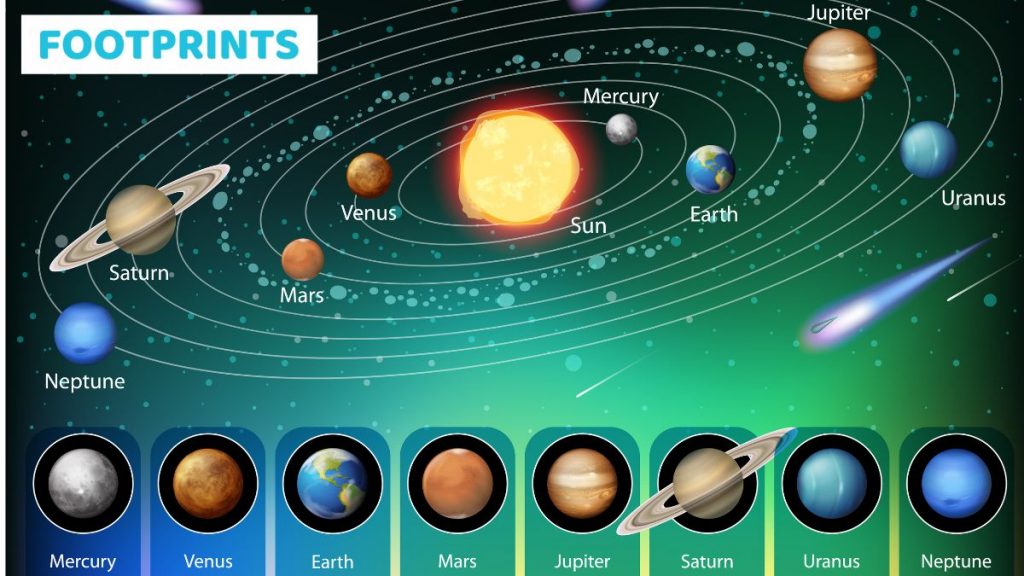
There are 8 planets in the solar system. These planets move around the Sun in a fixed path called an orbit.
Planets in the Solar System in Order:
| Sr. No | Planet Names |
| 1 | Mercury |
| 2 | Venus |
| 3 | Earth |
| 4 | Mars |
| 5 | Jupiter |
| 6 | Saturn |
| 7 | Uranus |
| 8 | Neptune |
Learning the planets in the solar system in order helps children remember them easily and understand their position from the Sun.
Names of Planets and Their Key Features
Here is a simple table to help understand the planet names and their characteristics:
| Planet | Key Feature | Fun Fact |
| Mercury | Closest to the Sun | Fastest orbit |
| Venus | Hottest planet | Thick atmosphere |
| Earth | Supports life | The only known life planet |
| Mars | Red planet | Has volcanoes |
| Jupiter | Largest planet | Has a giant storm |
| Saturn | Ringed planet | Beautiful rings |
| Uranus | Tilted planet | Rotates sideways |
| Neptune | Farthest planet | Strongest winds |
This table makes it easier for children to quickly understand and remember the planets.
Detailed Explanation of Each Planet
1. Mercury – The Closest Planet
Mercury is the closest planet to the Sun and moves very quickly around it. It completes one orbit in just 88 days. Due to its closeness to the Sun, it experiences extreme temperatures.
2. Venus – The Hottest Planet
Venus is known as the hottest planet in the solar system. It has a thick atmosphere that traps heat, making it even hotter than Mercury.
3. Earth – Our Home Planet
Earth is the only planet known to support life. It has water, air, and the right temperature for living things to survive.
4. Mars – The Red Planet
Mars is called the Red Planet because of its reddish colour. It has mountains and valleys and is one of the most studied planets.
5. Jupiter – The Largest Planet
Jupiter is the biggest planet in the solar system. It has a huge storm called the Great Red Spot and many moons.
6. Saturn – The Ringed Planet
Saturn is famous for its beautiful rings made of ice and rock particles. It is one of the most visually stunning planets.
7. Uranus – The Tilted Planet
Uranus rotates on its side, making it unique among all planets. It is an ice giant with a cold atmosphere.
8. Neptune – The Blue Planet
Neptune is the farthest planet from the Sun. It is known for its deep blue colour and very strong winds.
Fascinating Facts About Our Planetary Neighbours
Beyond just knowing the names of planets, preschoolers can be amazed by interesting facts about each one. For example, Mercury is the closest planet to the Sun and has extreme temperature variations. Venus, often called Earth’s twin, has a thick atmosphere that traps heat. Earth, our home planet, is the only known planet to support life. Mars is often called the “Red Planet” due to its rusty appearance. Jupiter is the largest planet, while Saturn is known for its remarkable rings. Uranus and Neptune, the outermost planets, are ice giants with unique features. Sharing these facts with preschoolers will spark their imagination and curiosity.
Why Should Children Learn About the Solar System?
Learning about our Earth and solar system helps children understand their place in the universe. It develops curiosity, improves memory, and builds a strong foundation for science learning.
It also encourages children to ask questions, explore new ideas, and think creatively. Early exposure to such concepts makes learning more exciting and meaningful.
Easy Ways to Teach Planet Names to Children
Teaching planet names can be simple and fun with the right approach:
- Use visual charts and images
- Teach through stories and rhymes
- Use space-themed activities
- Encourage questions and discussions
- Use repetition to improve memory
These methods make learning interactive and engaging.
Fun Activities to Teach the Solar System
Here are some simple and engaging activities:
- Create a solar system model using craft materials
- Use flashcards for planet names
- Watch space videos and animations
- Try role play (Sun and planets)
- Do coloring activities of planets
These activities help children learn while having fun.
Frequently Asked Questions (FAQs)
1. How to introduce solar systems to preschoolers?
Start with simple explanations using pictures, stories, and interactive activities to make learning fun and easy.
2. What are the wonders of our solar system?
The solar system includes amazing features like planets, moons, rings, and vast space, each with unique characteristics.
3. What is the introduction of the solar system and its planets?
The solar system consists of the Sun and 8 planets that revolve around it, each with different features.
4. How to explain planets to a child?
Use simple language, visuals, and real-life comparisons to explain planets and their features.
5. How many planets are there in the solar system?
There are 8 planets in the solar system.
6. Why is it important to learn planet names?
It builds curiosity, improves knowledge, and helps children understand the world beyond Earth.
To Sum Up
Learning the names of planets and understanding the solar system is an exciting journey for children. It helps build curiosity, improves knowledge, and encourages exploration of the world beyond Earth. By using simple explanations, fun activities, and engaging methods, parents and educators can make this learning enjoyable and meaningful. At Footprints Play School, we focus on nurturing curiosity and learning through interactive experiences that help children explore concepts like the solar system in a fun and memorable way.

Aditya brings over ten years of expertise as a Senior Marketing Strategist. He’s an expert at developing captivating marketing tactics that regularly provide excellent outcomes. His innovative strategies have demonstrated a track record of increasing organizational reach and engagement, showcasing his extensive knowledge of the contemporary marketing landscape.
 View Fees
  Call Us