

It is one of those November evenings where the sky is grey and Delhi pollution is at its peak. An alarming AQI number shows up on your phone just as your child is raring to go to the park. While you land up cancelling this visit, you are left thinking how keeping children indoors throughout winter is neither practical nor healthy.
As air pollution levels fluctuate, parents are often left wondering, When is it safe for children to step out? What do AQI numbers actually mean? Equally important is knowing how to improve indoor air quality and recognizing the respiratory symptoms that require medical attention.
Here is a practical guide that answers all your queries on winter care for children.
Why Air Pollution Affects Young Children More Than Adults
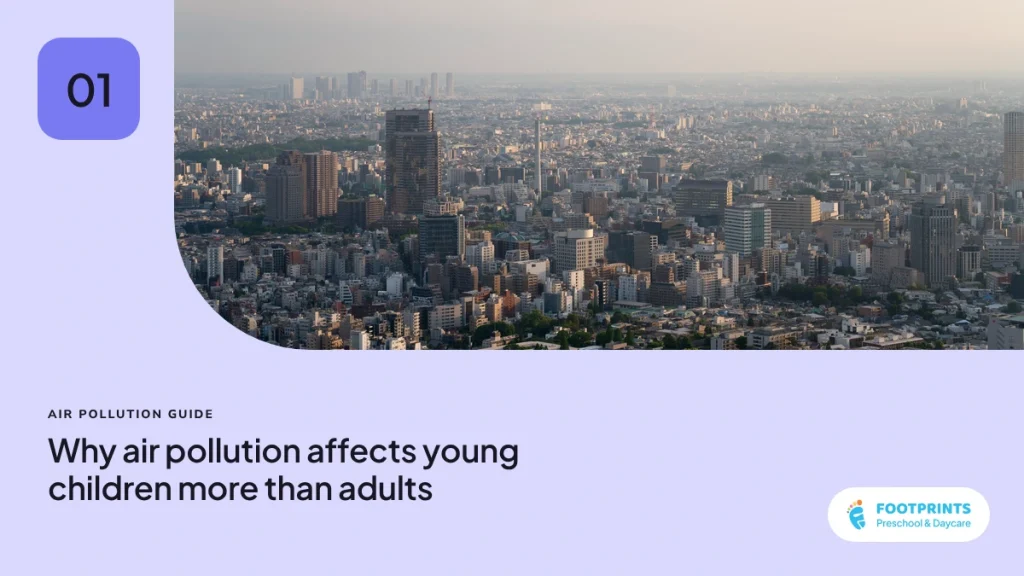
Young children are particularly vulnerable to air pollution because they breathe faster than adults. This means they inhale more air, and consequently more pollutants, relative to their body weight. The fact that children tend to spend more time being physically active outdoors than adults also automatically means that they tend to absorb a higher dose of pollutants.
Their lungs and immune systems are also still developing, making them less effective at filtering out harmful particles. Besides, children’s airways are narrower and more sensitive, so even small amounts of pollutants and smog can cause irritation and inflammation.
The WHO notes that children are more vulnerable to air pollution than adults because they breathe more rapidly for their body size and their lungs are still developing
Understanding the Air Quality Index: What the Number Actually Means
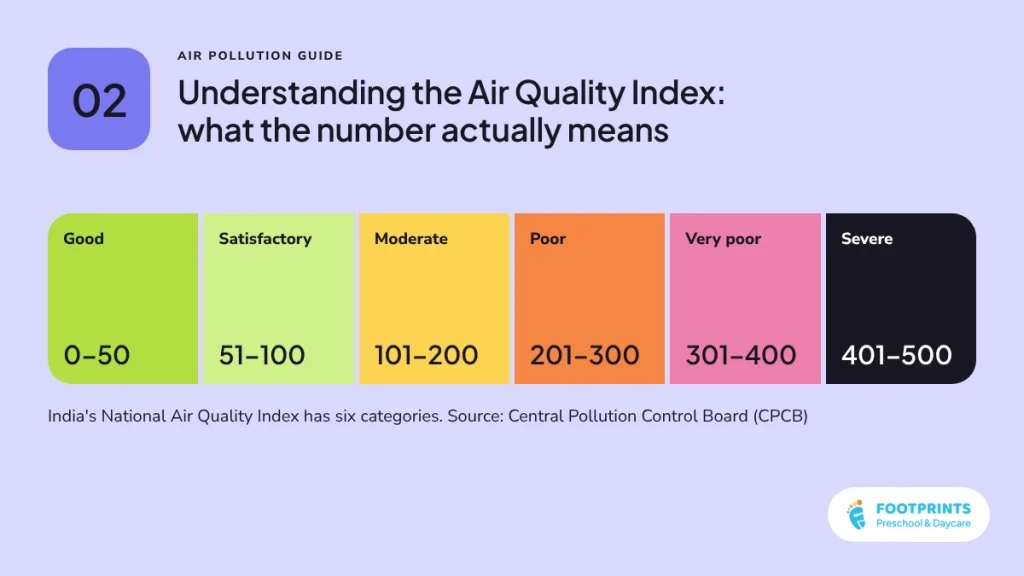
Think of the Air Quality Index (AQI) as a quick report card for the air outside. It is a standard numerical scale that tells you how clean or polluted the air is in a specific area. Put simply, the higher the AQI number, the dirtier the air.
The good thing is that you do not need any special tools to know the AQI. All you have to do is to open the regular weather app that is already built into many smartphone and it will show you the current AQI for your area. What you will notice are different color codes like Green (Good), Yellow (Moderate), or Red (Unhealthy). If the AQI Delhi is shown in the red zone for instance, the colour code itself makes you aware of the risk without having to interpret the exact AQI number.
Remember though that AQI levels can fluctuate significantly throughout the day, so it is important to check them regularly rather than relying on a single reading. During winter air quality is often at its worst in the early morning and late evening when colder air traps pollutants closer to the ground. Unfortunately, the morning hours coincide with school drop-offs, increasing children’s exposure to polluted air. A quick check of your AQI app before leaving home can help you make informed decisions such as whether your child should walk to school or use a bus or car.
What to Do at Each AQI Level
| AQI Range | What It Means | Outdoor Play | What to Do Indoors |
| 0–50 (Good) | Clean air | Normal outdoor play | Nothing special |
| 51–100 (Satisfactory) | Acceptable for most | Normal outdoor play | Nothing special |
| 101–200 (Moderate) | Sensitive children may react | Shorter outdoor sessions | Keep windows shut at peak hours |
| 201–300 (Poor) | Discomfort likely for children | Move play indoors | Windows shut, purifier if you have one |
| 301–400 (Very Poor) | Affects most children | Avoid outdoor play | Keep indoor air as clean as possible |
| 401–500 (Severe) | Serious for everyone | Stay indoors | Limit outings; see a doctor in case of breathing trouble |
Outdoor Play on Bad Air Days: A Simple Daily Routine
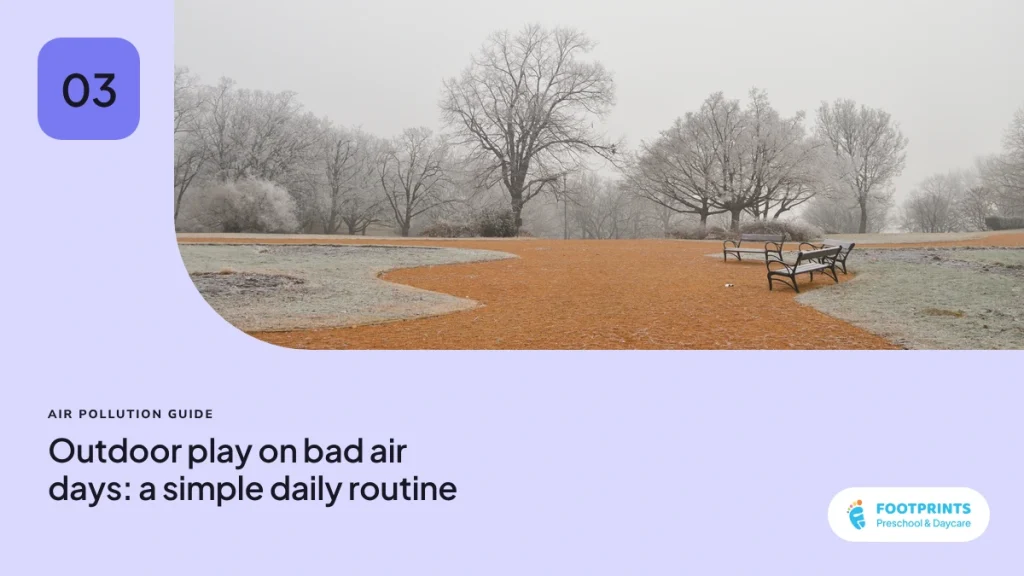
Dipping air quality does not necessarily mean that the child has to be kept indoors all day. With some simple actions you can make sure that you keep them healthy while ensuring their energy is well spent:
- Check the AQI first thing in the morning: Make checking the AQI a part of your daily routine, especially during winter. Knowing the air quality before your child gets ready for the day will help you plan ahead. Importantly, you will not have to disappoint the child with a last-minute “ we can’t go outside” just as he is putting on his shoes.
- Reschedule don’t cancel: Poor air quality in the early morning does not necessarily mean outdoor play is off-limits for the entire day. Winter AQI levels often improve as the sun warms the atmosphere and the trapped pollutants are dispersed. Instead of cancelling that park visit altogether, consider shifting it to the afternoon, when air quality is often at its best.
Remember that a child who is kept strictly indoors for long periods of time loses out on critical movement. This can, in turn, impact several things including their sleep quality and their mood. The goal therefore clearly is adjustment, not elimination.
On days when the air quality hits poor and you still need to burn off that toddler energy, all you need to do is to move the playground inside. Set up a living room obstacle course or play a game of balloon volleyball indoors. You can also check out other indoor activities for toddlers here.
Masks for Children: What Parents Should Know
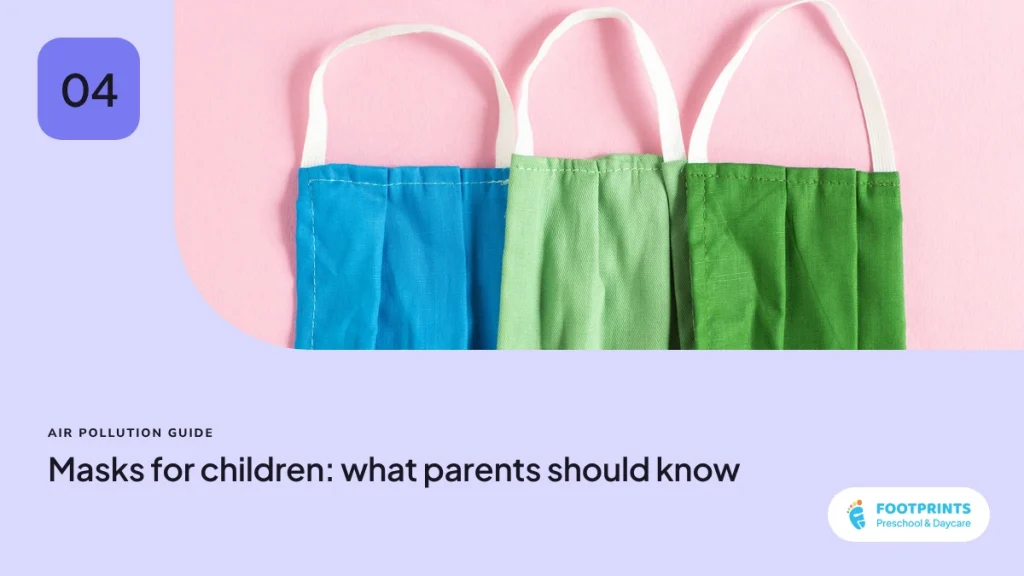
When the air quality drops, many parents naturally wonder if they should put a mask on their little ones. While masks can offer a layer of protection, they come with some practical risks.
First things first, toddlers have small airways, and adding any fabric barrier can make breathing hard and pose safety risks.
Additionally, getting a young child to wear a mask properly is incredibly challenging. Since young children have small faces, standard N95 masks rarely create a tight, airtight seal around their nose and chin. Without that snug fit, dirty air can enter through the gaps. Young children also tend to fidget and even pull their masks down.
While masks are not safe or suitable for children under the age of two, if you choose to use a mask for an older child on a polluted day, focus on the fit. You can look for child-sized designs that rest close against their cheeks and do not leave open pockets.
It is important to also keep in mind that a mask should only be relied upon for very short periods outside rather than extended hours. For young children, the most effective step you can take is to reduce their exposure to the outdoor air, if need be, as opposed to having them wear a mask.
Indoor Air Quality: The Part Parents Can Actually Control
During high-pollution season children tend to spend long stretches indoors. It is imperative, therefore, that the indoor air quality be managed. Fortunately, this is one area that you have direct control over.
Before investing in expensive equipment, there are several highly effective, free steps that you can take to secure your home’s air:
Lock down during peak hours: Keep all windows and doors tightly shut during the early morning and late evening hours when pollution levels are at their highest. Particularly in the aftermath of Diwali as well as in the stubble-burning weeks, this is an aspect you cannot ignore.
Eliminate indoor smoke: Avoid burning incense sticks or mosquito coils, as these release dense particulate matter directly into your living space. It will also help to maintain a strict-zero smoking policy inside the house as also to ensure that kitchen exhaust fans are kept on during cooking.
Switch your cleaning style: Ditch the traditional dry broom as it moves the settled dust and particles back up into the air. Instead, use a damp mop or microfibre cloth to trap and remove dust from floors and surfaces completely.
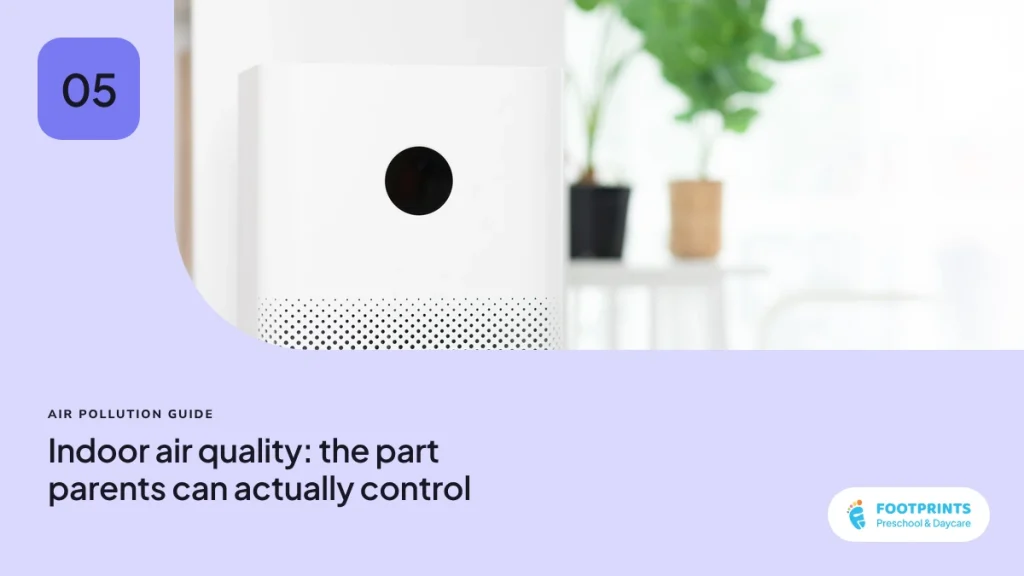
For an extra layer of protection, mechanical air purifiers can be incredibly helpful. These devices work by continuously drawing the air and passing it through specialized mesh filters which trap microscopic dust as well as pollen particles.
A standard purifier, however, can only clean the air in one single room, not the whole house, and it can never replace the essential habits like keeping your doors and windows shut.To get the most out of a purifier, it is important to place it in the room where your child spends the most time and keep the doors and windows of the room closed. Remember also to have its filters changed, periodically.
UNICEF highlights that reducing children’s exposure to polluted air, both outdoors and inside the home, is one of the most practical protections families can put in place.
Coughing and Breathing Trouble: When to See a Doctor
The most common impact of air pollution is irritation of the throat that shows up by way of children coughing more. For most, this irritation naturally settles down once the air clears up.
If you notice any of the following warning signs, however, do schedule a visit with your doctor:
- Audible wheezing – a whistling sound when they breathe out
- Breathing that is unusually fast or labored, where their chest or stomach pulls inward deeply
- A persistent cough that disturbs their sleep every night
- Tiredness that requires the child to rest frequently during normal playtime
In rare cases a lingering winter cough might mean something more serious, like asthma in children. It is important to remember that asthma is a complex condition that only a qualified pediatrician can properly assess and diagnose.
Remember that if your child already has a diagnosed respiratory condition, their pediatrician’s advice always comes first, ahead of any general advice found in this post.
HealthyChildren, the parenting site of the American Academy of Pediatrics, sets out the breathing signs in a child that should always be checked by a doctor rather than watched at home.
For a detailed look at managing everyday cough and cold in children, read our handy guide.
Frequently Asked Questions
1. At what AQI should I stop outdoor play for my child?
As a general rule, when AQI reaches the “poor” range, it is advisable to limit vigorous outdoor activities. At the “very poor” or “severe” range (above 300), it is best to move indoors. Children with asthma or allergies may need precautions even at lower AQI levels.
2. Should a 3-year-old wear a pollution mask?
Most paediatricians do not recommend routine mask use for toddlers. Young children may struggle to wear masks correctly, which reduces effectiveness. If outdoor exposure during very high pollution is unavoidable, focus first on limiting time outdoors.
3. Does an air purifier actually help a child?
Yes, a good-quality air purifier can improve indoor air. However, it works best when doors and windows are managed appropriately and other pollution sources, such as smoke or dust, are minimized.
4. Is it safe to send my child to preschool when the AQI is high?
In most cases, the answer is yes, provided the preschool has measures to reduce exposure, such as indoor play options, closed windows during peak pollution hours, and air filtration where possible. If your child has asthma or chronic respiratory conditions, you should discuss individual risks with their paediatrician.
5. My child coughs every winter — is it the pollution?
While it could well be on account of pollution, winter coughs may also be linked to viral infections, allergies or asthma. If your child’s cough worsens during periods of poor air quality or recurs every year, a paediatric evaluation is necessary to identify the underlying cause.
6. Which plants clean indoor air?
While certain houseplants are often promoted as air-purifying, scientific evidence suggests they have only a very small effect on real-world indoor air quality. Strategies such as using air purifiers, reducing indoor pollution sources, and timing ventilation when outdoor air is cleaner, are far more effective than relying on plants alone.
To Sum Up
Air pollution can feel overwhelming for parents, but a few simple habits can make a meaningful difference to your child’s daily exposure.
Start by checking the AQI before planning outdoor activities, just as you might check the weather forecast. As far as possible, think about adjusting outdoor play rather than cancelling it altogether.
Indoor air is the part you can control most effectively. Keep windows closed during peak pollution periods and make use of an air purifier.
The reassuring news is that most families can manage pollution-related challenges well with small, daily adjustments.
Do stay tuned to this space for such informative content. At Footprints Preschool we are committed to the holistic well-being of children.
Reviewed by Amita Bhardwaj, Chief Delivery Officer at Footprints Preschool & Daycare. Amita brings expertise in HighScope curriculum delivery and early childhood education.

Mirza Usman Habib is a senior early education content specialist with over 8 years dedicated to researching, writing, and explaining early childhood education for Indian parents. At Footprints Childcare, he has authored over 100 articles spanning child development milestones, preschool admission processes, teaching methodology comparisons (HighScope vs Montessori vs Playway), infant daycare selection, and the science of early brain development.
Usman’s approach is research-first: each article synthesises findings from leading authorities in early childhood education — including the HighScope Foundation, UNICEF, and the American Academy of Pediatrics — and translates them into practical, accessible guidance for working parents across India’s 30+ major cities.
His writing covers preschool selection guides, child safety checklists, developmental milestone trackers, and parent preparation guides for school admission. All child development content is reviewed by Amita Bhardwaj, Chief Delivery Officer and HighScope-certified trainer at Footprints Childcare.
 View Fees
 Call Us