

Updated: 24-December-2025
Learning opposite words is one of the simplest and most effective ways to build strong language skills in early childhood. When children understand words like big–small, hot–cold, or fast–slow, they begin to recognise contrasts in everyday life and express themselves more clearly. Parents and teachers often introduce opposite words during preschool and early primary years because they help children develop vocabulary, comprehension, and thinking skills naturally.
In this blog, you’ll find 50+ easy opposite words in English for children, along with simple examples. The list is suitable for preschool, nursery and grade 1 children, and includes practical tips to help parents teach opposite words at home in a fun and engaging way.
50+ Opposite Words in English for Children
| Word | Opposite Word | Example |
|---|---|---|
| Big | Small | The big ball is red |
| Hot | Cold | Ice cream is cold |
| Fast | Slow | The turtle is slow |
| Happy | Sad | She feels happy today |
| Up | Down | The kite went up |
| In | Out | The toy is inside |
| Open | Close | Please close the door |
| Day | Night | We sleep at night |
| Light | Dark | The room is dark |
| Tall | Short | The tree is tall |
| High | Low | The bird flies high |
| Full | Empty | The glass is full |
| Wet | Dry | The towel is dry |
| Near | Far | The park is near |
| Young | Old | The puppy is young |
| Clean | Dirty | Wash dirty hands |
| Long | Short | This rope is long |
| Loud | Quiet | Please be quiet |
| Hard | Soft | The pillow is soft |
| Inside | Outside | Let’s play outside |
| Above | Below | The fan is above |
| First | Last | She came first |
| Same | Different | The bags are different |
| Left | Right | Turn left |
| Front | Back | Sit at the front |
| Smooth | Rough | The stone is rough |
| Sweet | Sour | Lemon is sour |
| Wide | Narrow | The road is wide |
| Early | Late | Don’t be late |
| Strong | Weak | He is strong |
| Together | Apart | They sit together |
| Push | Pull | Pull the rope |
| Begin | End | The game will begin |
| Go | Stop | Stop the car |
| Open | Shut | Shut the box |
| Clean | Messy | The room is messy |
| Full | Empty | The bag is empty |
| Fast | Slow | The bike is fast |
| Happy | Sad | The child feels sad |
Opposite Words for Nursery Children
| Big | Small |
| Hot | Cold |
| Fast | Slow |
| Happy | Sad |
| Up | Down |
| In | Out |
| Open | Close |
Opposite Words for Preschool Children
| Near | Far |
| Loud | Quiet |
| Clean | Dirty |
| Long | Short |
| Left | Right |
| Full | Empty |
| Day | Night |
Opposite Words for Grade 1 Children
| Early | Late |
| Begin | End |
| Go | Stop |
| Push | Pull |
Why Opposite Words Are Important in Early Learning
Opposite words help children understand contrast, comparison, and meaning. When children learn words like big and small or hot and cold, they start understanding how ideas relate to each other in everyday situations
Learning opposite words helps your children in many different ways, like:
1. Expands vocabulary: When children learn and add new words to their collection, they find it easier to express what they see. Also, it helps them understand complex ideas better, communicate more precisely, and sound more fluent.
2. Improves sentence formation: By using opposite words, children learn to speak in clearer, more complete sentences.
3. Builds early reasoning skills: Understanding contrasts encourages children to think, compare, and make sense of information.
4. Supports reading and comprehension: Recognising opposite words makes it easier for children to understand stories, instructions, and conversations.
These foundational skills are especially important during preschool and early primary years, when language development happens rapidly.
How Parents Can Teach Opposite Words at Home
- Compare objects (big spoon vs small spoon)
- Talk about the weather (hot day, cold night)
- Use storybooks and picture cards
- Ask children to act out opposites (jump up, sit down)
Learning through daily experiences makes the concept of opposites natural and memorable.
Fun Games to Teach Opposite Words to Children
Some engaging activities include:
- Opposites Memory Game – Match word pairs using cards
- Opposite Actions Game – Run fast, walk slow
- Picture Sorting – Group images showing opposite concepts
These playful methods improve retention and keep children interested.
Frequently Asked Questions (FAQ’s)
1. What are opposite words for children?
Opposite words are pairs of words with contrasting meanings, such as big–small or happy–sad.
2. At what age should children learn opposite words?
Children usually start learning opposite words between 2 to 4 years, during preschool and nursery.
3. How can parents teach opposite words easily?
Parents can use daily conversations, games, storybooks, and actions to teach opposite words naturally.
4. Are opposite words part of preschool learning?
Yes, opposite words are commonly introduced in preschool as part of early language development.
Conclusion
Teaching opposite words is a simple yet effective way to strengthen a child’s language development. With the right words, examples, and playful learning methods, children can quickly grasp the concept of opposites and use them confidently in daily conversation. Whether at home or in preschool, consistent practice helps children build strong communication and thinking skills from an early age.
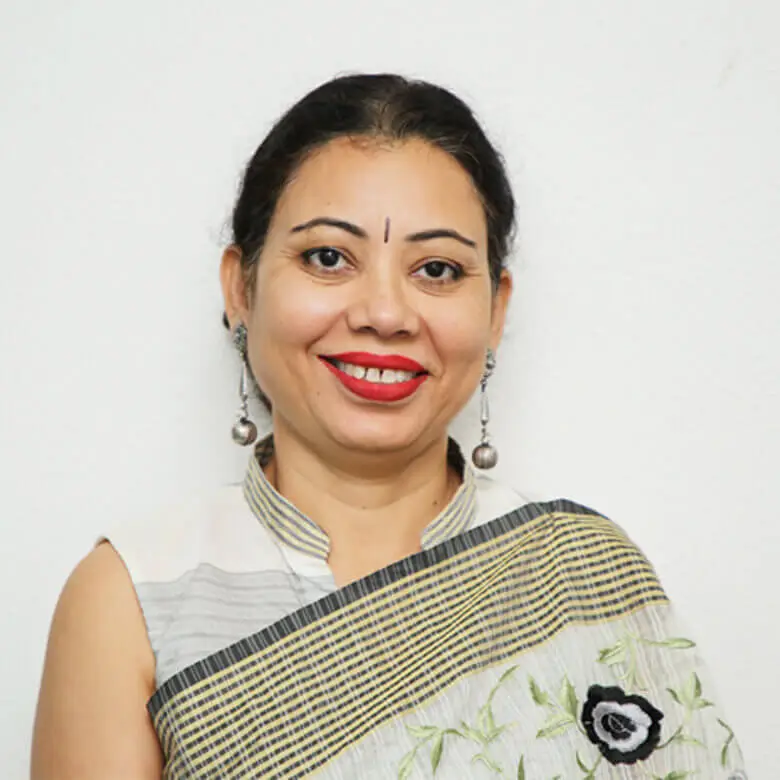
Amita Bhardwaj is one of India’s few certified HighScope curriculum trainers, trained and certified by the US-based HighScope Educational Research Foundation — the same framework underpinning over 50,000 preschools across 20+ countries. As Chief Delivery Officer at Footprints Childcare, she has spent the last decade architecting the curriculum and learning outcomes across 230+ centres serving 60,000+ children across India.
With over 30 years in early childhood education, Amita has worked across infant care, toddler development, preschool pedagogy, and educator training. She is also a certified course leader at Landmark Education, the world’s largest personal development organisation, which informs her approach to child-centred learning and growth.
Amita writes on child development milestones, early brain development, age-appropriate activities, infant safety, and curriculum best practices. All parenting content published under the Footprints Childcare blog is reviewed and approved by her before publication.
 View Fees
  Call Us