

Several school PTMs echo one feedback: “The child needs to improve his handwriting.” Good handwriting can indeed go a long way in building confidence and creating positive first impressions. Before we get to looking at some handy tips to improve a child’s handwriting, let us look at the advantages that excellent handwriting offers, even in this digital age.
Cognitive & Learning Benefits
Firstly, the physical act of writing activates brain regions, thereby improving memory retention and understanding. It is also known to enhance focus and help organise thought.
Academic & Professional Advantages
Needless to say, excellent handwriting creates a great first impression. Legible and neat work makes it easier for examiners to go over the work. It also ensures that written messages are understood and there is no scope for miscommunication.
Neatness and legibility, in turn, build self-confidence.
That said, let us look at some ways of improving handwriting in children
Tips to improve handwriting
1. Build fine motor skills
Good handwriting is a lot about developing fine motor skills. It will help for the child to work on activities such as playing with playdough, doing up buttons, tracing in sand, and more. Fine motor skills, involving small hand and finger movements, are foundational for writing, enabling precise control for legible letter formation, writing speed, and fluency.
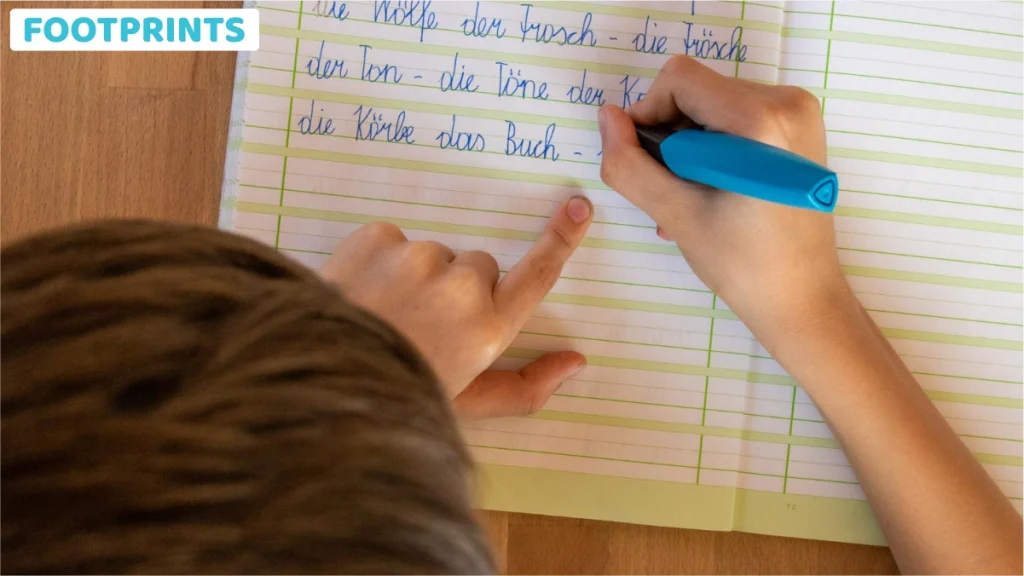
2. Correct grip & posture.
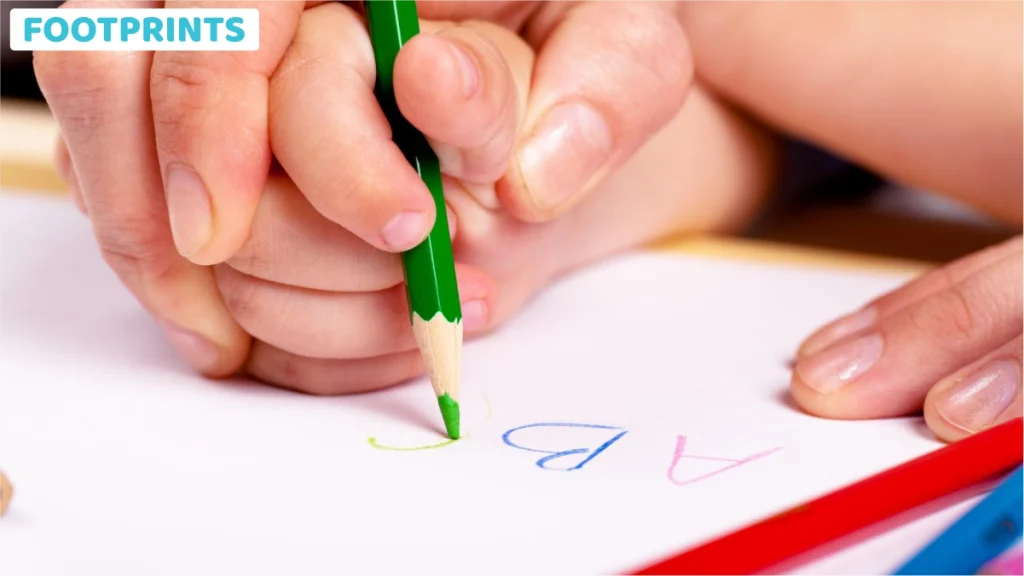
It is important to ensure that the child sits upright with shoulders relaxed. Additionally, it is important to hold the pencil with a proper grip using the thumb, index finger, and middle finger.
3. Use the right tools.
To improve the child’s handwriting, it is important to offer the child a proper age-appropriate pencil. If you notice that the child has issues gripping the pencil, you could also offer them pencil grips. Also, ensure that the child is not pressing down too hard on the pencil.
4. Neatness over speed
One of the best handwriting tips in the child’s formative years is to prioritize neatness over speed. Oftentimes, as parents, we tend to do the opposite. The fact, however, is that once the child learns to develop the letters neatly, speed can be developed later.
5. Letter formation
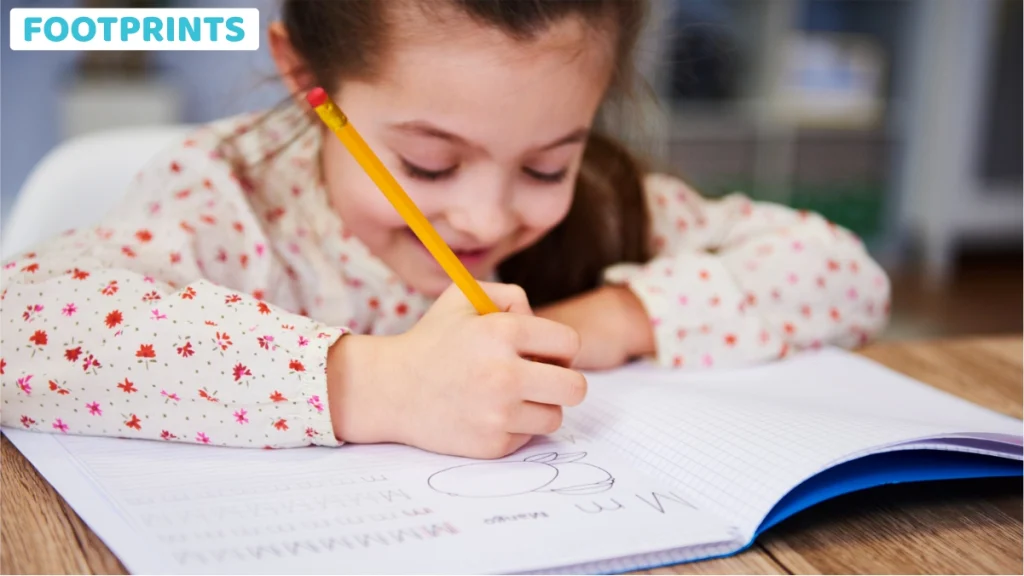
Speaking of letter formation, it is important to focus on consistency in terms of shapes. It will be a beneficial idea to use tracing and practice sheets. It is also important to teach children the concept of finger spacing between words. Working on maintaining the same slants and alignment also goes a long way in developing consistency. It will be a good idea to practice with pangrams (sentences that use all letters).
6. Games
Playing games and drawing can be a wonderful way of building pencil skills and thus improving the child’s handwriting. Focus on some fun playgroup activities, such as making a storybook or playing some fun games where the child gets to practice their writing skills without it feeling like a chore.
7. Identify the problem
If, despite all the above measures, the child is encountering handwriting issues, ensure that you sit down to see what the actual issue is. They might be having trouble with the formation of some letters; perhaps their handwriting is too large or too small, or the issue lies in the spacing between words. Once you have identified the micro issue, you will be able to provide help in resolving it before it becomes a habit.
8. Patience and positivity
Last, but definitely not least, patience and positivity can go a long way in encouraging a child to improve his or her handwriting. While it is easier to be a harsh critic, it is more fruitful to become a supportive instructor. Remember also to celebrate small milestones in the journey.
To Sum up
Poor handwriting can often result on account of issues such as lack of practice or incorrect grip or posture. It could also result on account of some learning disabilities that could make writing challenging. Visual processing issues could also make it hard to copy letters or words correctly. Do ensure that if the child is facing poor handwriting issues, you go into the depth of This approach focuses on addressing the issue rather than applying pressure on the child. Some amount of patience can go a long way in improving the child’s handwriting.
Do tune in to this space for more such informative content. At Footprints Preschool, we believe in the child’s active learning and focus on their holistic growth. Our scientifically designed HighScope curriculum emphasises children’s independence, decision-making, and problem-solving through purposeful play and teacher guidance.
Frequently Asked Questions (FAQs)
1. Why is excellent handwriting important in today’s digital age?
Correct handwriting boosts confidence, creates positive first impressions, and ensures clarity in communication.
2. How does handwriting benefit a child’s learning and cognition?
The physical act of writing activates brain regions, improves memory retention, enhances focus, and helps organise thoughts.
3. What academic advantages does neat handwriting offer?
Legible handwriting makes exam papers easier to read, reduces miscommunication, and builds self-confidence.
4. What role do fine motor skills play in handwriting?
Fine motor skills involving finger and hand movements are foundational for letter formation, speed, and fluency.
5. How can I help my child develop the correct grip and posture?
Encourage upright sitting with relaxed shoulders and a tripod pencil grip using the thumb, index, and middle fingers.
6. Which tools can support better handwriting?
Provide age-appropriate pencils, use pencil grips if needed, and ensure the child doesn’t press too strongly while writing.
7. Should children focus on speed or neatness first?
Neatness should be prioritised in the early years; speed can be developed later, once letter formation is consistent.
8. What activities can make handwriting practice fun?
Games, drawing, and creative tasks like making a storybook help children practice writing without feeling pressured.
9. How can parents identify specific handwriting problems?
Observe if issues lie in letter formation, size, spacing, or alignment, and address them before they become habits.
10. How can parents encourage children positively?
Celebrate small milestones, be patient, and offer supportive guidance rather than harsh criticism.

Shubham is an SEO expert dedicated to helping businesses to thrive in a digital landscape. His innovative marketing campaigns have significantly boosted the organization’s reach and engagement.
 View Fees
  Call Us