

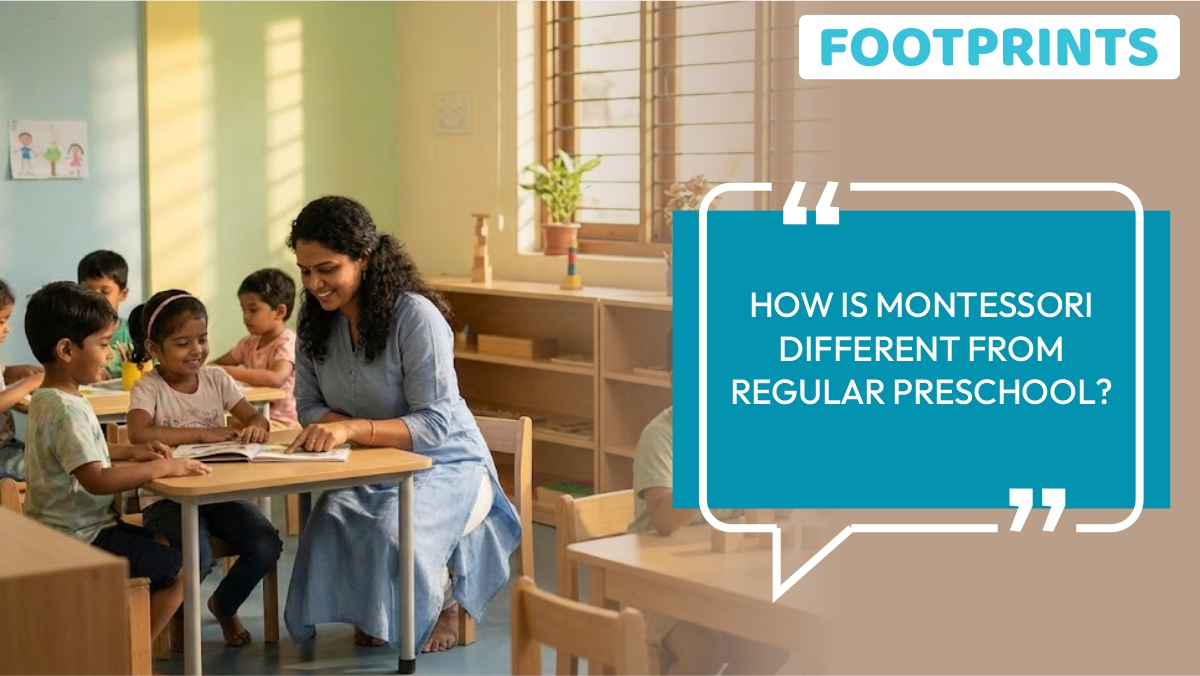
We have all read research that states unequivocally that the first five years of a child’s life are crucial in terms of brain development. Early childhood education plays a crucial role, with up to 90% of a child’s brain developing during this period. Early childhood education, however, takes different forms—namely Montessori and regular preschool. If you are confused between the two approaches, you are likely to find all your answers here, including the benefits of Montessori versus the benefits of preschool education.
What is Montessori Education?
Founded by the Italian physician and educator Maria Montessori, the approach is based around the fact that children are naturally curious learners. The approach therefore places a lot of importance on offering the children enough opportunities to explore aspects independently, while teachers act as facilitators in this journey.
Another key aspect of Montessori learning is the fact that the classrooms include children of a certain age range, as it is believed that such classrooms with their experiential learning help children. The material used in the classroom also supports child development. In fact, children are encouraged to choose activities that align with their interests.
Preschool Education
The hallmark of this preschool education is a more structured approach to learning. In this format, trained educators generally lead students through a predetermined curriculum that covers a wide range of issues and skills.
Preschool classrooms are typically organized by age, unlike Montessori classrooms. A big objective of the curriculum is to prepare children for formal schooling.

Key Differences Between Montessori and Preschool Education
To sum up, the key difference between the Montessori and preschool approaches lies in
- The Montessori approach favours mixed-age classrooms over those designed based on age.
- Focus on exploration versus more conventional learning
- Teachers’ role as facilitators versus instructors
- Self-directed learning versus a structured learning approach
- The focus is on natural consequences rather than external rewards and consequences.
Benefits of both approaches
Needless to say, both these approaches come with their own individual benefits. A key advantage of the Montessori approach lies in the fact that it fosters independence in children. Children are given the autonomy to select activities that they like and learn at their speed. With mixed-age classrooms, the emphasis is on fostering a collaborative spirit. Learning practical life skills from an early age tends to give children an advantage.
Traditional preschool education, on the other hand, comes with its own set of benefits. With structured routines and a consistent schedule, children develop a sense of security needed at a young age. With clear guidance from teachers, children also gain foundational knowledge and skills.
To Sum Up
A clear understanding of the benefits of both approaches needs to go into making the choice for your ward. You must consider your child’s needs to choose the right system.
That being said, there are preschools that offer well-researched, scientifically developed curricula that follow an active learning approach. While the focus is on foundational skills, they emphasise aspects such as independence, decision-making, problem-solving, and more. These curriculums provide a regular daily schedule and focus on important growth areas like reading, math, and science, while also supporting emotional and social development along with academic learning.
Stay tuned to this space for more such informational content. Our commitment to the holistic development of children is unwavering at Footprints Play School. We follow the scientifically developed HighScope curriculum, which is based on more than 50 years of research on early childhood development. The HighScope Preschool Curriculum is structured around eight key areas that highlight the important experiences needed for developing basic skills in young children.
Frequently Asked Questions (FAQs)
1. What is Montessori education?
Montessori is a child-centred approach founded by Maria Montessori, where children learn through exploration, independence, and hands-on activities, with teachers acting as facilitators.
2. How is regular preschool different from Montessori?
Regular preschool follows a structured curriculum led by teachers, with age-based classrooms designed to prepare children for formal schooling.
3. What is the role of teachers in Montessori vs. preschool?
In Montessori, teachers guide and facilitate learning, while in preschool, teachers instruct and lead lessons.
4. How are classrooms organised at Montessori compared to preschool?
Montessori classrooms are mixed-age, encouraging peer learning, while preschools group children strictly by age.
5. What kind of learning style does Montessori emphasise?
Montessori emphasises self-directed learning, where children choose activities based on their interests and pace.
6. What is the focus of preschool education?
Preschool stresses structured routines, foundational knowledge, and skills to prepare children for formal schooling.
7. How does Montessori handle rewards and consequences?
Montessori focuses on natural consequences and intrinsic motivation, while preschools often use external rewards and consequences.
8. What are the benefits of Montessori education?
It fosters independence, collaboration, and practical life skills and allows children to learn at speed.
9. What are the benefits of regular preschool education?
It provides consistency, security through routines, and clear guidance from teachers to build foundational academic skills.
10. How should parents decide between Montessori and preschool?
Parents should weigh their child’s personality, learning style, and family priorities to choose the approach that best fits their needs.

Mirza Usman Habib is a senior early education content specialist with over 8 years dedicated to researching, writing, and explaining early childhood education for Indian parents. At Footprints Childcare, he has authored over 100 articles spanning child development milestones, preschool admission processes, teaching methodology comparisons (HighScope vs Montessori vs Playway), infant daycare selection, and the science of early brain development.
Usman’s approach is research-first: each article synthesises findings from leading authorities in early childhood education — including the HighScope Foundation, UNICEF, and the American Academy of Pediatrics — and translates them into practical, accessible guidance for working parents across India’s 30+ major cities.
His writing covers preschool selection guides, child safety checklists, developmental milestone trackers, and parent preparation guides for school admission. All child development content is reviewed by Amita Bhardwaj, Chief Delivery Officer and HighScope-certified trainer at Footprints Childcare.
 View Fees
  Call Us